
Huwwara
Huwwara, Thursday 24.03.05, PMObservers: Roni K., Galit G. (reporting)On our arrival – light traffic, no line, one detainee with a Jordanian document waiting in the shed. We didn’t come across any roadblocks. There was a reason, as we found out later.15:00 – bus of reporters on a trip of “concessions”, organized by the IDF spokesman.Newspaper reporters and photographers, TV and radio, accompanied by the brigade commander of the region (Yuval Bezek) and the head of the DCO (Ra’ad), arrived to get an impression of the concessions on which the IDF had reported recently. The first stop on their tour was the humanitarian station – a small room at the back of a caravan used for lavatories, in which were supposed to sit a medic and a doctor (as it was reported on that evening’s news), who would provide first aid to the residents. We didn’t enter to look at the room, but the shift from Beit Iba reported that the humanitarian station there is not more than a tiny room with a number of shelves containing baby food.The brigade commander explained to those present that this room, as also the computer stations and the elimination of the southern checkpoint, were meant to allow the local population “lead their everyday lives” and to isolate terrorist elements. And surely – a model checkpoint. The soldiers were efficient and friendly to the residents, the vehicle upon which the inspection machine for baggage sits was asked to remain in place, the computer terminals were functioning, even all the roads were open. “We didn’t find any roadblocks on the way to Jerusalem,” said on of the press people when we pointed out to him that the number of roadblocks was increasing.Those that spoke with us seemed critical and skeptical about the reported “concessions.” Will this message get across on the news? We hoped so, and recommended that they visit Beit Iba and the villages and speak with the residents.And meanwhile, the police arrived. The detainee, so it seems, was a Jordanian citizen who crossed the border 9 years ago to visit relatives in Ramallah. His Jordanian passport was returned at the border crossing. He sounded confident about his future – he will return to Ramallah or to Jordan, whatever will be, will be. The policeman gave advice on the walkie talkie and left. By the time we left, he was still waiting at the checkpoint, his fate was unclear.A taxi carrying a family of dignified appearance from the Allenby Bridge to Nablus was stopped at the checkpoint. The suitcases were taken down and opened for inspection, the photographers rushed to record the scene; the family members, either embarassed or astonished by the opportunity occasioned them.16:30 – we left.
Beit Iba
See all reports for this place-
A perimeter checkpoint west of the city of Nablus. Operated from 2001 to 2009 as one of the four permanent checkpoints closing on Nablus: Beit Furik and Awarta to the east and Hawara to the south. A pedestrian-only checkpoint, where MachsomWatch volunteers were present daily for several hours in the morning and afternoon to document the thousands of Palestinians waiting for hours in long queues with no shelter in the heat or rain, to leave the district city for anywhere else in the West Bank. From March 2009, as part of the easing of the Palestinian movement in the West Bank, it was abolished, without a trace, and without any adverse change in the security situation.
 Jun-4-2014Beit-Iba checkpoint 22.04.04
-
Huwwara
See all reports for this place-
The Huwwara checkpoint is an internal checkpoint south of the city of Nablus, at the intersection of Roads 60 and 5077 (between the settlements of Bracha and Itamar). This checkpoint was one of the four permanent checkpoints that closed on Nablus (Beit Furik and Awarta checkpoints to the east and the Beit Iba checkpoint to the west). It was a pedestrian-only barrier. As MachsomWatch volunteers, we watched therre since 2001 two shifts a day - morning and noon, the thousands of Palestinians leaving Nablus and waiting for hours in queues to reach anywhere else in the West Bank, from the other side of the checkpoint the destination could only be reached by public transport. In early June 2009, as part of the easing of Palestinian traffic in the West Bank, the checkpoint was opened to vehicular traffic. The passage was free, with occasional military presence in the guard tower. Also, there were vehicle inspections from time to time. Since the massacre on 7.10.2023, the checkpoint has been closed to Palestinians.
On February 26, 2023, about 400 settlers attacked the town's residents for 5 hours and set fire to property, such as houses and cars. Disturbances occurred in response to a shooting of two Jewish residents of Har Bracha by a Palestinian Terrorist. The soldiers stationed in the town did not prevent the arson and rescued Palestinian families from their homes only after they were set on fire. No one was punished and Finance Minister Smotrich stated that "the State of Israel should wipe out Hawara." Left and center organizations organized solidarity demonstrations and support actions for the residents of Hawara.Hawara continued to be in the headlines in all the months that followed: more pogroms by the settlers, attacks by Palestinians and a massive presence of the army in the town. It amounted to a de facto curfew of commerce and life in the center of the city. On October 5, 2023, MK Zvi established a Sukkah in the center of Hawara and hundreds of settlers backed the army blocked the main road and held prayers in the heart of the town all night and the next day. On Saturday, October 7, 23 The "Swords of Iron" war began with an attack by Hamas on settlements surrounding Gaza in the face of a poor presence of the IDF. Much criticism has been made of the withdrawal of military forces from the area surrounding Gaza and their placement in the West Bank, and in the Hawara and Samaria region in particular, as a shield for the settlers who were taking over and rioting.
On November 12, 2023, the first section of the Hawara bypass road intended for Israeli traffic only was opened. In this way, the settlers can bypass the road that goes through the center of Hawara, which is the main artery for traffic from the Nablus area to Ramallah and the south of the West Bank. For the construction of the road, the Civil Administration expropriated 406 dunams of private land belonging to Palestinians from the nearby villages. The settlers are not satisfied with this at the moment, and demand to also travel through Hawara itself in order to demonstrate presence and control.(updated November 2023)
.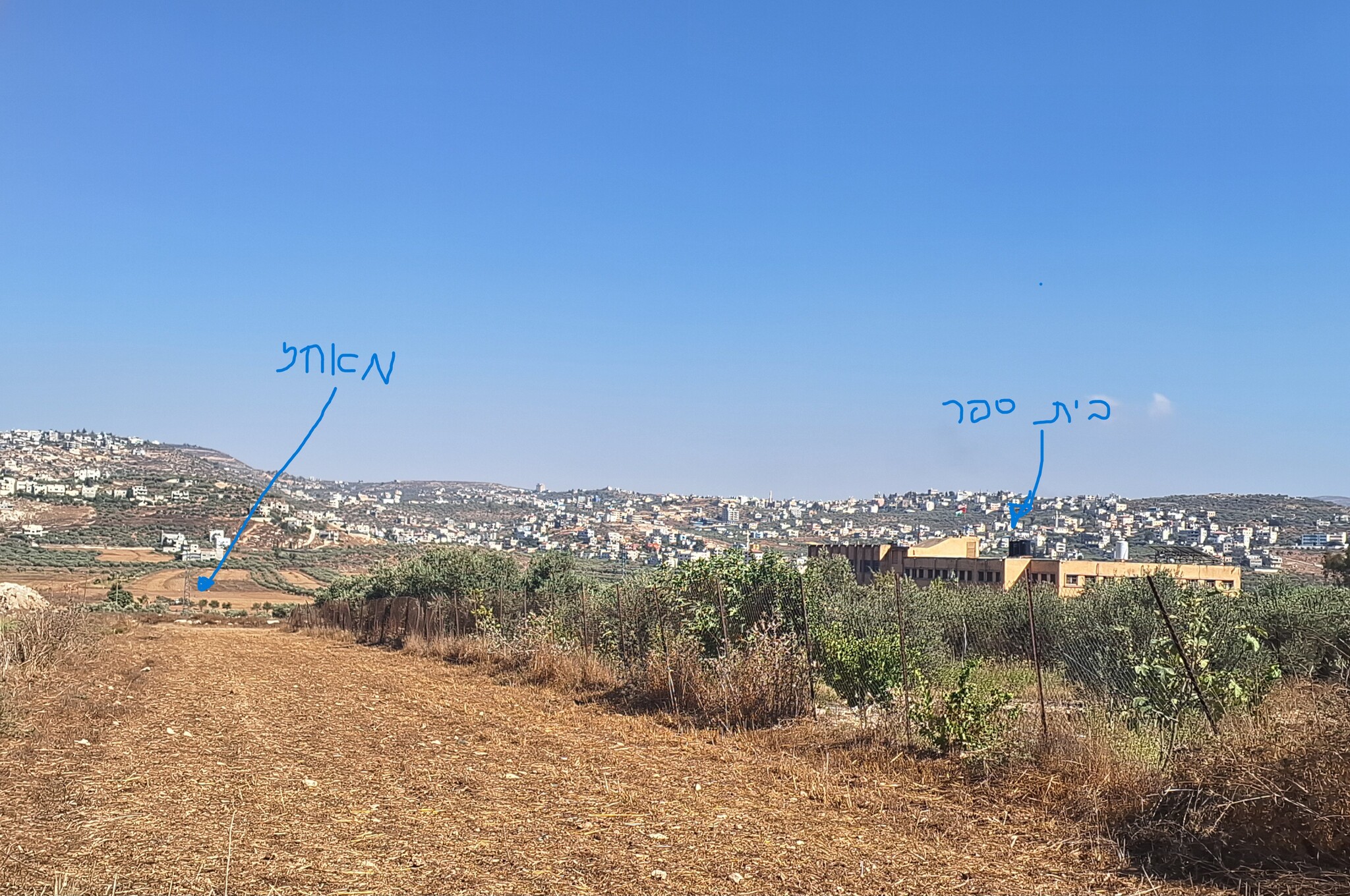 Ronit Dahan-RamatiAug-24-2026Huwara: The school on the outskirts of town and an outpost hidden among the trees
-
