
Huwwara & Beit Furik
Huwwara and Beit Furiq. 6 October 2005 Watchers: Chava H., Chana B. (reporting)There is great tension at the roadblock. The soldiers all have their weapons ready to fire. The sensation is that any incident, no matter how small, will cause a flare-up.The proceedings are extremely slow, everything is checked meticulously, one at a time. Buses and taxis cross more slowly than usual and the justification for all this is: “As far as I am concerned there can be hassle and the Palestinians can suffer – the main thing is that my soldiers are protected.” So says the roadblock commander. Highway 60: between Jerusalem and Huwwara there are five roadblocks. Two of them are permanent – Chizma and Tapuach – and three ‘surprise’ roadblocks which, as is well known, surprise no one – at Sha’ar Binyamin, and at the entrance to Mizra’a e Sharkiah and at the entrance to Tormus Aya.Huwwara7:00 a.m.There are few soldiers at the roadblock and the traffic of pedestrians is still light. The cars are checked very slowly and the queue unfolds like a sinuous snake. The only voice heard, continuously, is that of the girl soldier shouting “ta’el, ta’el”. Only one turnstile is functioning worked manually by a soldier, who is covered by another soldier, whose weapon is aimed straight at the faces of those crossing. For some reason not all those crossing speak fluent Hebrew – what a nerve – so shouting is necessary to make the ‘meaning of the text’ clear.7:20 a.m.The snail-like pace continues in the line of buses and taxis. A female and male soldier get the passengers out of the cars, collect their I.D. documents and check them all against a ‘shortened’ list in their hands. Meanwhile they laughingly flirt between each other and make loud calls to the soldiers on the other side of the road.A detained taxi stands at the side. The driver sits indifferently in the car. He is used to hold-ups. Each time the soldiers claim that his document is forged. The soldiers pass the document from one to another, hold it up to the sun to see it properly and finally bring a magnifying glass. The verdict is ‘the document is forged’ and they call the blue police. When the police arrive the long process starts anew of an in-depth discussion of the quality of the document. The driver is called for a body search which takes place behind the blue police jeep and includes removing trousers. Now he is asked to get into the police car and is taken for interrogation to the D.C.O. About a quarter of an hour later he returns, with his document, and the mountain has given birth to a mouse. We asked for the telephone number of the driver and were treated to an insolent and aggressive verbal assault from the policeman. The person with a rifle in his hands and a uniform on his body is the man in authority, with the power – and who are we anyway – just simple citizens with no uniform and no rifle.7:30 a.m.The overcrowding builds up. Everyone is asked to stand quietly and straighten the queue. Now another computer is started up and the checkpoint is reinforced. Parcels are checked on the ground, but slowly – slowly, slowly and meticulously “because we are all suffering a trauma – there was an attempt to stab a woman soldier and she is seriously injured”. Who distorts facts? In the newspapers and on the radio it was stated that the soldier was lightly scratched. Women cross, on the whole, without being checked. However, when a veiled woman arrives she is asked to raise her veil and roll back her sleeves. When the woman complains the woman soldier answers: “I don’t care, don’t bring out any knives.”There is tension behind the turnstile. People shout and a row breaks out between those in the queue. The soldiers shout at them “Oskot, oskot” (quiet, quiet). At the same time a ‘joke market’ about Palestinians develops – and shouts of yallah and ta’el interfere with ‘the neighbours’ rest’.Discussions with officers on the spot were in vain. “There are no personnel” “There are people armed with knives”, etc. Even the telephone calls to the Brigade, to the Central Command and to Yehuda & Shomron District Command did not change the situation. Finally we understood that ‘that’s the way it is now’ – collective revenge and punishment.In the afternoon we saw a banner headline in ‘Yediot Aharonot’ saying that internal roadblocks will be lifted, significant relief for the Palestinians, etc. – we thought maybe we had lost our way and were at the wrong address…When we left at 10:30 a.m., nothing had changed. The flow of pedestrians did not decline, the queue of cars continued to crawl with one bus crossing every thirty to forty minutes. Despair!Beit Furiq10:45 a.m.The roadblock, once full of people, is deserted now. There are very few pedestrians and only two cars. Possibly the reason is the late hour – or maybe everyone has given up in despair. We left after a quarter of an hour.On the way back on Highway 60 – again and again snap roadblocks – but there is almost no traffic. Tapuach is also deserted.
Huwwara
See all reports for this place-
The Huwwara checkpoint is an internal checkpoint south of the city of Nablus, at the intersection of Roads 60 and 5077 (between the settlements of Bracha and Itamar). This checkpoint was one of the four permanent checkpoints that closed on Nablus (Beit Furik and Awarta checkpoints to the east and the Beit Iba checkpoint to the west). It was a pedestrian-only barrier. As MachsomWatch volunteers, we watched therre since 2001 two shifts a day - morning and noon, the thousands of Palestinians leaving Nablus and waiting for hours in queues to reach anywhere else in the West Bank, from the other side of the checkpoint the destination could only be reached by public transport. In early June 2009, as part of the easing of Palestinian traffic in the West Bank, the checkpoint was opened to vehicular traffic. The passage was free, with occasional military presence in the guard tower. Also, there were vehicle inspections from time to time. Since the massacre on 7.10.2023, the checkpoint has been closed to Palestinians.
On February 26, 2023, about 400 settlers attacked the town's residents for 5 hours and set fire to property, such as houses and cars. Disturbances occurred in response to a shooting of two Jewish residents of Har Bracha by a Palestinian Terrorist. The soldiers stationed in the town did not prevent the arson and rescued Palestinian families from their homes only after they were set on fire. No one was punished and Finance Minister Smotrich stated that "the State of Israel should wipe out Hawara." Left and center organizations organized solidarity demonstrations and support actions for the residents of Hawara.Hawara continued to be in the headlines in all the months that followed: more pogroms by the settlers, attacks by Palestinians and a massive presence of the army in the town. It amounted to a de facto curfew of commerce and life in the center of the city. On October 5, 2023, MK Zvi established a Sukkah in the center of Hawara and hundreds of settlers backed the army blocked the main road and held prayers in the heart of the town all night and the next day. On Saturday, October 7, 23 The "Swords of Iron" war began with an attack by Hamas on settlements surrounding Gaza in the face of a poor presence of the IDF. Much criticism has been made of the withdrawal of military forces from the area surrounding Gaza and their placement in the West Bank, and in the Hawara and Samaria region in particular, as a shield for the settlers who were taking over and rioting.
On November 12, 2023, the first section of the Hawara bypass road intended for Israeli traffic only was opened. In this way, the settlers can bypass the road that goes through the center of Hawara, which is the main artery for traffic from the Nablus area to Ramallah and the south of the West Bank. For the construction of the road, the Civil Administration expropriated 406 dunams of private land belonging to Palestinians from the nearby villages. The settlers are not satisfied with this at the moment, and demand to also travel through Hawara itself in order to demonstrate presence and control.(updated November 2023)
.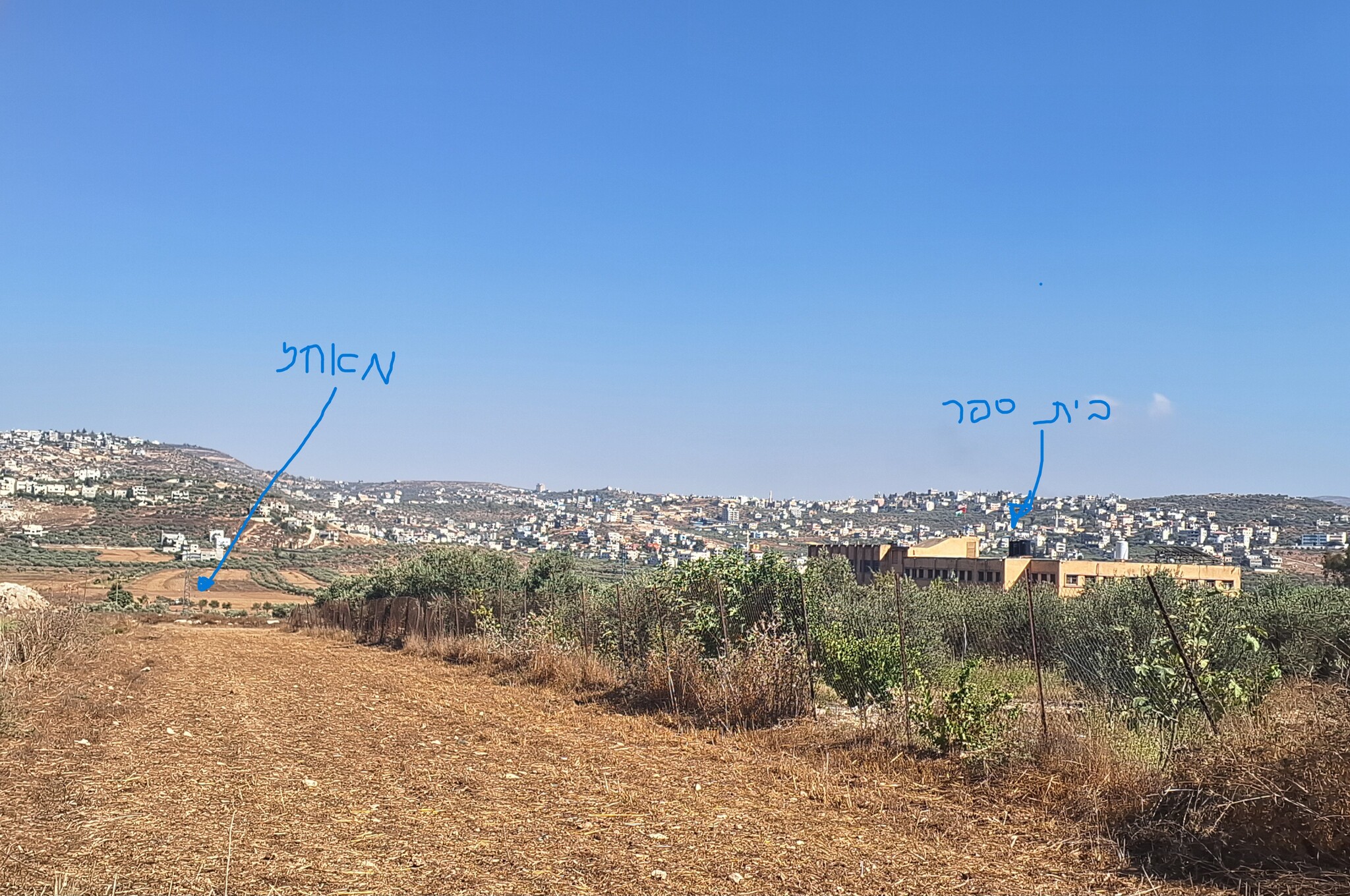 Ronit Dahan-RamatiAug-24-2026Huwara: The school on the outskirts of town and an outpost hidden among the trees
-
Jerusalem
See all reports for this place-
The places in East Jerusalem which are visited routinely by MachsomWatch women are Silwan and Sheikh Jarrah. During the month of Ramadan, also the Old City and its environs are monitored.
-
