
Huwwara, Beit Furik, Za’atara
Huwwarra, Beit Furik, Za’atara, Monday 27.2.2006 PMObservers: Micky S, Dalia G. Merav A. (reporting)Guests: Moran A. (Merav’s mother) and a group from the University of Tel Aviv who are doing a film on Dalia.Natanya translating. How is a checkpoint born? Like a baby (from the brain of the occupation). The momentum of development is known to all – new neighborhoods in Ariel, new gates at the entrance to villages and technological improvements at Hawarra. One has to stop referring to the checkpoint at Hawarra as temporary. Cement blocks have been built there compliments of the engineering force and the continuation we already know.12.45 -We did a turn through Ariel where we were very impressed by the size and fast development. To all those who are interested new neighborhoods are being populated.13.00 -About a kilometer before Zeita is an army hammer but we did not see them stopping or detaining anyone.New gates have appeared at the entrance to Zeita and Marda which were open ….but it was clear who held the keys. 13.10 Za’atara checkpoint. no line of cars from the West, from the north were 15 cars and two checking posts. 13.15 -The morning shift had reported that there was a entrance to Kfar Beita was blocked and we went in to see. And in fact there were two army jeeps and one of the border police. The soldiers told us that they are there because earlier on two molotovs had been thrown . It did not look as if they were going to enter the village or to block the traffic completely but were just checking those entering and exiting. A sort of demonstration of power and collective punishment of the villagers.13.20 Huwwara crossroad CP. 15 cars waiting to pass. It seems that the army is also not relating to this checkpoint as a temporary or rolling checkpoint. Cement blocks have been built to protect the soldier on guard. With the coming rains a hut will probably appear for the same soldier, a point of checking for others and before we will long for the rolling checkpoint there will be a complete terminal with a sign welcoming those who pass.13.35 Hawarra CP. 10 cars waiting to enter, the pace of checking is exceedingly slow and the passengers in the cars say they have been waiting for more than an hour.The checkpoint is developing from week to week. On the other side of the new carousel which is not yet working a kind of corridor has been put up but it is not clear what it is. Maybe it is a checking post of the ultra red and some other such invention of genius. This is all for use in the future. At the side of the checkpoint there is also a momentum of development, another rroad from the crossroads which passed next to the checkpoint from the eastern side, it seems that the checkpoint is being widened. 2 detainees in the “jorra”. The DCO representative claims that they are there for security reasons and that he is on contact with everyone necessary to speed up the checking. He repeats this, that they are truly a high security risk. At the end after 3 hours the high security risks are sent on their way.The humanitarian lane was working most of the time that we were at the checkpoint, The cement blocks from the previous week have been pushed against one of the banks of the passage and there is a speace where the pedestrians can pass one by one.The checking of the young men is done by a woman soldier of the military police who has metal detectors. With these she goes over every centimeter of the body of each man and this after she orders them to expose their stomachs and turn around. A very humiliating procedure.Every now and again the checking is stopped because of those trying to by-pass the line. The second lieutenant R. explains to us that they are doing so because it is not fair to those who are waiting in line as they should. But in this situation the explanation of fairness seems a bit out of place,14.15 -A group of lower school children arrive from Nablus, the teacher explains to us that he is teaching them the traditional ways of working the land and wanted to take them on a tour of the area. For this they have also brought traditional tools. Pitchfork, sickle, etc. But the soldiers confiscate these and they go on their way without them.15.00 -The woman soldier finds a Japanese knife in the possession of a student who explains to her that he is a designer and needs it to build his models. He shows her that in his bag are rulers and other tools for designing. The second lieutenant takes it from him and after his documents have been checked returns it to him. The student again explains that he needs the knife for his studies but the second lieutenant explains to him in return that it is not worth his while to come through the checkpoint with it and he goes on his way.Every now and again the soldier at the car lane going into Nablus leaves his place to go and chase away those who are waiting on the southern side. There are also elderly women there, sick and handicapped who have passed the humanitarian line and are waiting for those accompanying them and who are still stuck in the ordinary lanes. He sends them as far as the path but as opposed to where they had been waiting there is no place to sit. This is not of interest to him and also not the fact that in all the previous months this has never been a problem and has only now become one. All of a sudden the place that they have always waited has become a security rish.Amongst those sitting outside the checkpoint is a woman who is sick and suffering from pains in her stomach and has been waiting a long time. Her mother joins her and explains that this is her daughter who has just left hospital where she lost her baby. They are waiting for the husband who is stuck in the line of the young men (the passage takes an hour). She asks us if we cannot hurry up the procedure. In the end we manage to do so.The soldier at the car lane is full of motivation and when the car lane empties he goes to make a random check of those entering Nablus and from time to time again checks those who have already been checking in the humanitarian line. He orders an elderly woman to open her backs and sweetens his order with a curse “Your sister’s cunt,” When we reprimanded him he said we had a hearing problem.15.40 Awarta CP. is completely empty.15.50 Beit Furik. No cars entering, 3 waiting to leave. Only a few people and the checking is fairly fast. Only one computer to the three check posts for those entering, leaving and for cars. They found a way to speed up the checking. The checkers read out aloud the last numbers of the id and a soldier checks with against a list. Today for a change there is no music.16.30 back to Hawarra where there are two detainees and for one the police have been summoned. When they arrived they questioned him and he was freed.17.00 CP of Hawarra at the crossroad…15 cars.17.10 Kfar Beita. The jeeps have disappeared but there are still soldiers on the road entering the village. Both cars entering and leaving are checked and there are about 5 in each direction.17.15 Zatara crossroads…2o cars from the north, 5 from the west and none detained.
Marda
See all reports for this place-
Marda
There are about 2500 inhabitants in the village. A large part of their lands was confiscated for the benefit of the settlement of Ariel, some of whose buildings are adjacent to the village.
They often feel under siege. At both entrances to the village from the main road (505) there are checkpoints and the army does close the yellow arms from time to time. The inhabitants of Marda own olive groves behind a fence. Rarely are they allowed to cultivate their agricultural plots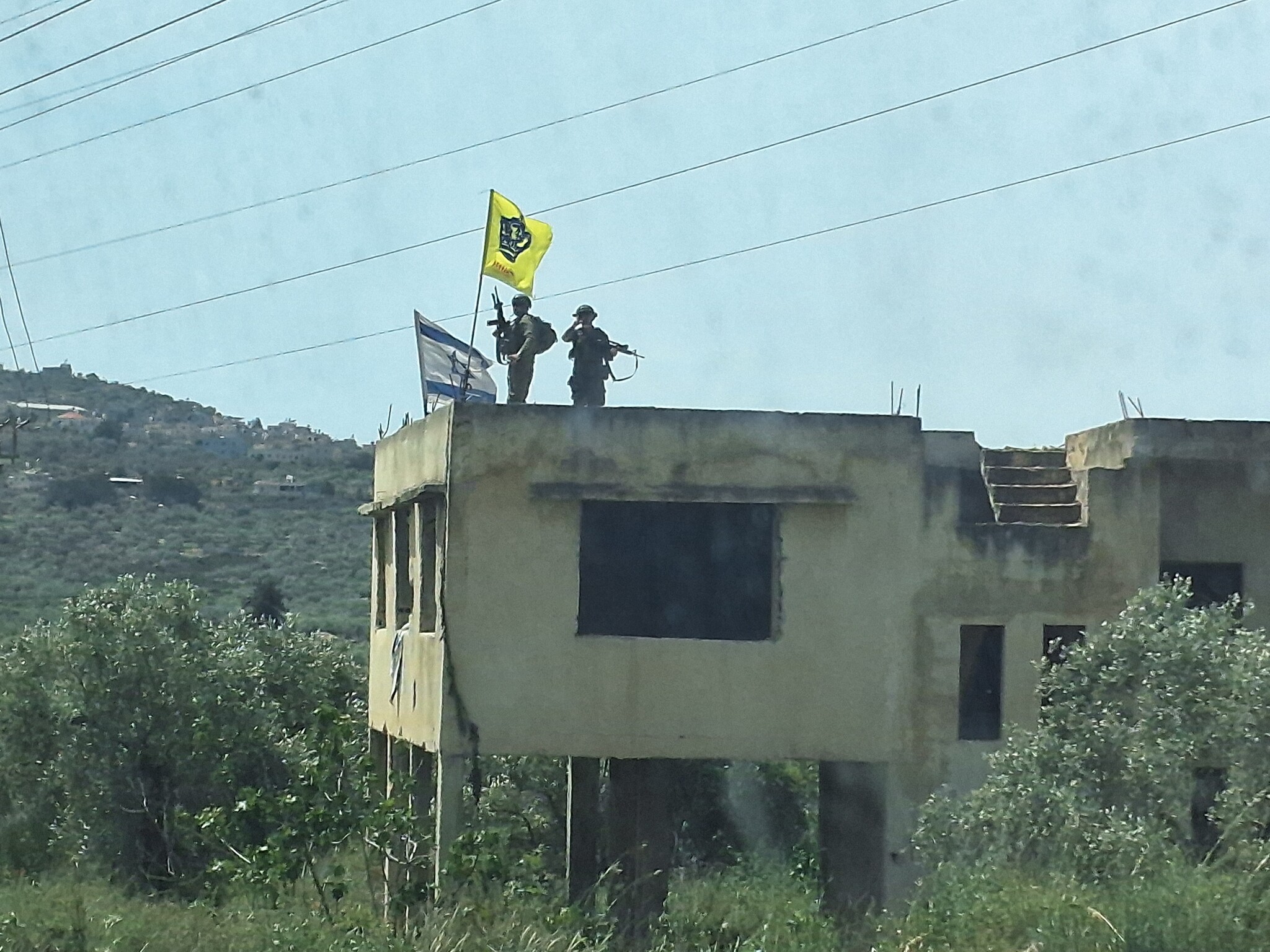 Ronit Dahan-RamatiApr-14-2026Marda. IDF post on the roof of a Palestinian home with the Messiah flag
-
