Huwwara Dir Balut Beit Furik
Huwwara, Dir Balut, Beit Furik, Tuesday 6.6.2006 PMObservers ; Tami P. and Hagit A. (reporting)Natanya translating.1ots of exhausted people walking on road 5 by foot in the heat and without water.Reports of a terrible shortage of food at Huwwara and the nearby villages.14.00 -On road 5, the apartheid road which is only for Jews are 10s of people walking. They walk at the side of the road exhausted, thirsty and hungry (Ishmaelites). It is a terribly hot day, the air is boiling. We took up three people and heard that the police had caught people without licenses, put them on to a bus and then put them down at the crossroads of Kfar Kana there to continue on their way, 25 kilometre to Za’atara Jnc. and then they would still have a long road to their villages. There are no taxis because they are not allowed on this road.The people whom we took up were thirsty and dehydrated, exhausted and despairing. They ate and drank the little that we had and said that they had left their villages on Saturday to look for work. They did not work and did not earn anything but only paid for the taxi to take them to Jerusalem. They said there is a terrible shortage of food in the villages and when we told them of the caravan of cars of the “Peace coalition” which intends to arrive on Saturday at Hawarra with food and medicines they asked for our phone numbers so as to find out when the procession will arrive. It was obvious that they are in very real distress and are waiting anxiously for help. On Saturday morning one of them phoned Tammie and when he heard the caravan had been delayed his despair rent one’s heart.If help does not arrive from America or somewhere the situation will be extreme.Huwwara, Terrible heat. Truly we can hardly bear it. Each time we fled to the car to drink and to cool off. It is frightening to think of these people standing in the heat for hours, waling on foot, carrying their parcels and children. There is not much traffic. It is obvious that whoever does not have to come will not. The people whom we see at the checkpoint are the strong ones who can bear the suffering.Beit Furik and Dir Balut. “The checkpoints faint in the heat.” They are practically empty. Also at the crossroads of Yizhar and Za’atara there is hardly any movement. At Dir Balut some pedestrians are waiting who have to get from hours to house as the checkpoint divides between the houses of the village.
Huwwara
See all reports for this place-
The Huwwara checkpoint is an internal checkpoint south of the city of Nablus, at the intersection of Roads 60 and 5077 (between the settlements of Bracha and Itamar). This checkpoint was one of the four permanent checkpoints that closed on Nablus (Beit Furik and Awarta checkpoints to the east and the Beit Iba checkpoint to the west). It was a pedestrian-only barrier. As MachsomWatch volunteers, we watched therre since 2001 two shifts a day - morning and noon, the thousands of Palestinians leaving Nablus and waiting for hours in queues to reach anywhere else in the West Bank, from the other side of the checkpoint the destination could only be reached by public transport. In early June 2009, as part of the easing of Palestinian traffic in the West Bank, the checkpoint was opened to vehicular traffic. The passage was free, with occasional military presence in the guard tower. Also, there were vehicle inspections from time to time. Since the massacre on 7.10.2023, the checkpoint has been closed to Palestinians.
On February 26, 2023, about 400 settlers attacked the town's residents for 5 hours and set fire to property, such as houses and cars. Disturbances occurred in response to a shooting of two Jewish residents of Har Bracha by a Palestinian Terrorist. The soldiers stationed in the town did not prevent the arson and rescued Palestinian families from their homes only after they were set on fire. No one was punished and Finance Minister Smotrich stated that "the State of Israel should wipe out Hawara." Left and center organizations organized solidarity demonstrations and support actions for the residents of Hawara.Hawara continued to be in the headlines in all the months that followed: more pogroms by the settlers, attacks by Palestinians and a massive presence of the army in the town. It amounted to a de facto curfew of commerce and life in the center of the city. On October 5, 2023, MK Zvi established a Sukkah in the center of Hawara and hundreds of settlers backed the army blocked the main road and held prayers in the heart of the town all night and the next day. On Saturday, October 7, 23 The "Swords of Iron" war began with an attack by Hamas on settlements surrounding Gaza in the face of a poor presence of the IDF. Much criticism has been made of the withdrawal of military forces from the area surrounding Gaza and their placement in the West Bank, and in the Hawara and Samaria region in particular, as a shield for the settlers who were taking over and rioting.
On November 12, 2023, the first section of the Hawara bypass road intended for Israeli traffic only was opened. In this way, the settlers can bypass the road that goes through the center of Hawara, which is the main artery for traffic from the Nablus area to Ramallah and the south of the West Bank. For the construction of the road, the Civil Administration expropriated 406 dunams of private land belonging to Palestinians from the nearby villages. The settlers are not satisfied with this at the moment, and demand to also travel through Hawara itself in order to demonstrate presence and control.(updated November 2023)
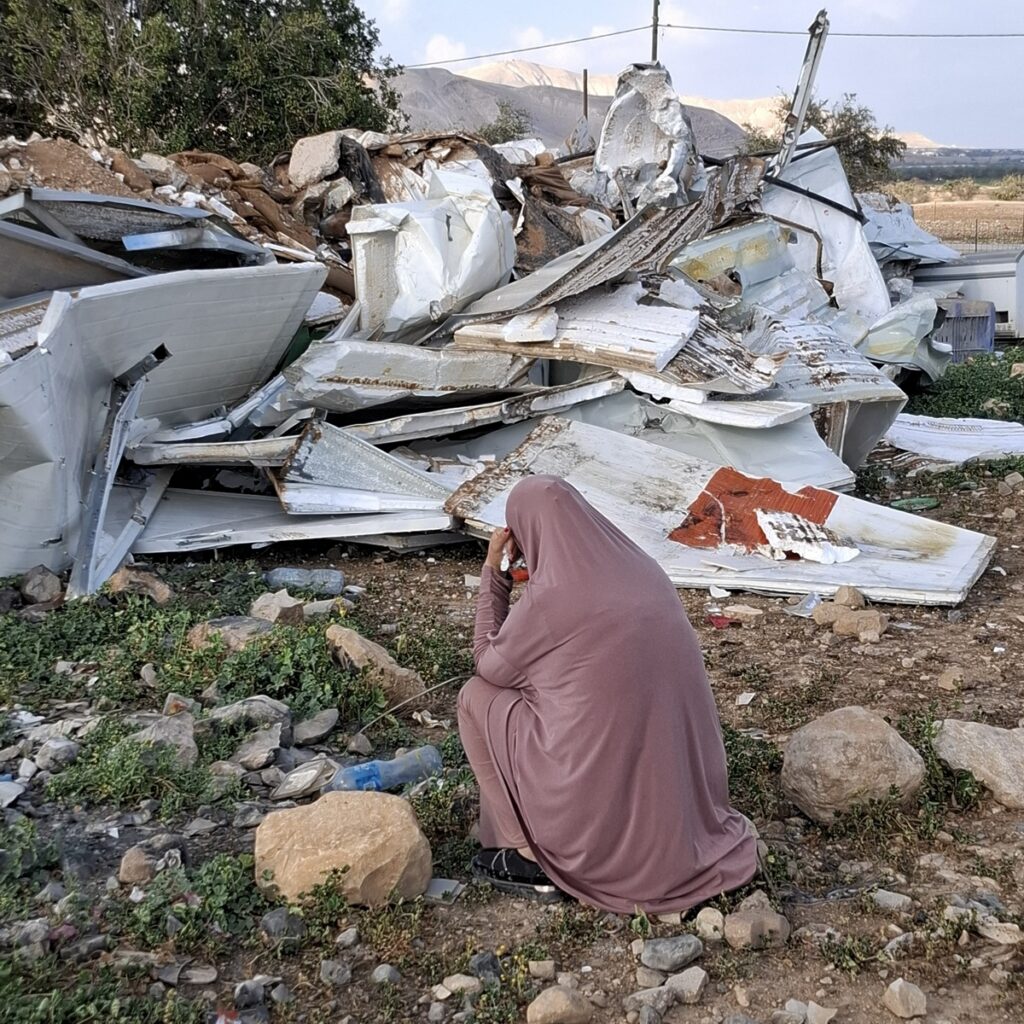
. Shoshi AnbarMay-18-2025Huwara: The old houses in Area C
-
Jerusalem
See all reports for this place-
The places in East Jerusalem which are visited routinely by MachsomWatch women are Silwan and Sheikh Jarrah. During the month of Ramadan, also the Old City and its environs are monitored.
-