
Huwwara PM
HUWWARA, Monday 9 August 2004 PMObservers: Riva C., Anat S., Sivan T., Hagar K. (reporting) colour=red>At Huwwara North traffic moved well, apart from very long delays imposed to punish “disobedient” taxi drivers (i.e. they’d parked in the wrong place). At the southern checkpoint, it was a very difficult watch, mainly because of the anger of the commander, A., at the article in Yediot Aharonot [a mass circulation evening paper which had just run an article highly critical of the behaviour of some soldiers at the checkpoints]. Huwwara NorthApart from treatment of the detainees, the line moved very fast and people went through almost immediately. The x-ray caravan, which had been brought back, and the presence of A., from the District Co-ordinating Office (DCO) [the army section that handles civilian matters; it usually has representatives at the checkpoints, ostensibly to alleviate the lot of the Palestinians] seemed to have had an effect. Worthy of note was the change in the way soldiers held and aimed their weapons—rifles were no longer aimed at people, not even at the detainees. Some of the soldiers simply had their weapons hanging off one shoulder by the strap, others , while holding the weapons at the ready, nevertheless aimed them away from the crowd.Most of the time there were some 15 detainees [detainees are, typically, men aged from 16 to 30 who have no passage permits. The checkpoint soldiers phone their ID details to the General Security Services (GSS) which cross-checks them against a central list of security suspects and then phones the results back to the checkpoint. This cumbersome procedure, which often takes a long time, can take even longer if the checkpoint soldiers wait to accumulate a batch of ID cards before they contact the GSS, or if they wait to get back a batch from the GSS rather than releasing individuals as clearance comes through for each. During this time, the detainees are virtually prisoners at the checkpoints since the soldiers retain their ID cards until clearance arrives]. Five of the dteainees were taxi drivers, two – over the age of 50, detained as “punishment” (we were told so explicitly by A. and by D. the checkpoint commander) for parking in a spot which interfered with checkpoint traffic . We contacted the army’s “humanitarian” hotline, because one of the reports had stated that detention as punishment was forbidden. They took the details and promised to check. After three minutes, the head (as she identified herself) called back and confirmed that punishment detention was forbidden; she said she would check the details because “she couldn’t believe that was the reason for the detention.” She promised to call back and, after a series of calls on my part, she said she was waiting for an answer from the DCO. I offered to let her talk to the DCO representative at the checkpoint, but she refused, saying that she would deal with their release. They were not released, needless to say. Two were let go at 16:00 and two others, who said they’d been there five hours, were still there when we left. Later the “humanitarian” hotline called me back and said that in fact it was permissible to detain for up to four hours.As for the other detainees, at 15:45 we saw the commander checking their papers with the GSS. A few were released at once, most were still there when we left. Otherwise, all problems were dealt with: a 17-year-old, who said he was younger in order to go through with his mother, was detained after his ID details were checked, but when we intervened he was let through; a boy who had no permit to do so wanted to visit his sick grandfather in Ramallah: he was let through in the end.Huwwara SouthThe soldiers were ordered by their commander not to talk to us (they began to obey strictly only after two settler children arrived to “guard” them). A. himself (the commander) refused to talk or listen because of the Yediot Aharonot article for which he said we were responsible. However, he was efficient and did his work without making problems or inflicting any particular harassment; but, when any of his soldiers were out of line or there were humanitarian problems we were unable to help.Three elderly doctors, with all the required documents, living in Nablus, were detained by a soldier. We finally contacted R. [of the DCO] who promised to help. They were eventually released when GSS approval arrived and, at the same time, a DCO jeep came to solve the problem. A young man whose permit had been partially erased because it has been folded so often was detained by the soldier who didn’t like the look of the document Because of the breakdown in communications we were again unable to help. In other cases, where he became aware of the problems, A. placated his men and dealt with matters .At oAt one time there were 25 detainees, the first released an hour-and-a-half after we arrived._____________
Huwwara
See all reports for this place-
The Huwwara checkpoint is an internal checkpoint south of the city of Nablus, at the intersection of Roads 60 and 5077 (between the settlements of Bracha and Itamar). This checkpoint was one of the four permanent checkpoints that closed on Nablus (Beit Furik and Awarta checkpoints to the east and the Beit Iba checkpoint to the west). It was a pedestrian-only barrier. As MachsomWatch volunteers, we watched therre since 2001 two shifts a day - morning and noon, the thousands of Palestinians leaving Nablus and waiting for hours in queues to reach anywhere else in the West Bank, from the other side of the checkpoint the destination could only be reached by public transport. In early June 2009, as part of the easing of Palestinian traffic in the West Bank, the checkpoint was opened to vehicular traffic. The passage was free, with occasional military presence in the guard tower. Also, there were vehicle inspections from time to time. Since the massacre on 7.10.2023, the checkpoint has been closed to Palestinians.
On February 26, 2023, about 400 settlers attacked the town's residents for 5 hours and set fire to property, such as houses and cars. Disturbances occurred in response to a shooting of two Jewish residents of Har Bracha by a Palestinian Terrorist. The soldiers stationed in the town did not prevent the arson and rescued Palestinian families from their homes only after they were set on fire. No one was punished and Finance Minister Smotrich stated that "the State of Israel should wipe out Hawara." Left and center organizations organized solidarity demonstrations and support actions for the residents of Hawara.Hawara continued to be in the headlines in all the months that followed: more pogroms by the settlers, attacks by Palestinians and a massive presence of the army in the town. It amounted to a de facto curfew of commerce and life in the center of the city. On October 5, 2023, MK Zvi established a Sukkah in the center of Hawara and hundreds of settlers backed the army blocked the main road and held prayers in the heart of the town all night and the next day. On Saturday, October 7, 23 The "Swords of Iron" war began with an attack by Hamas on settlements surrounding Gaza in the face of a poor presence of the IDF. Much criticism has been made of the withdrawal of military forces from the area surrounding Gaza and their placement in the West Bank, and in the Hawara and Samaria region in particular, as a shield for the settlers who were taking over and rioting.
On November 12, 2023, the first section of the Hawara bypass road intended for Israeli traffic only was opened. In this way, the settlers can bypass the road that goes through the center of Hawara, which is the main artery for traffic from the Nablus area to Ramallah and the south of the West Bank. For the construction of the road, the Civil Administration expropriated 406 dunams of private land belonging to Palestinians from the nearby villages. The settlers are not satisfied with this at the moment, and demand to also travel through Hawara itself in order to demonstrate presence and control.(updated November 2023)
.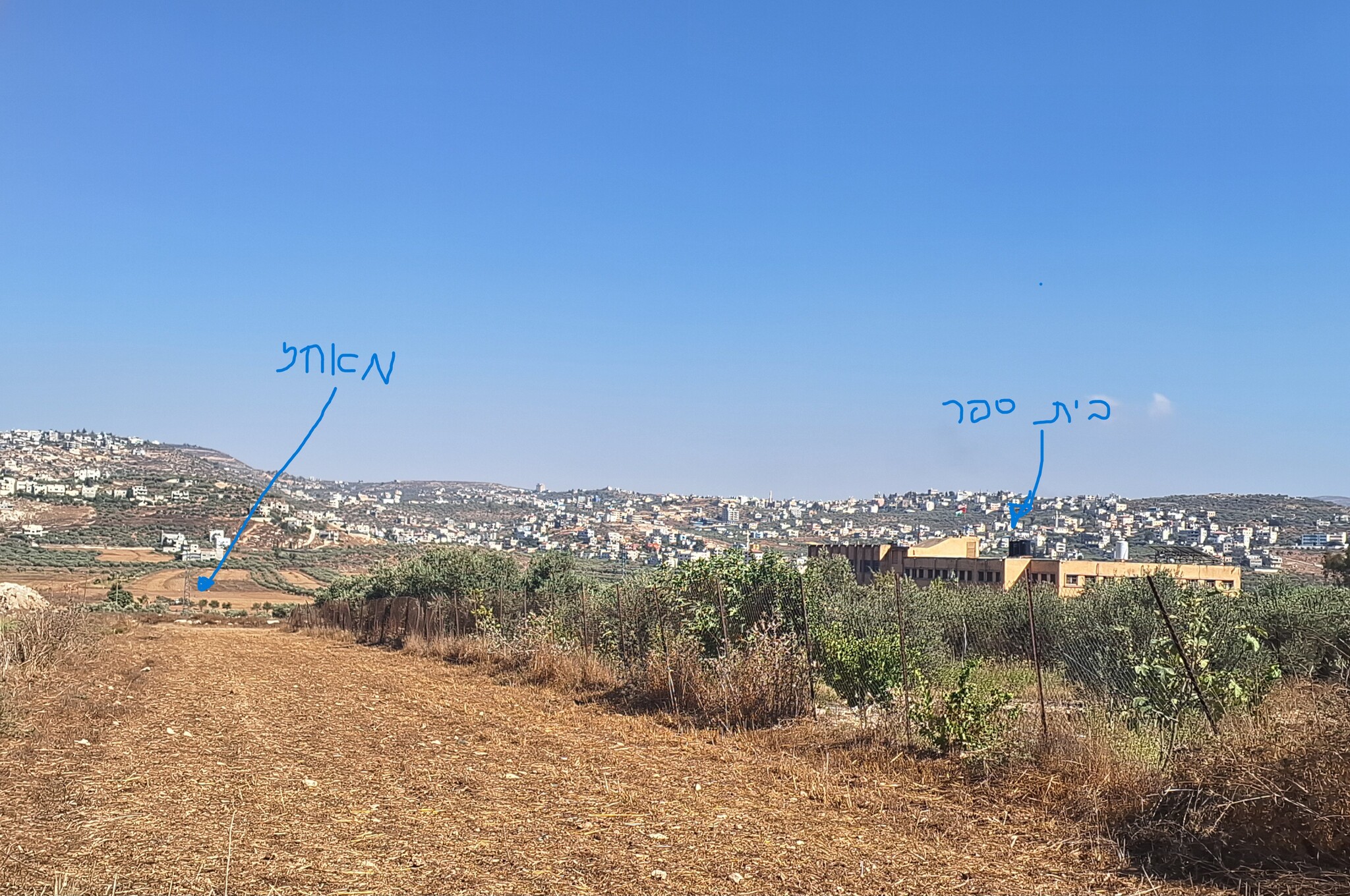 Ronit Dahan-RamatiAug-24-2026Huwara: The school on the outskirts of town and an outpost hidden among the trees
-
