
Jit Junction (vicinity of) Deir Sharaf, Beit Iba
Jit Junction (vicinity of) Deir Sharaf, Beit Iba, Sunday, 13.08.06 PMObservers: Alex W, Susan L (reporting) Summary On an evening when we’ve just heard that David Grossman’s son has been killed in Lebanon, it’s probably not fair or seemly to talk about Occupation as a way of Life. (taking a cue from Grossman’s book, “Death as a Way of Life”). But Grossman has frequently shown the courage, strength and honesty to confront the brutal truth of the Israeli reality. What we saw once again in the Occupied West Bank today was the ugly face of a reality that cares little about the army’s self-generated mistakes, but cares a lot about aggrandizement and the exponential growth of ever larger checkpoints, nothing about the pain caused in the way of life known as occupation. 12:30 — on the way from Qalqiliya We can hardly believe our eyes. The huge concrete blocks have been removed (evidently last Sunday-Monday) from the road leading into Azzun. We stop by a group of men, sitting talking at the side of the road. They aren’t all that happy with the open road, however, since it’s not brought an increase of work. Not now, is what the men tell us they hear from their customers, the settlers from nearby Qarne and Maale Shomron. 12:45 Jit Junction Little action here. Three yellow taxis are met by three soldiers at the checkpoint coming from the direction of Huwwara. 12:50 Rte 57: Gas pump (outside Qedumim’s industrial area) A lone Hummer has stopped at least 16 vehicles coming from the Beit Iba direction. One soldier sings cheerfully to music coming out of the vehicle as he stands in the open lookout tower. Two soldiers are below, chewing gum, beckoning vehicles to come forward to be checked. They tell us proudly that this checkpoint is not instead of Jit, but in addition to Jit. Otherwise they make it plain they have no intention of talking to us and give us a cold shoulder, answering no questions about the six young men, all below the age of 27, detained, sitting in the scant shade afforded by the huge petrol laden steel drum. In their midst, only one remembers his ID number, two sets of brothers, one doctor, two electronics engineers from a hi-tech firm in Nablus, riding in the company car with three other young men, the same age, but not from within the city itself, were allowed to proceed. All of them on their way to Ramallah or Qalqiliya. All have passed the Beit Iba checkpoint. One says he’s been there since 6:00 in the morning, the others since 10:00. The soldiers, they tell us, have told them that they will be brought back to Nablus, maybe after 17:00. Our phone calls, both within the army and to the Moked do little good. Much, much later, when we’re at Deir Sharaf, we hear from the army’s Humanitarian Center that it was a mistake — a mistake that the young men were allowed to get through the Beit Iba checkpoint. A mistake: yes, one of those mistakes about which we’ve heard all too much from the army in the past month. Not that the young men are being checked. Nothing. But we do learn that a checkpoint, such as this, is there to cover up for the army’s mistakes! How interesting! Meaning that security as enforced at a permanent checkpoint, such as Beit Iba, is not quite so secure after all? 13:00 — a military vehicle arrives, bearing lunch for the soldiers, while we dispense water and painkillers on demand to the young men who must be suffering from heat stroke by now. The soldiers eat, one puts his finger to his lips to tell the other soldier not to answer our questions, and the standoff, and the eating, continue. A woman strides from one car in the long line of patiently waiting vehicles, papers in hand, tells us cheerfully that she’s a physician from Jerusalem, that her grandchild is becoming dehydrated in the waiting car, that they’ve already spent one and a half hours going through the checkpoint in Beit Iba: she’s ready to confront the soldiers here. She does so. She makes her way back to the car, but when the car tries to pass the soldiers, they pull it over once again and hold it for another check. 13:50 — another young man joins the detainees. Welcome to our place, one of the veteran detainees tells him. What’s going on? We’re used to the rules for going in and out of places changing from day to day, based on whatever new profile the army dreams up, but hour to hour? That’s a new one for the occupation! We leave having called in the names to Naomi of MW. Somebody behind the scenes must try to deal with this horrendous situation. Deir Sharaf 14:00 — WARNING, BUT THERE IS NO WARNING AHEAD FOR US. We can hardly believe our eyes. A brand new, unmanned, swing arm barricade, the arm, thankfully open, plus surrounding concrete boulders placed across the roadway allowing just one car, or a truck with great difficulty, to squeeze through. Where? Exactly at the turn off for the Shavei Shomron settlement, exactly where the well paved road becomes bad and bumpy, not too far from the junction of Rtes 57 and 60. We stop, but we are not alone. Beside us, the DCO representative’s jeep. He, too, is amazed. I’m in shock, he tells us. He’s going to phone to find out whose idea this was. D, his driver in the passenger seat beside him, is driving the jeep, and tells us if we go on ahead to Beit Iba, he’ll have an answer for us as to why. (He does: the brigade commander, on the Shabak’s request. Editorial note, what about the request of the settlers above? After all, they’ve already got a new wall, based on destroyed olive groves). D. expresses his concern that at night, the barrier will not be seen. As for the detainees at the rolling checkpoint, he knows: there’s been an alert, “I can do nothing.” 14:30 Beit Iba There are more than 30 vehicles, the majority huge semi trailers, standing in a line which goes beyond the Huwwash Bros. carpentry workshop. At the head of the line, a truck driver says he’s been waiting for more than two and a half hours, others say even longer. 14:40 — at the pedestrian checking area, complete and utter chaos. The humanitarian line, open to the unrelenting sun, is full of people, mainly women and small children. The sun beats down mercilessly, as does this particular shift of soldiers who have helped to create this utter hell. The commander whose name, you could have guessed, is Commander of this Checkpoint, nothing else, and “you have to leave since you annoy me, and you cannot stand here” is more intent on making a confrontation with us than dealing with the mass of humanity behind him. One of the soldiers, a sergeant, takes his gun, walks up to the turnstiles, not working well, full of men, and hits it hard on the metal, shouting, of course, as he does so. There is noise, pushing, shouting, chaos, 12 men in the detention compound. With ten minutes, D., the same DCO representative arrives, and on hearing our complaints tells us that he cannot deal with this commander, that a new shift is arriving (as indeed we now see), and that things will improve. As some of the regulars say of a good shift, “they are sweethearts.” 14:50 — IDs are returned to the detainees, the compound is empty. 15:05 — at the women’s line, the chaos that was is soon cleared, and since there are no more women for the moment, men try to pass in that line too. No go: they are sent to the back of the men’s turnstile line! Only women! the soldiers call, but some of the men tryto negotiate their way through. Again, to no avail. This is not a suk. 15:10 — the new commander, a sergeant, also makes problems. We are not to talk to a new detainee, and must move back: he tells the DCO representative: You are not allowed to talk to them (us) A young father is led into the compound, his family, with numerous small children, as well as numerous enormous fully laden bags, stands outside. D., the DCO representative, who is busy moving from place to place, keeping things moving and quietly telling soldiers what to do, comes over, grins to us. Nobody checked his ID and lets him go, and the entire family small, frightened children goes on its way, thanking us as they go. As we leave, there are still problems, the commander has again told us not to stand where we do, there is again a detainee, who needshelp, and D. tells us, Give me time. 15:15 — the chaos at the vehicle checking area continues, in both directions. The lines are endless as is the variety of transportation: huge trucks, semi trailers, ambulances, donkey carts, private cars and taxis picking up or depositing passengers, and there is no room to back up when a vehicle comes from the Nablus direction. There is but one narrow pathway leading to the vehicle checking area from the taxi/kiosk area, but surely a way can be found for the army to widen the roadway by simply removing the concrete barriers on the quarry side. As we leave, a huge semi trailer has to make way and back up towards the checkpoint again, an ambulance has to back up for an army jeep, and, finally, there is a military transporter, whose back doors are open. We see someone waving, it is the young men from the rolling checkpoint at Qedumim. They have been brought back to Nablus a couple of hours before the promised time!
Beit Iba
See all reports for this place-
A perimeter checkpoint west of the city of Nablus. Operated from 2001 to 2009 as one of the four permanent checkpoints closing on Nablus: Beit Furik and Awarta to the east and Hawara to the south. A pedestrian-only checkpoint, where MachsomWatch volunteers were present daily for several hours in the morning and afternoon to document the thousands of Palestinians waiting for hours in long queues with no shelter in the heat or rain, to leave the district city for anywhere else in the West Bank. From March 2009, as part of the easing of the Palestinian movement in the West Bank, it was abolished, without a trace, and without any adverse change in the security situation.
 Jun-4-2014Beit-Iba checkpoint 22.04.04
-
Huwwara
See all reports for this place-
The Huwwara checkpoint is an internal checkpoint south of the city of Nablus, at the intersection of Roads 60 and 5077 (between the settlements of Bracha and Itamar). This checkpoint was one of the four permanent checkpoints that closed on Nablus (Beit Furik and Awarta checkpoints to the east and the Beit Iba checkpoint to the west). It was a pedestrian-only barrier. As MachsomWatch volunteers, we watched therre since 2001 two shifts a day - morning and noon, the thousands of Palestinians leaving Nablus and waiting for hours in queues to reach anywhere else in the West Bank, from the other side of the checkpoint the destination could only be reached by public transport. In early June 2009, as part of the easing of Palestinian traffic in the West Bank, the checkpoint was opened to vehicular traffic. The passage was free, with occasional military presence in the guard tower. Also, there were vehicle inspections from time to time. Since the massacre on 7.10.2023, the checkpoint has been closed to Palestinians.
On February 26, 2023, about 400 settlers attacked the town's residents for 5 hours and set fire to property, such as houses and cars. Disturbances occurred in response to a shooting of two Jewish residents of Har Bracha by a Palestinian Terrorist. The soldiers stationed in the town did not prevent the arson and rescued Palestinian families from their homes only after they were set on fire. No one was punished and Finance Minister Smotrich stated that "the State of Israel should wipe out Hawara." Left and center organizations organized solidarity demonstrations and support actions for the residents of Hawara.Hawara continued to be in the headlines in all the months that followed: more pogroms by the settlers, attacks by Palestinians and a massive presence of the army in the town. It amounted to a de facto curfew of commerce and life in the center of the city. On October 5, 2023, MK Zvi established a Sukkah in the center of Hawara and hundreds of settlers backed the army blocked the main road and held prayers in the heart of the town all night and the next day. On Saturday, October 7, 23 The "Swords of Iron" war began with an attack by Hamas on settlements surrounding Gaza in the face of a poor presence of the IDF. Much criticism has been made of the withdrawal of military forces from the area surrounding Gaza and their placement in the West Bank, and in the Hawara and Samaria region in particular, as a shield for the settlers who were taking over and rioting.
On November 12, 2023, the first section of the Hawara bypass road intended for Israeli traffic only was opened. In this way, the settlers can bypass the road that goes through the center of Hawara, which is the main artery for traffic from the Nablus area to Ramallah and the south of the West Bank. For the construction of the road, the Civil Administration expropriated 406 dunams of private land belonging to Palestinians from the nearby villages. The settlers are not satisfied with this at the moment, and demand to also travel through Hawara itself in order to demonstrate presence and control.(updated November 2023)
.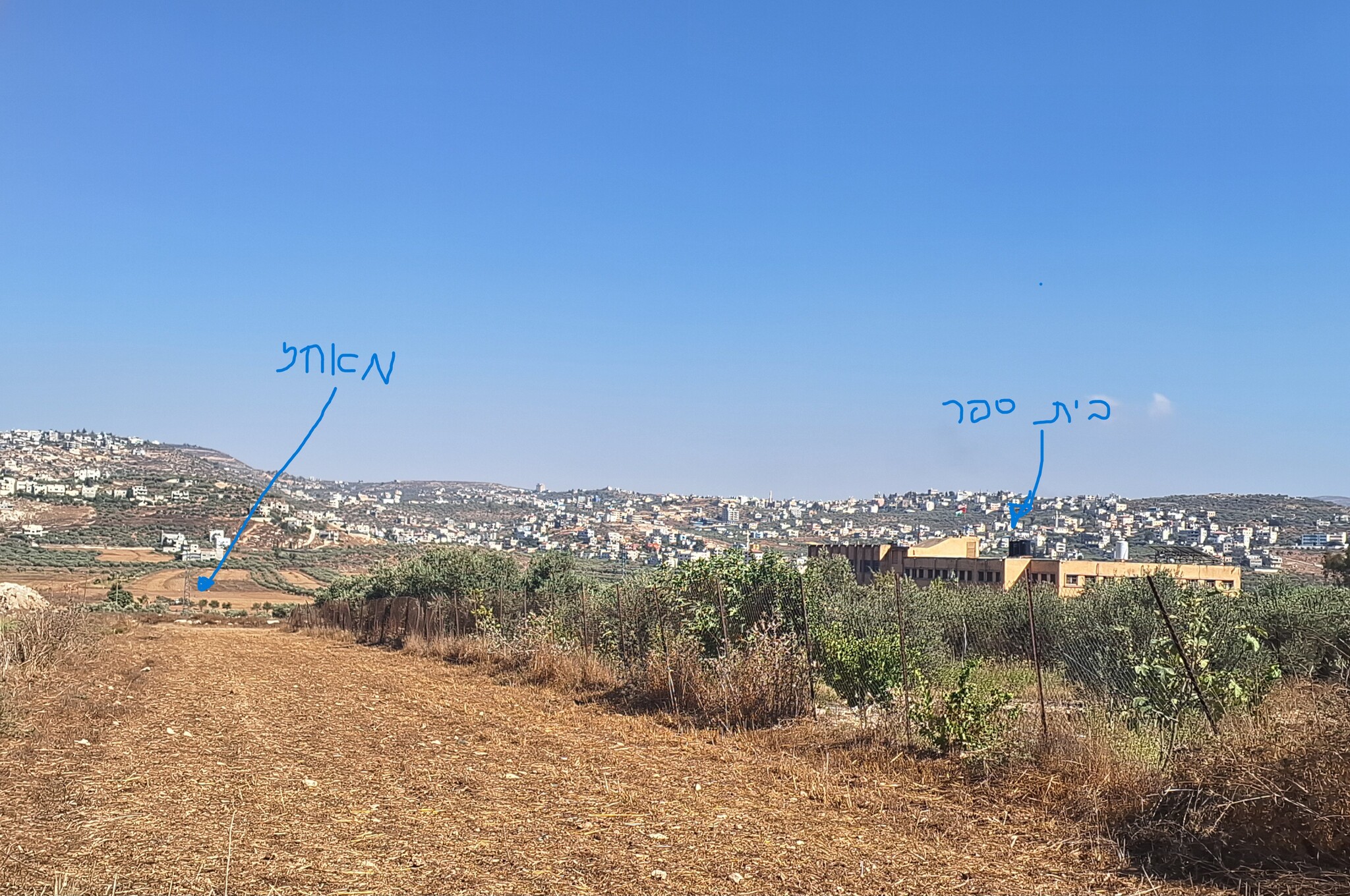 Ronit Dahan-RamatiAug-24-2026Huwara: The school on the outskirts of town and an outpost hidden among the trees
-
Jit Junction
See all reports for this place-
The checkpoint is located on Route 60 near at the junction with Route 55, near the village of Jit. There was a checkpoint for vehicles passing between the north and south of the West Bank, which was abolished towards 2010. Since then, surprise checkpoints have been set up there from time to time with a police or Border Police vehicle, and vehicles and their passengers are inspected.
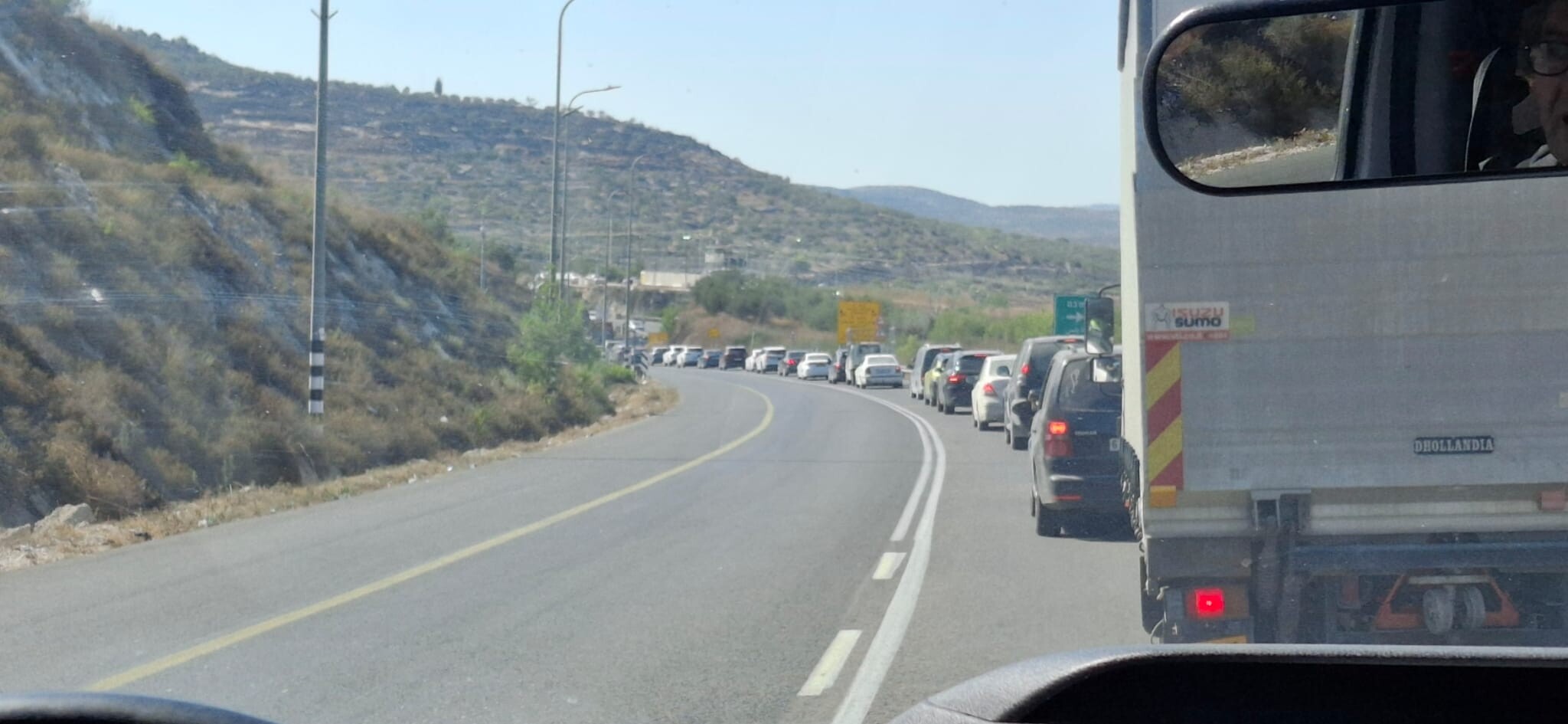 Anat PolakJul-17-2025Yitzhar Road, Jit Junction: traffic jam
-
