
Jordan Valley: Quiet accompaniment on a winter day in Samara

After breakfast with F. and his father, we climbed from the wadi dwelling of the shepherd community to the north and grazed while moving northward and crossing 4 large ravine. The two other flocks of the community grazed nearby. The day began warm but got cloudy eventually until it drizzled, which did not disturb the grazing.
When we were close to the upper Umm Zuka road (old road no. 5788 that connects the Allon Road and road no. 90), F. was uneasy and said ‘we’ll move the flock away from the road before Uri, of the nearby settler-colonist outpost, brings the army on us…”
The Umm Zuka road begins at its junction with Allon Road, then climbs eastward to the army base, where it winds to the north and at some point descends north-eastward until it connects with road 90. Uri Cohen’s outpost is located on a hill east of the road in its southern part. At a high point on the western side of the road, an outpost was erected, named after Israeli combatant Joseph Gino. The army base, the outpost and the winding road create a kind of compound, which Uri Cohen has taken over and controls. The Palestinian shepherds are afraid to enter it although the ground is owned by their relative, and that is where they used to graze their flocks for years. In the past they loved close to the place where the outpost is now situated, but had to leave because a nature reserve was declared there. The nature reserve excuse does not apply to the new settler-colonist… He owns a cattle flock that affects the environment much more than the sheep and goats do. When one enters this compound, one finds seating corners, a plaque commemorating Gino, a campfire site, and naturally – trees irrigated with the water which is forbidden to the Palestinian shepherds. The area is not fenced in, but the Palestinian flocks do not enter, whereas the settler-colonist’s do. Yes. I know, because I look at the ground and at all kinds of dung.
Around 11:30 a.m. the sheep that birthed lately began to pull us southward and home, because they wanted to suckle their young. The shepherds tried to stall the flock a bit, but after some minutes we moved back quickly. We are still in the quieter season: births have begun but there is not much milk yet (the animals are only milked for domestic use) and grazing times are short. It is a time of getting prepared for winter in the communities, and thus shepherd accompaniment includes help of different types, such as preparing the encampments and sheep pens for the rainy season.
Jordan Valley
See all reports for this place-
Jordan Valley The Jordan Valley is the eastern strip of the West Bank. Its area consists of almost a third of the West Bank area. About 10,000 settlers live there, about 65,000 Palestinian residents in the villages and towns. In addition, about 15,000 are scattered in small shepherd communities. These communities are living in severe distress because of two types of harassment: the military declaring some of their living areas, as fire zones, evicting them for long hours from their residence to the scorching heat of the summer and the bitter cold of the winter. The other type is abuse by rioters who cling to the grazing areas of the shepherd communities, and the declared fire areas (without being deported). The many groundwaters in the Jordan Valley belong to Mekorot and are not available to Palestinians living in the Jordan Valley. The Palestinians bring water to their needs in high-cost followers.
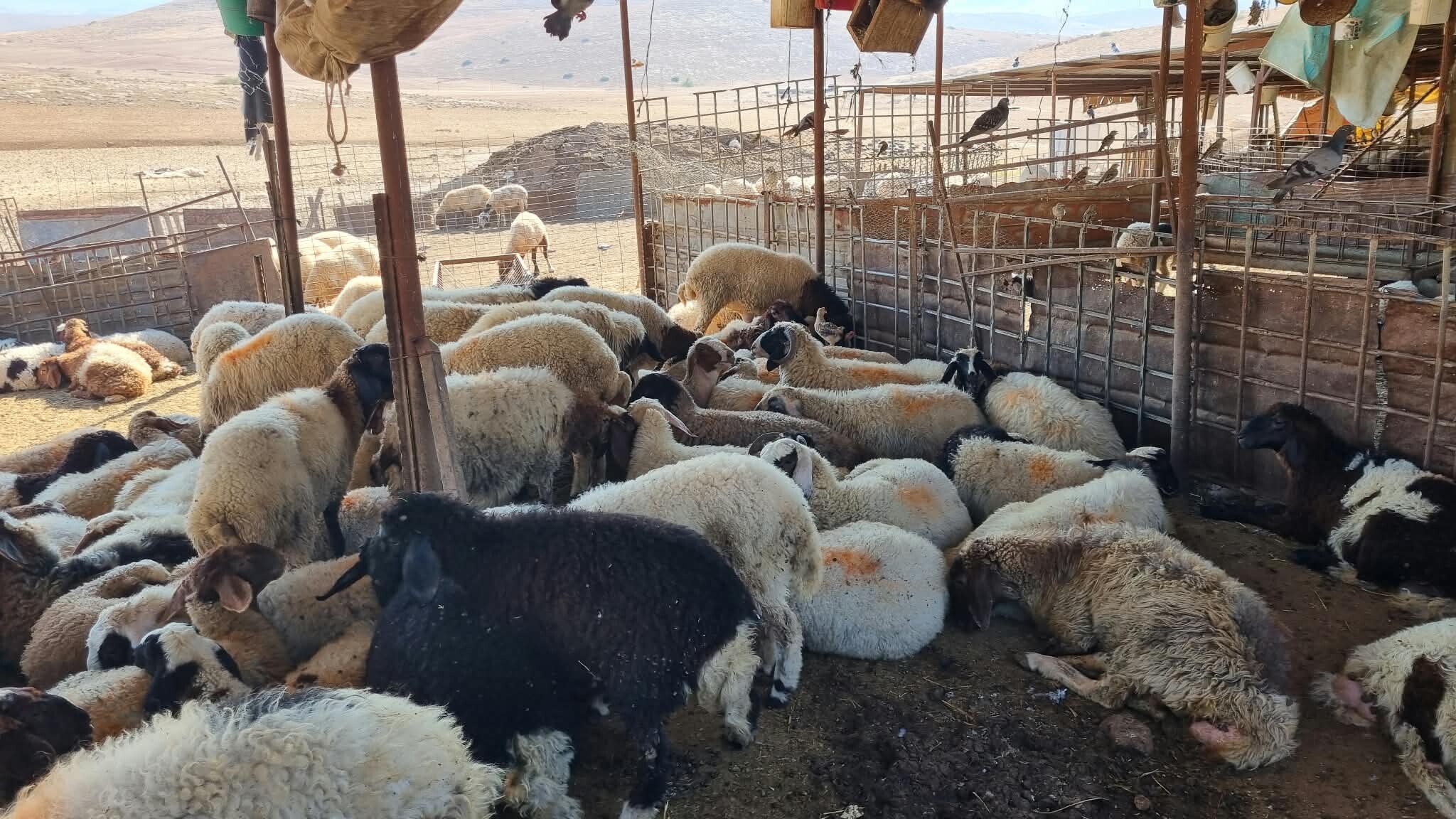 Bosmat HetzroniSep-10-2026Samra. Sheep resting at noon
-
