
Jordan Valley: Visit to shepherd communities and distribution of scholarships and clothing.
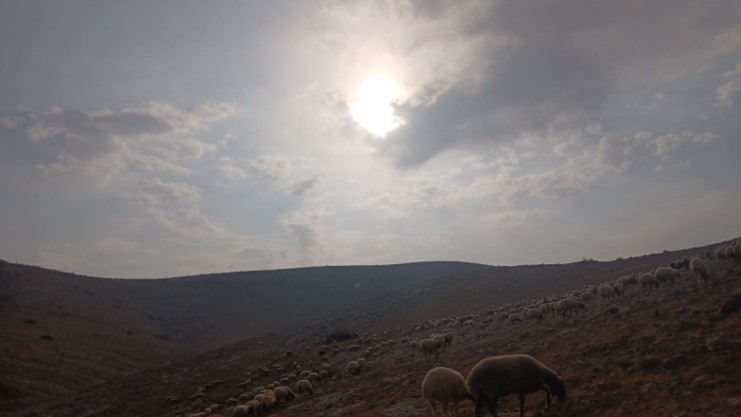

Protective presence shift in al-Farsiya, distribution of “scholarships” for students from the Valley, family visits, and distribution of clothing, shoes, blankets, and whatever else the car contained, in several communities.
The day began with unloading supplies in Humsa, west of the Allon Road — a community that, to my knowledge, doesn’t usually receive support from us. I stopped by the roadside; two young men arrived, loaded the goods, asked for a piece of cake they saw in the car, and went off happy.
We then stopped at Ein al-Hilweh to bring shoes requested by a young woman living there. Together we went down to the spring to water the cows — something they do every morning and afternoon, with accompaniment when requested. The spring is sometimes used by settlers. It’s very close to them, and the shepherds need accompaniment to reach it safely for fear of settlers. They watch the spring from their homes and go only when it’s clear.
In casual conversation, the father of the family explained why Palestinians or Muslims have many children. F. is very proud of his hardworking wife, who cleans, cooks, and keeps their place spotless — truly so. She even cleans outside the house as if it were part of the interior. Everything is spotless. He praises her constantly. This time he explained that it’s forbidden to take a second wife while the first is pregnant — so, he said, they end up having many children. We laughed, and I said that’s why we don’t have many children. I’m not sure whether to write that here — sometimes things are said in humor, sometimes in earnest.
We unloaded goods there, and also for his brother’s family on the other side. I met H., whom I hadn’t seen in a long time, and we enjoyed recalling old memories. He’s a shepherd who used to spend months in the fields with his cows. Now there is no grazing land — the settlers don’t allow it — so he stays home, and the cows have no grass. No land, no pasture.
The five families near the spring (whom I mentioned in the previous report), in Ein al-Hilweh, received a donation today from an international organization. It came as assistance following the army’s demolition at one of their homes about two weeks ago (see the report from two weeks ago). The donation consisted of cattle feed — barley and fodder, two portions of each — a truly important form of help.
For K., in the destroyed area, two new tents have been set up. For now, they have not been demolished.
We returned to Samra to distribute the scholarships. We spoke with the happy students. Muhammad said his father can’t afford to pay — in fact, they all say that. They place all their hopes on us. The father said he wants a donation of 220,000 shekels — why? Just because. They mostly joked that I’m their mother and father, since their parents can’t pay the tuition. In the end, they pay at least half of it — and struggle terribly.
It’s so hot these days that I think the heat makes people talk more freely. They say whatever is on their hearts — knowing they can, without harm. And it’s important to talk sometimes, to release the tension they live under. There’s only so much one can bear. And besides, laughter is good for the soul. Later, we took two people to Ein Bida to refill a gas canister.
Finally, we reached al-Farsiya, where we also brought some items — mainly toys to play with the sweet children — and had a lovely time. All the kids were home, since school only runs three days a week because of the teachers’ strike. As usual, the strike half-collapsed — half are teaching, half are striking. I wish people here would strike fully too, until the hostages are released and this cursed war ends.
On the way home, we stopped to meet a Palestinian friend in Jama’in. While we waited, a woman with four small children stood by the roadside. With a tearful face, she said she didn’t know where she was — she had visited her husband in the hospital and now wanted to go home. I was skeptical, but I let them all into the car. She said she wanted to go to Huwara and lived in Burin. I called our friend in Burin; as soon as he heard her voice on the phone, he explained she’s a known case — a regular — and told me to take her out of the car and give her 50 shekels for the bus to Burin. And so I did.
If something like that happens to you, remember this story — don’t take families into your car.
The scholarship fundraising is ongoing. Any contribution is welcome.
Location Description
Jordan Valley
See all reports for this place-
Jordan Valley The Jordan Valley is the eastern strip of the West Bank. Its area consists of almost a third of the West Bank area. About 10,000 settlers live there, about 65,000 Palestinian residents in the villages and towns. In addition, about 15,000 are scattered in small shepherd communities. These communities are living in severe distress because of two types of harassment: the military declaring some of their living areas, as fire zones, evicting them for long hours from their residence to the scorching heat of the summer and the bitter cold of the winter. The other type is abuse by rioters who cling to the grazing areas of the shepherd communities, and the declared fire areas (without being deported). The many groundwaters in the Jordan Valley belong to Mekorot and are not available to Palestinians living in the Jordan Valley. The Palestinians bring water to their needs in high-cost followers.
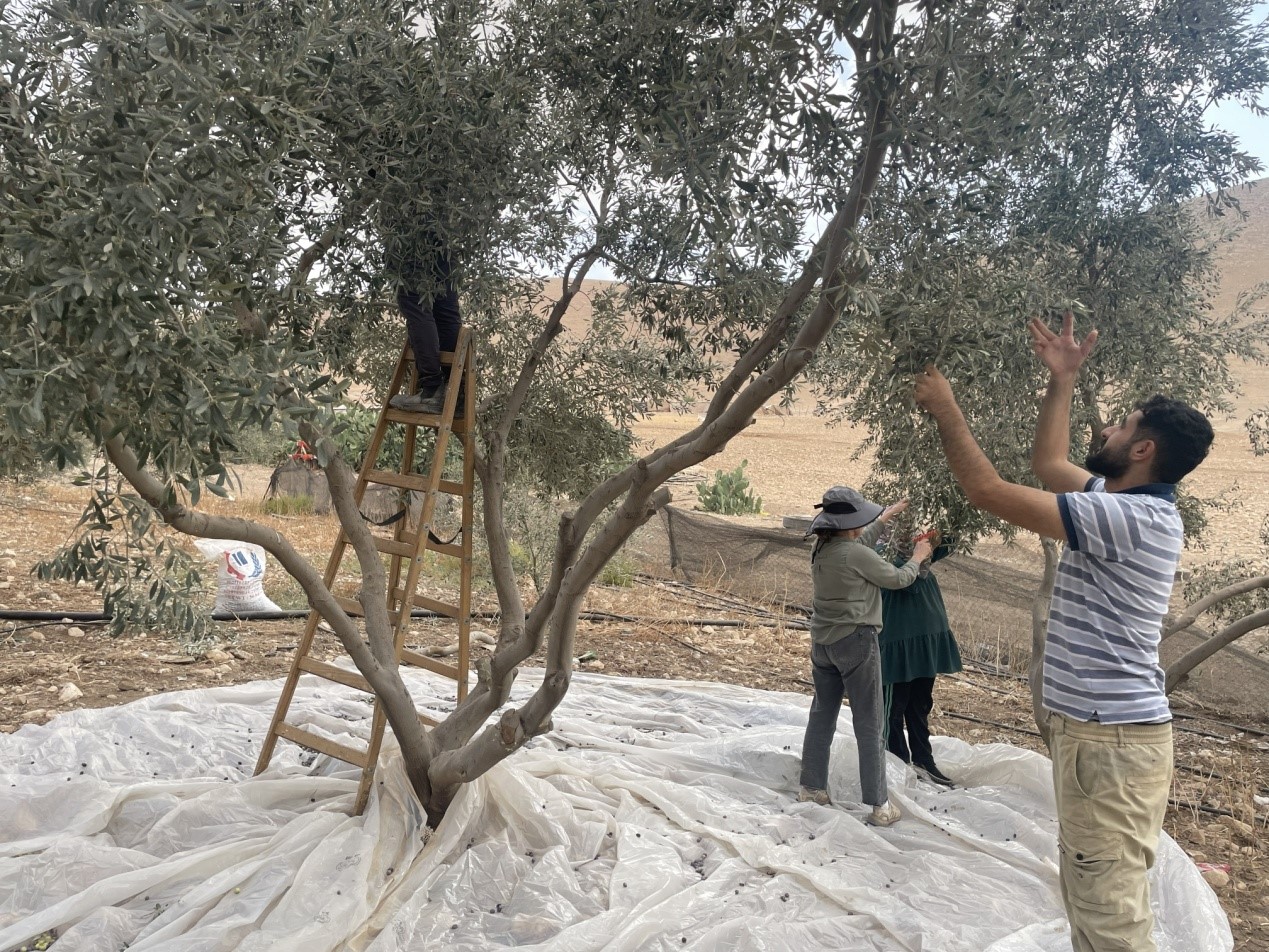 Rachel AfekOct-15-2026Olive Harvest in the Jordan Valley
-
