
Massive felling of olive trees by settlers, atrocities, Highway 5
At the beginning of our drive on Road 5, we heard the siren preceding the alarm siren of 7 missiles being fired, and we were in an open area. We saw the monstrous structure of the Yarqon cemetery and headed there, to its protected area. There was no sign so we entered the first floor of a multi-floor burial site and found a protected space there. We and another 50 persons…
With the all-clear sign, we continued, and by the roadside below Ariel settlement, on the land of Marda village, we saw dozens of cut down olive trees. We entered what had been an olive tree grove and was now just a pile of cutdown trees. The owner told us that along Road 5, hundreds of olive trees had been cut down. He had lost 40 trees that had fed the family. The old family father came on his donkey and the son said he had lost his entire world. The father used to take care of his olive trees every day, in every weather, from morning till night. This was his life and he used to only come home at night. He would have his meals in the grove, among his “children”. The father would not speak. His world had gone down all of a sudden, I have no words to describe it.
Half an hour later we were called to rush on to Samra, as there was no protective presence there right now, and an army pickup truck had just entered the village. We hurried there and found a second lieutenant politely speaking with H. (A.’s wife) and several boys. He came because the aerial photos showed a new tent in the community area. The family showed the officer photos of ownership papers on the phone, all the hundreds of dunams in their possession. The officer asked to see the original document which is in Tubas town. They set another date in the future with the original documents. He also said the structure (tent) erected by the settlers right above Samra houses is illegal but did not detail what the DCO would do about it. Our experience says nothing would be done, until some minister would decide to make it legal. He also said that the Palestinians were permitted to graze all the areas in their possession – unlike claims by the army and settlers.
We drove to see the family father, A., grazing in the areas he owned south of the village.
We continued to Khalat Makhoul, and when we passed by I.’s compound, his son A, a 10-year-old, came running, upset. He said that while grazing alone on the hill south of Makhoul, a group of soldiers arrived. One of the officers approached and asked him, “Where is your father?” Alaa said “I don’t know”. The officer told him to scram. A. refused and the officer hit his back with his rifle butt. A. escaped home. We drove with him to look for the flock and the officer who hits a 10-year-old child. On our way we were notified by the father that he had reached the flock and that the soldiers had disappeared.
We visited R. and A.’s family, were treated to cheeses and thyme to the sounds of torrential rain and a phone siren of missiles (which was not followed by any changes in our hosts’ conduct as they have no protected space anyway). From there we went on to visit B. and his family. Then we were instructed by the daily activity coordinator to meet 2 activists with the activist vehicle and pass it on to Al Hadidiya, where 2 of us would spend the night as a Protective Presence shift, while the 2 others would be present at Humsa which was attacked several weeks ago.
However, the torrential rain had turned the track leading to Humsa and Al-Hadidiya into thick mud, and 100 meters later my car got stuck. I finally managed to turn it back but reaching the exit it got stuck again, and only after half an hour of attempts – including collecting twigs and straw to pad the swamp – did we manage to finally get the car out into the road, all of us covered in mud. We realized that we would not be able to reach Humsa and Al-Hadidiya today.
We went to Al-Farisiya to get the activist vehicle back and drive home. Arriving at Al-Farisiya we saw 2 settlers – including Gil’ad Amosi – trying to steal A.’s donkey and his children trying to prevent him from doing this. We joined them and buffered between the thieves and the donkey as A.’s wife took the animal and hid it.
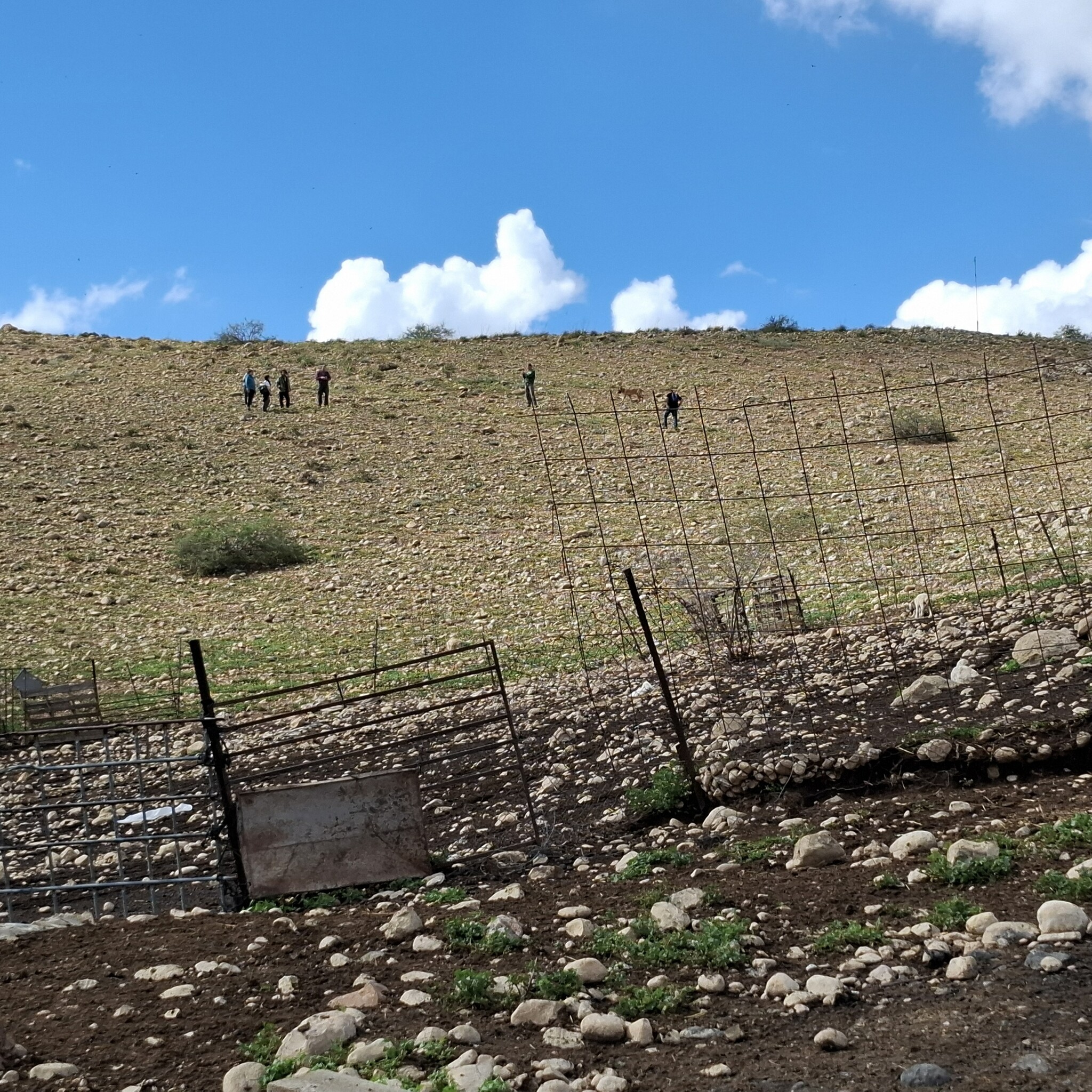
For another half hour together with another 2 activists, we clashed with the settlers on the hill above the village, until they gave up and went back to Rotem.
Not more than 10 minutes passed, and we were called to Al Heima in the northern Palestinian Jordan Valley – settlers had entered the area of the local community.
We decided to split up. The 2 other activists went there and we remained to watch over Al Farisiya. There were no more events, and the two who had gone to Al Heima saw the settlers leave the village, leaving water pipes from Bardala all cut up…
Location Description
Al-Farisiya / 'Ein a-sakut
See all reports for this place-
Al-Farisiya / 'Ein a-sakutA community of shepherds in the Jordan Valley opposite the settlement of "Rotem". Making a living from grazing sheep, the residents are exposed to harassment, abuse and theft from settlers who come to them from outposts and settlements in the area, and their grazing area is shrinking due to settler takeovers, fire zones and declared nature reserves.Machsom Watch companies participate in shepherd escort activities and provide a 24/7 protective presence, and there is continuous and warm contact with the community.
-
Jordan Valley
See all reports for this place-
Jordan Valley The Jordan Valley is the eastern strip of the West Bank. Its area consists of almost a third of the West Bank area. About 10,000 settlers live there, about 65,000 Palestinian residents in the villages and towns. In addition, about 15,000 are scattered in small shepherd communities. These communities are living in severe distress because of two types of harassment: the military declaring some of their living areas, as fire zones, evicting them for long hours from their residence to the scorching heat of the summer and the bitter cold of the winter. The other type is abuse by rioters who cling to the grazing areas of the shepherd communities, and the declared fire areas (without being deported). The many groundwaters in the Jordan Valley belong to Mekorot and are not available to Palestinians living in the Jordan Valley. The Palestinians bring water to their needs in high-cost followers.
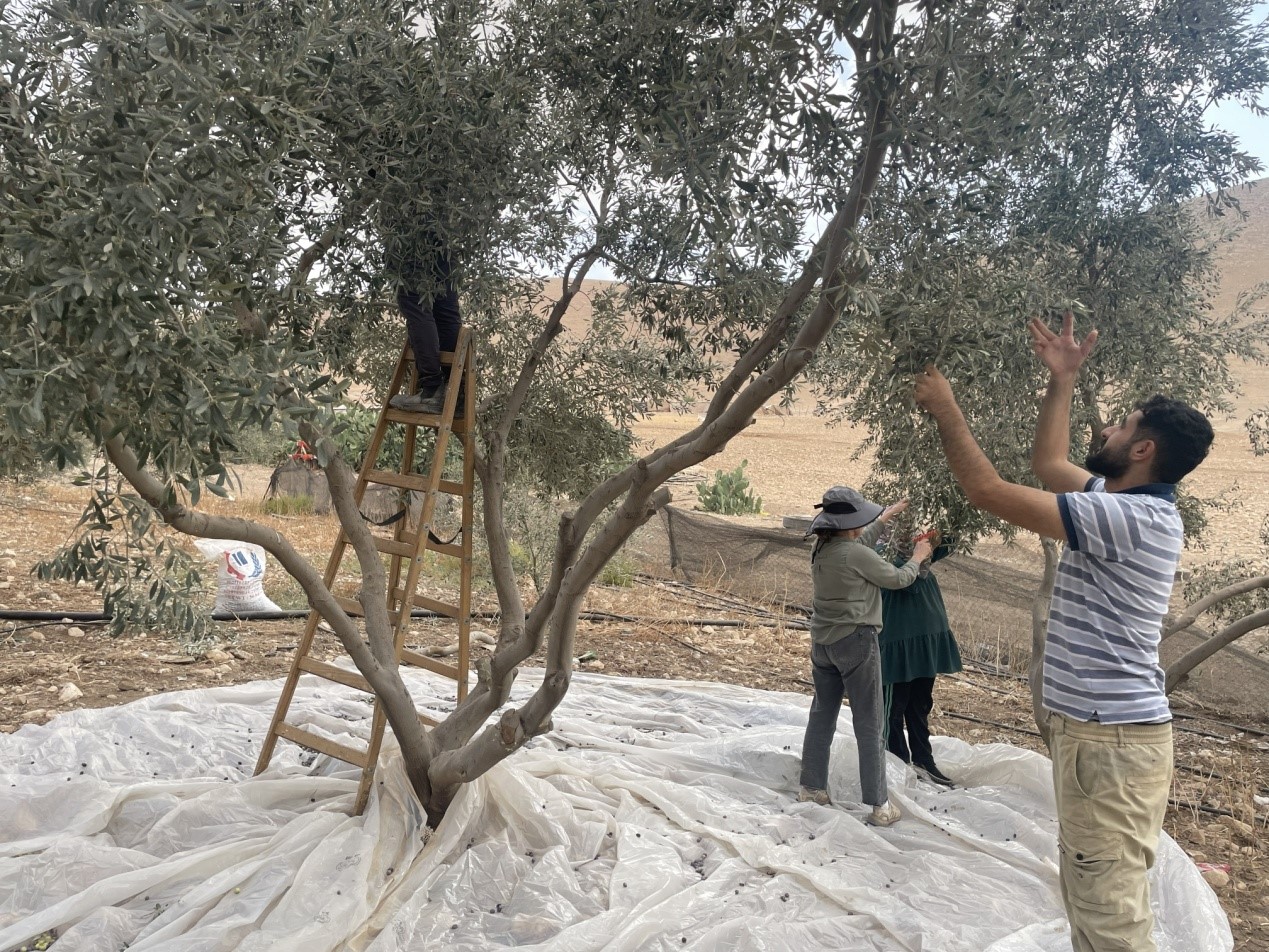 Rachel AfekOct-15-2026Olive Harvest in the Jordan Valley
-
Khalet Makhul
See all reports for this place-
Khalet Makhul
A small settlement of a shepherd community located on the way to the settlement of Hemdat. Two nearby outposts make life miserable for the Palestinians, who make a living from grazing, and the army backs the settlers. As a result, the possible grazing areas are getting smaller.
The local children attend school in the settlement of Ein Al-Beida. Long lines of 3 hours sometimes stretch out at the Hamra and Tayasir checkpoints leading to the town of Tubas, making it difficult to get water, supplies, and sell the cheese, milk, and meat that the residents produce for their living.
Following a deadly attack at the Tayasir checkpoint in February 2025, the checkpoint was closed completely for the time being.
(Updated March 2025)
-
