
Nabi Samauil, Tour
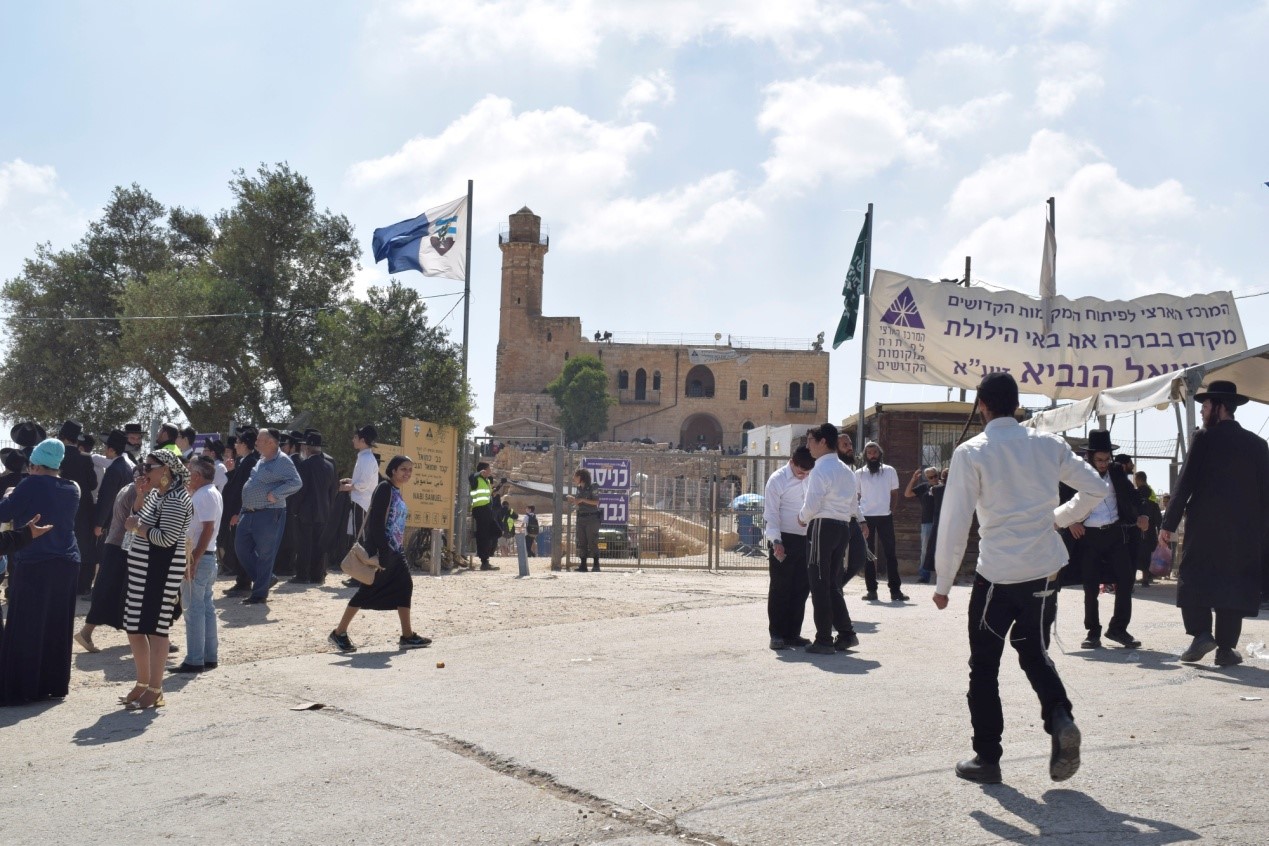
From afar we saw the tower of the large fort located on the range, a most impressive sight against the green landscape. We joined the hundreds of celebrants who waited for transport to the celebration of the Prophet Samuel there. In spite of the crowd, transport to the prayers area was orderly. There were clean washrooms for women and men (the cleaners – Palestinians) as well as water and food free of charge. Out of curiosity we first joined the women’s line that moved into the prayer hall assigned them, but as we arrived we felt we had no business there. We turned back and toured the nature reserve around the site.
The place is a natural beauty spot, much has been invested there. Fruit trees and Jerusalem pine trees add to the pastoral atmosphere. On our way to the spring we were warned to keep our distance for men bathe there in the nude. We felt that as women we were being excluded the way Palesitnians are.
Palestinians are allowed to enter the local mosque to pray but not during the celebrations that take place twice a year.
Archeological digs are conducted in the fort on a permanent basis. It was construct and restored in various periods by Crusaders, Jews and Muslims and every historic period left its mark. A guide who told young religious Jews about the site ignored the role of the Crusaders and Muslims there. Even the official explanatory plaques there are fairer to the truth.
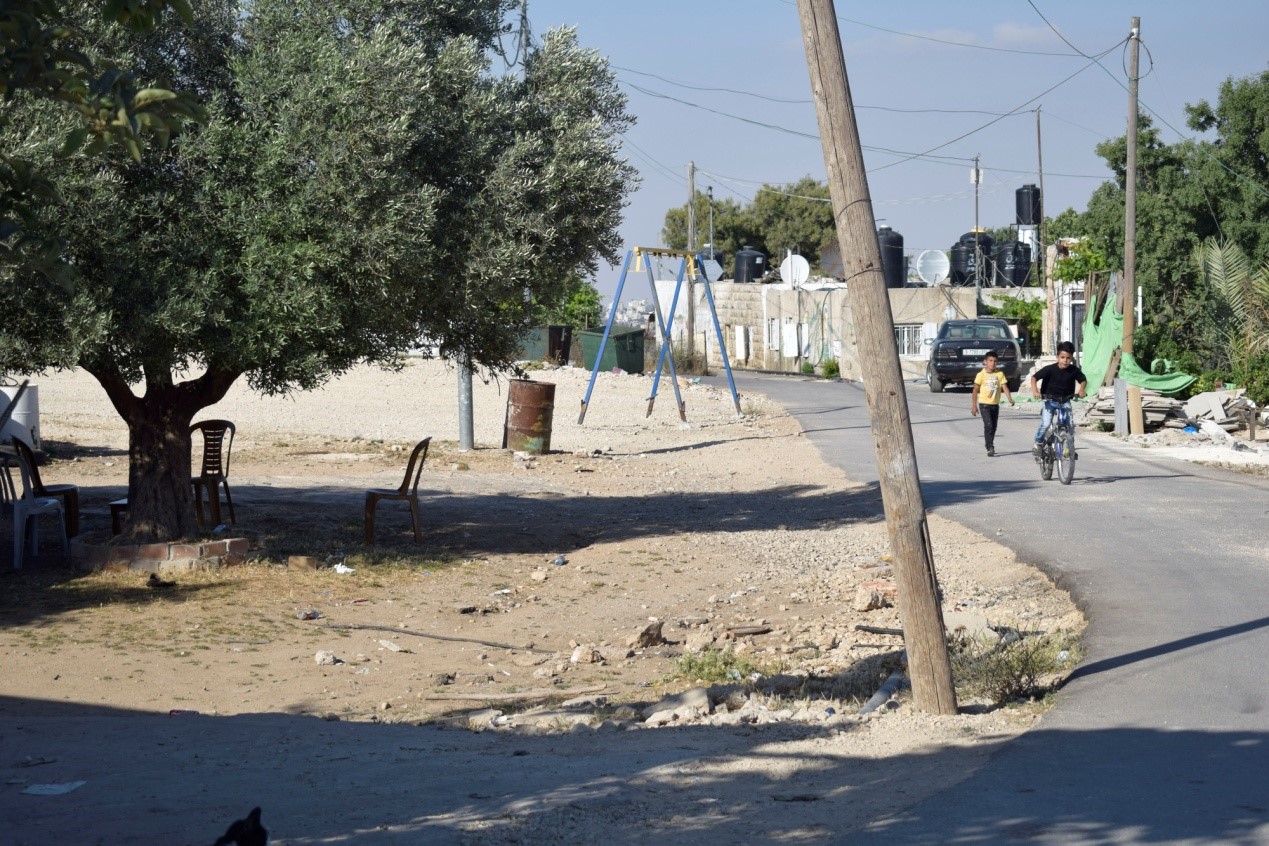
The entrances to the Palestinian village of Nabi Samauil were seriously guarded against harassers and troublemakers. We were told that in previous years there were harassments incidents. We entered after obtaining permission from the “officer” in charge. Sights of neglect and waste and stench hit us. This village, that has seen expulsions and confiscation of most of its lands, is now inhabited by 200 persons, and according to A. who hosted us, any attempt made by the villagers to put up pens for livestock or other structures is immediately blocked by the police.
One of A.’s sons was arrested inside Israel as an illegal alien (not having an entry/work permit); the father and another son underwent a saga of interrogation and detention due to an image of the stabbing of a tiger which the son ‘liked’ on Facebook. At first soldiers arrived at 11 p.m. and asked about the son. A. told them he was in Jericho and would be back the next night at 11 p.m. They searched the house and left (without trashing it). At 3 a.m. they returned. A. Told them the same thing and at 9 a.m. the soldiers came yet again, while A. was at work. The soldiers reached him and demanded he join them until his son came back home. At 11 p.m. the son came and was taken away for interrogation. He was interrogated in the Russian Compound (detention facility in the heart of West Jerusalem) and released in the morning.
Nabi Samwil
See all reports for this place-
Nabi Samwil - a village literally placed in a transparent cage.
This Palestinian village is 800 years old. It is located on top of a hill, its altitude 890 meters above sea level, and overlooks the entire area. According to Jewish, Christian, and Muslim traditions, the Prophet Samuel was buried here. In recent years the mosque has been turned into a popular Jewish prayer site. Jews use the basement for prayer, and Muslims the upper part of the mosque. New signs are placed here, containing verses from the Jewish scriptures and mention of exclusively Israeli historical times. The nearby spring has become a popular site of ritual bathing. On Iyar 28th, every year, a mass-celebration is held in memory of the Prophet Samuel.
Until 1967 this was a well-off village that developed around the mosque, with a population of 1,000 owning thousands of dunams of farmland. In 1967 most of the villagers fled, and only 250 remained. In 1971 Israel expelled them, and until the 1990s completely razed its houses that were sitting on a Crusader and Hellenist archeological stratum, without any kind of compensation for the expelled inhabitants. Parts of the village lands are at present used for the settler-colony of Har Shmuel, another part has been declared a national park. Villagers have tried to restore their lives on their remaining lands, a short distance from their original homes, in an area that formerly held structures to house the village’s livestock.
Then the Separation Fence was erected in the West Bank, the village remained an enclave caught between the Green Line and the Fence, and its inhabitants were torn away from other West Bank villages. Any exit to the West Bank requires crossing the distant Jib checkpoint, with a permit. The movement to Israel inside the Green Line is forbidden as well. In 1995 the entire village area was declared a national park – not only around the mosque and antiquities around it which take up about 30 dunams, but an area of no less than 3,500 dunams including the new village and all of its land. Any additional construction is forbidden: any room, caravan, fence, a newly planted tree. Work permits are issued sparingly. There is a tiny school made up of several caravans.
Watch the movie by Eran Turbiner and MachsomWatch: NABI SAMWIL 1099-2099, a film by Eran Torbiner
-
