
PM
Qalandiya 16/5/2004 Watchers: Tamar F. (reporting), Phyllis W. 15:00, Ar-Ram. A shortish line of pedestrians is making slow progress. The line of vehicles is fairly short as well, but passengers are required to disembark and show their papers to BP soldiers. 16:00, Qalandiya. A thin stream of pedestrians is moving quickly; the line of vehicles is not long. Two detainees are standing near the pillbox waiting for the return of their ID papers. They were caught in the quarry trying to bypass the CP and reach Hebron. The Commander of the CP greets us sourly saying that all is as usual except for the fact that a fellow with fake papers managed to get through. He shouts his displeasure at the soldier in the pillbox telling him that he should have stopped the fellow by shooting in the air and then at his legs. 16:45. The CP is closed to passage from both directions – an unidentified bundle has been discovered by the wall under construction. The soldiers evacuate the northern market and the northern transit parking lot. The stores at the entrance to Qalandiya Camp are closed. A robot begins shooting at the bundle lying near the wall. Two BP jeeps stand at the entrance to Qalandiya Camp, waiting. The children climb up on the roofs and begin to throw whatever is at hand – stones, planks, pieces of metal and bags of paint. 17:10. The soldiers begin shooting, mainly tear gas that quickly disperses in the wind. 17:30. The incident ends, the CP is opened to traffic from all directions. A huge traffic jam develops immediately, both vehicles and pedestrians. After 5 minutes the BP jeeps return, cut through the crowds and position themselves at the entrance to the Camp. The children climb back on the roofs to throw things and the soldiers shoot tear gas grenades once again. 17:45. The second incident ends, the jeeps disappear, long lines develop at the CP. The unit manning the CP works efficiently and the lines disappear fairly quickly. Meanwhile the detainees have disappeared. Were they released? 19:00. We return to A Ram. The line of pedestrians is not long but is moving very slowly. People are complaining. The line of vehicles has not moved for an hour. There are many soldiers. They tell us that the CP is closed due to a “hot alert”. Two women carrying a 10-year-old boy approach on the opposite side of the street. The soldiers shout at them to go back, not to come closer and make threatening motions with their weapons. We approached and saw that the boy was barely conscious. We understood that the women wanted to take him to the hospital. The soldiers relented and allowed them to pass.At this point we just wanted to go home to Tel Aviv, but we got stuck in the traffic jam caused by the alert for 3 hours.
Hebron
See all reports for this place-
According to Wye Plantation Accords (1997), Hebron is divided in two: H1 is under Palestinian Authority control, H2 is under Israeli control. In Hebron there are 170,000 Palestinian citizens, 60,000 of them in H2. Between the two areas are permanent checkpoints, manned at all hours, preventing Palestinian movement between them and controlling passage of permit holders such as teachers and schoolchildren. Some 800 Jews live in Avraham Avinu Quarter and Tel Rumeida, on Givat HaAvot and in the wholesale market.
Checkpoints observed in H2:
- Bet Hameriva CP- manned with a pillbox
- Kapisha quarter CP (the northern side of Zion axis) - manned with a pillbox
- The 160 turn CP (the southern side of Zion axis) - manned with a pillbox
- Avraham Avinu quarter - watch station
- The pharmacy CP - checking inside a caravan with a magnometer
- Tarpat (1929) CP - checking inside a caravan with a magnometer
- Tel Rumeida CP - guarding station
- Beit Hadassah CP - guarding station
Three checkpoints around the Tomb of the Patriarchs
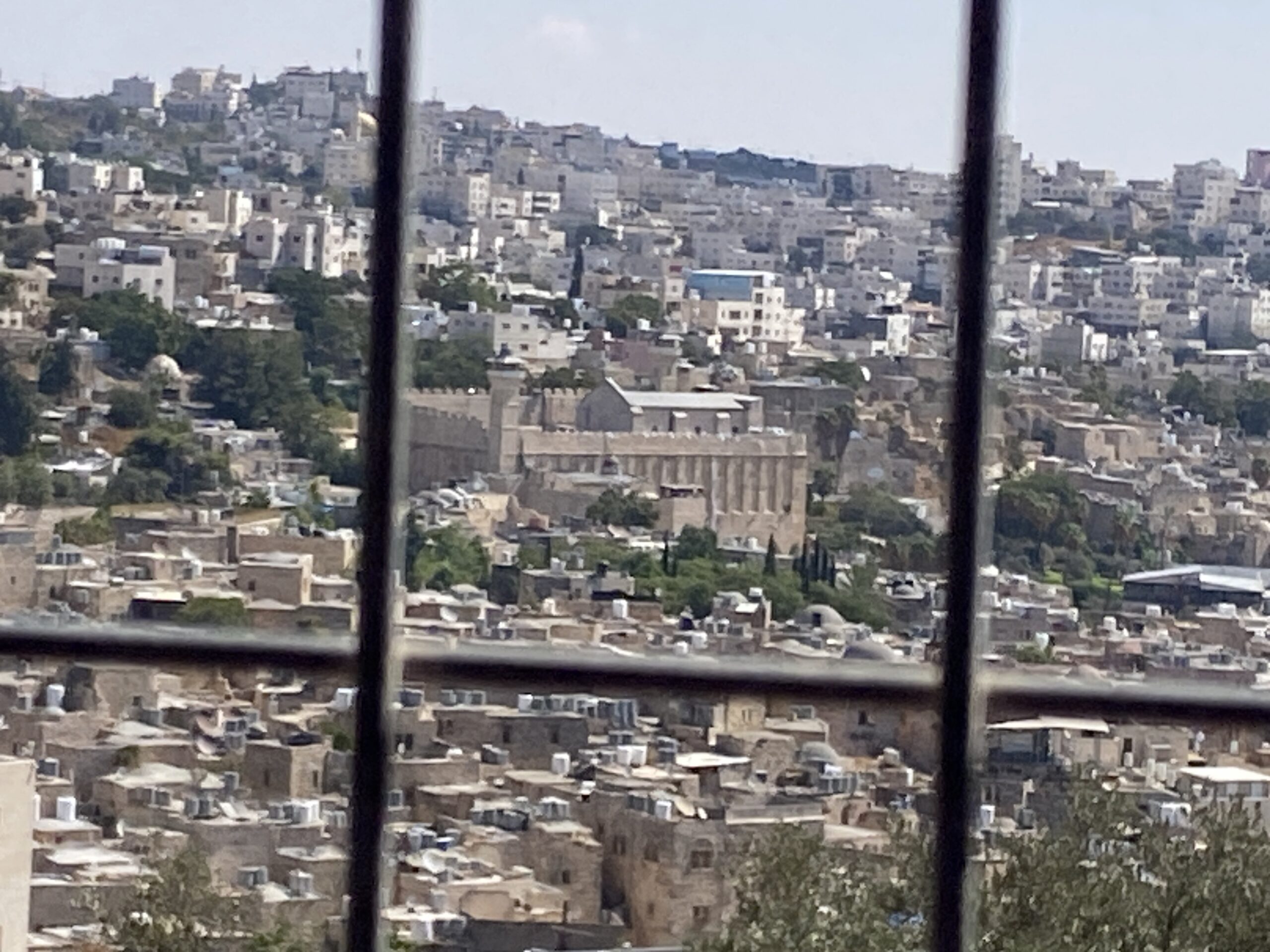 Yael ZoranSep-24-2026Hebron and the Cave of the Patriarchs from Beit Hashalom
-
Qalandiya Camp
See all reports for this place-
Qalandiya Camp The camp was founded east of the village of Qalandiya in 1949 and became inhabited by Palestinian refugees from Jerusalem and the surrounding villages whose homes had remained on the Israeli side of the armistice lines. The camp was included in Jerusalem’s municipal jurisdiction after 1967, and since the erection of the Separation Wall has been disconnected from the city and become no-man’s-land between Jerusalem and Ramallah. It numbers about 10,000 inhabitants and many of them hold a Jerusalem ID. It is considered one of the most difficult camps both from a criminal and a ‘security’ standpoint, and also one of the most neglected and impoverished. It suffers from poverty, neglect, crime, illegal construction, and the lack of proper municipal services. Terrorist attackers have come from there, and it often seems ‘security’ incidents, numerous incursions, and arrests, including the killing of youths following stone-throwing.
-
