
Qalandiya
An acquaintance who’d never been there asked me to describe the routine at Qalandiya, and I, who had been there, didn’t do so.
What can I tell someone who hadn’t been there, or someone who had?
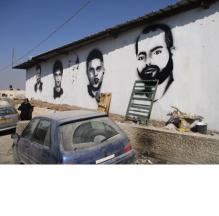
About the memorial wall filling with portraits of the murdered residents of the refugee camp, the wall which isn’t long enough for them all, nor thick enough to absorb all the sorrow and pain?
Or about the medical teams lugging patients between stretchers and ambulances on their way to the hospital in a procedure that’s always the same and always according to the same rules and shadowed by the same weapons?
What isn’t the same is the face of the particular patient, their name, their illness, like the man from Tulkarm who arrived connected to a blood-pressure monitor lest his pulse stop, an oxygen tank beside him lest his lungs give out, “his heart is in a critical condition and he has to reach Makassed Hospital very quickly” said the member of the medical team, but very-quickly took a while.
Because here, the place whose routine my friend wanted to hear about, following procedures is more important than human life.

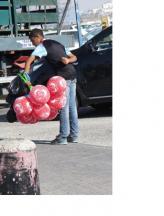
And perhaps the routine are the children, some young, some less young, who push their skinny bodies through the cluster of vehicles in the never-ending traffic jam at the entrance to the checkpoint, wiping windshields with a filthy damp rag and extending a thin hand to the driver to receive a few shekels? Or others like them knocking on the side windows of the same vehicles, offering whatever they can for sale?
Perhaps the routine is the Civil Administration personnel from Beit El who once again – no one any longer counts how many times – destroyed Abdallah Tamimi’s fruit stand?
Or the conversations between and with people and statements such as:
– “The people here are better, not like those who burned the family in Duma, in Hebron one of us took the ones who got lost to his home, protected them and also gave them water…”
– “What happened in Hebron seemed strange to me, I couldn’t understand how they could have been settlers but they didn’t have guns…”
So that’s that, I haven’t any answer, not because I don’t want to answer, but because I don’t know how to answer.
Qalandiya Checkpoint / Atarot Pass (Jerusalem)
See all reports for this place-
Click here to watch a video from Qalandiya checkpoint up to mid 2019 Three kilometers south of Ramallah, in the heart of Palestinian population. Integrates into "Jerusalem Envelope" as part of Wall that separates between northern suburbs that were annexed to Jerusalem in 1967: Kafr Aqab, Semiramis and Qalandiya, and the villages of Ar-Ram and Bir Nabala, also north of Jerusalem, and the city itself. Some residents of Kafr Aqab, Semiramis and Qalandiya have Jerusalem ID cards. A terminal operated by Israel Police has functioned since early 2006. As of August 2006, northbound pedestrians are not checked. Southbound Palestinians must carry Jerusalem IDs; holders of Palestinian Authority IDs cannot pass without special permits. Vehicular traffic from Ramallah to other West Bank areas runs to the north of Qalandiya. In February 2019, the new facility of the checkpoint was inaugurated aiming to make it like a "border crossing". The bars and barbed wire fences were replaced with walls of perforated metal panels. The check is now performed at multiple stations for face recognition and the transfer of an e-card. The rate of passage has improved and its density has generally decreased, but lack of manpower and malfunctions cause periods of stress. The development and paving of the roads has not yet been completed, the traffic of cars and pedestrians is dangerous, and t the entire vicinity of the checkpoint is filthy. In 2020 a huge pedestrian bridge was built over the vehicle crossing with severe mobility restrictions (steep stairs, long and winding route). The pedestrian access from public transport to the checkpoint from the north (Ramallah direction) is unclear, and there have been cases of people, especially people with disabilities, who accidentally reached the vehicle crossing and were shot by the soldiers at the checkpoint. In the summer of 2021, work began on a new, sunken entrance road from Qalandiya that will lead directly to Road 443 towards Jerusalem and Tel Aviv. At the same time, the runways of the old Atarot airport were demolished and infrastructure was prepared for a large bus terminal. (updated October 2021)
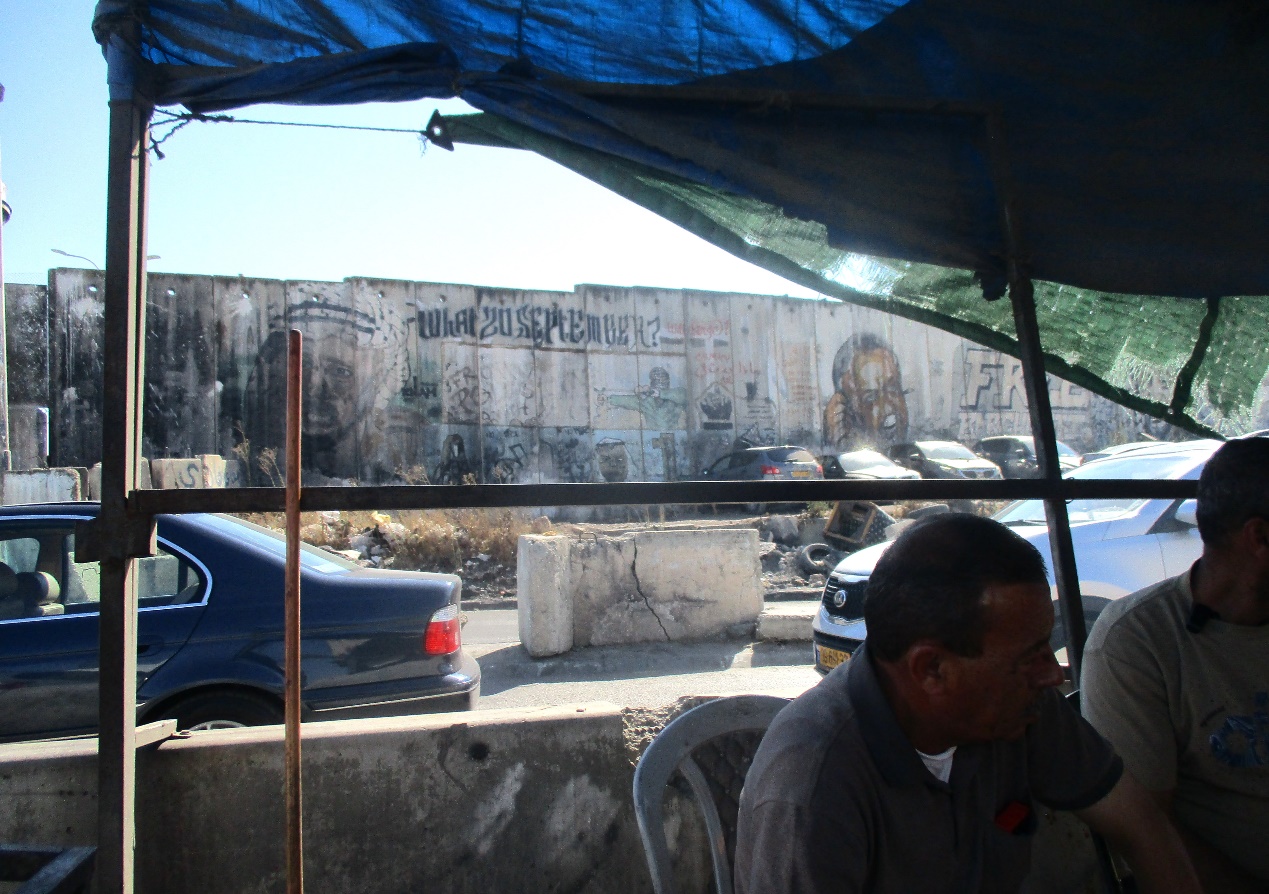 Tamar FleishmanJul-21-2026Qalandiya. Conversation in the shadow of the wall
-
