Qalandiya
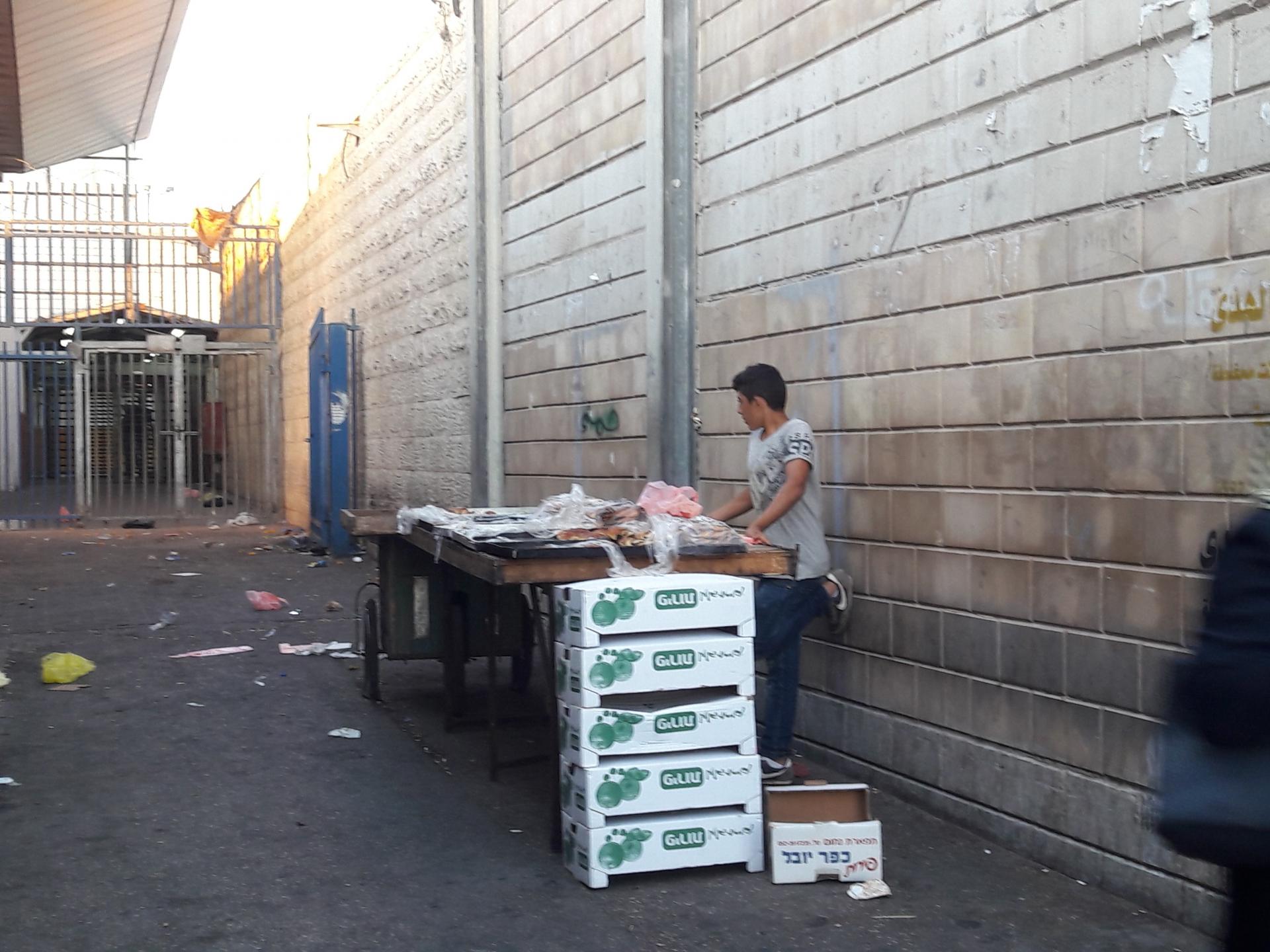
05.15. This week there was not as much filth as previously, but discarded fruit and vegetable cartons were piled at the edge of the shed. The beigel seller was present, the kiosk open, as well as the counter selling cakes at 1 shekel each.
When we arrived there were hardly queues and everyone entered at each opening of the turnstiles. As the lines got longer, the soldier in the aquarium allowed large groups in, causing quite long lines at each checking station. In the shed itself conditions were relatively reasonable, lines not extending beyond it.
This time, too, there is an innovation: the fences that border the area from which our forces arrive (which is usually closed to Palestinians) have been covered with green material and one cannot see what is happening behind them. It seems they have also covered the gate through which the soldiers, guards and police enter. We wondered where they would come from. Then we saw a new opening in another spot, and, indeed after 6 o’clock through it appeared a policeman and a soldier to replace the one in the aquarium.
The policeman made preparations for opening the humanitarian gate, but told the people waiting there that he would not be opening it meanwhile. While waiting, we chatted with two school teachers (counted as worthy of using the humanitarian gate), who told us that their school year was beginning today. When we talked about smoking in Palestinian society (they had complained about the smell of smoking in the shed), one said that in his school smoking was forbidden in all areas, and it was forbidden to bring in sweetened drinks or sweets. At about 6.15 the D.C.O. officer and guard arrived and began to open the humanitarian gate. Later, the officer – a fluent Arabic speaker – approached the sleeves (cages) and chatted with people waiting in line, while the policeman continued operating the humanitarian gate, assisted by the guard.
We went outside, and entered the open gate in the white fence that surrounds the outside of the checkpoint, but there is still no sign of building activity there. On our return the lines were still of a reasonable length. Apparently at one of the checking stations the inspection machine was out of order and the soldier repeatedly announced that this station was open only for those without bags and cases.
At about 7 o’clock we joined a line and passed through in 20 minutes. Today, too, the entrance to the slalom is blocked, and people go directly from the turnstiles to the checking stations. [It would be interesting to know if this is to be a permanent arrangement and, if so, why the authorities changed their minds.]
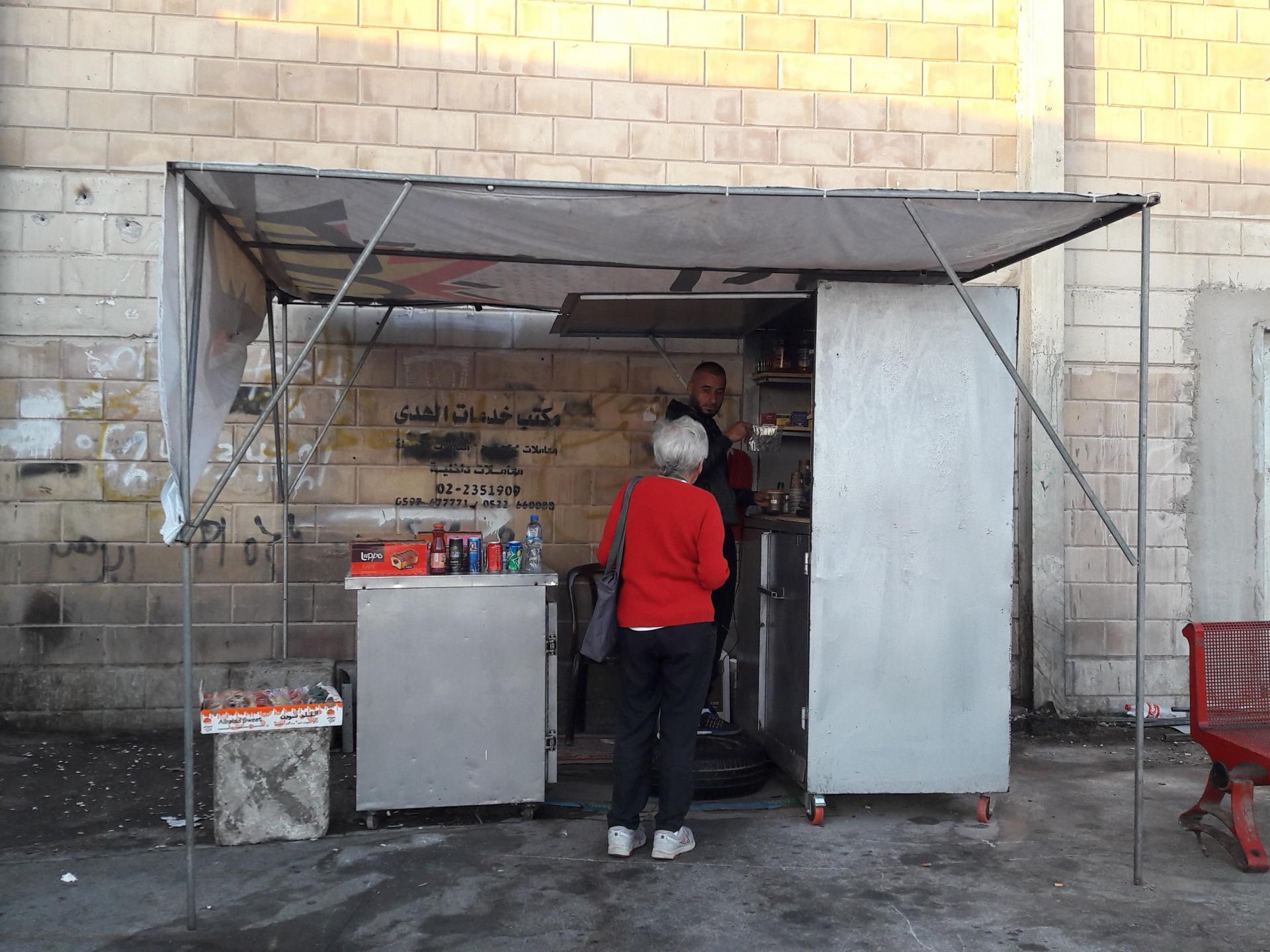
יצאנו לראות מה המצב בחוץ. נכנסנו גם הפעם דרך השער הפתוח בגדר הלבנה מפח שנמתחה מסביב למבנה המחסום מבחוץ ועדיין לא נראה שהתבצע בינוי כלשהו. קנינו כוס תה בקיוסק ששב לפעול זה מכבר וחזרנו פנימה. מצב התורים היה סביר במשך כל זמן שהותנו. באחת העמדות מכונת השיקוף ככל הנראה מקולקלת, והחייל מודיע כל פעם ברמקול שלעמדה זו יש לגשת רק ללא שקיות ותיקים.
בסביבות שבע הצטרפנו לתור ועברנו תוך כ-20 דקות. גם היום הכניסה לסלאלום חסומה והולכים מהקרוסלות שבקצה המכלאות ישירות לעמדות הבידוק, כמו לפני שהיו גדרות הסלאלום במקום.
Qalandiya Checkpoint / Atarot Pass (Jerusalem)
See all reports for this place-
Click here to watch a video from Qalandiya checkpoint up to mid 2019 Three kilometers south of Ramallah, in the heart of Palestinian population. Integrates into "Jerusalem Envelope" as part of Wall that separates between northern suburbs that were annexed to Jerusalem in 1967: Kafr Aqab, Semiramis and Qalandiya, and the villages of Ar-Ram and Bir Nabala, also north of Jerusalem, and the city itself. Some residents of Kafr Aqab, Semiramis and Qalandiya have Jerusalem ID cards. A terminal operated by Israel Police has functioned since early 2006. As of August 2006, northbound pedestrians are not checked. Southbound Palestinians must carry Jerusalem IDs; holders of Palestinian Authority IDs cannot pass without special permits. Vehicular traffic from Ramallah to other West Bank areas runs to the north of Qalandiya. In February 2019, the new facility of the checkpoint was inaugurated aiming to make it like a "border crossing". The bars and barbed wire fences were replaced with walls of perforated metal panels. The check is now performed at multiple stations for face recognition and the transfer of an e-card. The rate of passage has improved and its density has generally decreased, but lack of manpower and malfunctions cause periods of stress. The development and paving of the roads has not yet been completed, the traffic of cars and pedestrians is dangerous, and t the entire vicinity of the checkpoint is filthy. In 2020 a huge pedestrian bridge was built over the vehicle crossing with severe mobility restrictions (steep stairs, long and winding route). The pedestrian access from public transport to the checkpoint from the north (Ramallah direction) is unclear, and there have been cases of people, especially people with disabilities, who accidentally reached the vehicle crossing and were shot by the soldiers at the checkpoint. In the summer of 2021, work began on a new, sunken entrance road from Qalandiya that will lead directly to Road 443 towards Jerusalem and Tel Aviv. At the same time, the runways of the old Atarot airport were demolished and infrastructure was prepared for a large bus terminal. (updated October 2021)
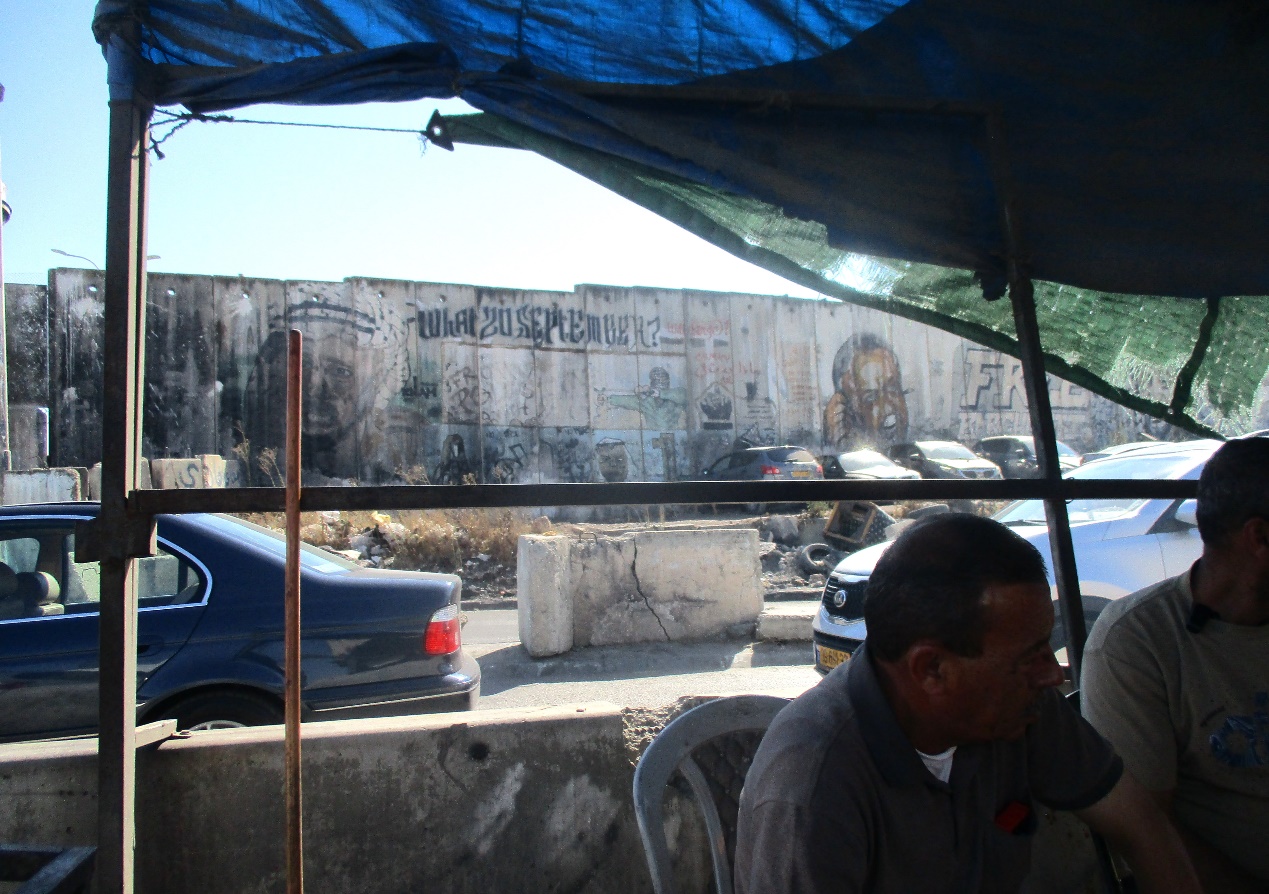 Tamar FleishmanJul-21-2026Qalandiya. Conversation in the shadow of the wall
-