
Qalandiya
Indictment for murder
The newspaper headline in the latter half of September read as follows:
“During Yom Kippur Eve prayers a terrorist attack attempt was thwarted in the Old City of Jerusalem. The terrorist, resident of the Qalandiya refugee camp, was shot and killed.”
There is partial truth in the above item. Very partial truth.
The true parts of the item are its date (September 19, 2018), the place, and the existence of a dead body.
The weapon photographed next to the man’s body was not a knife, not a screwdriver, not even a vegetable peeler. The weapon was a tester (tiny instrument for checking electrical charge). Clearly a tester is no murder weapon, and still the man holding it was shot by the police.
Nor did the Israeli media mention the Palestinian’s name. Perhaps because whoever is defined as a terrorist is better off (or we, or they are better off) anonymous?
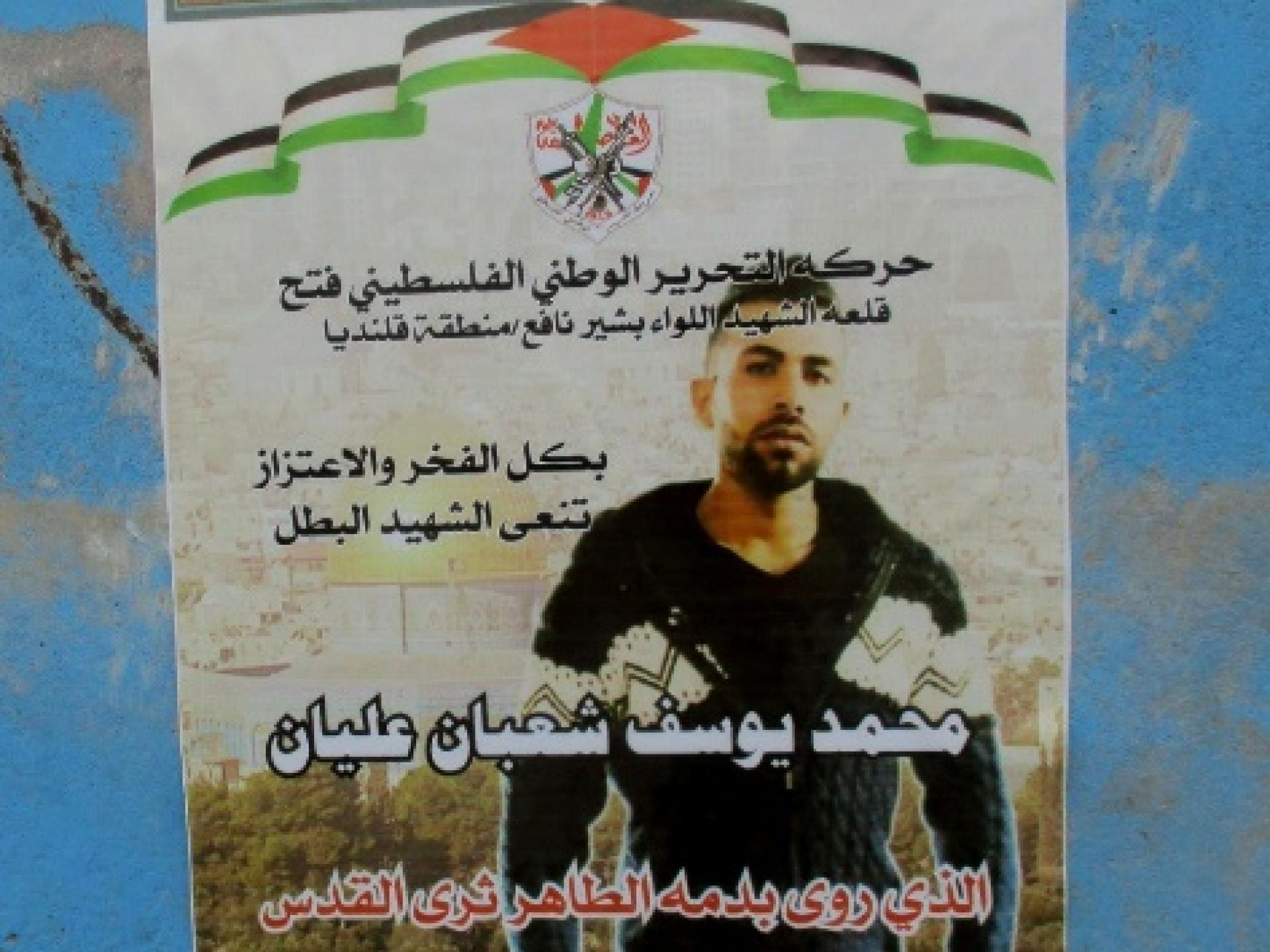
But this fellow, too, has a name given to him by his parents, and his name is Mohammad Alian.
Moreover, and in spite of Islamic law, just like Jewish law, stipulating that the dead must be buried on the day of his death, Mohammad Alian was not handed over to his family until Friday, November 9. Only then, weeks after his murder, did his funeral take place and his picture was posted publicly.
Slowly, tripping along, laden with luggage, the daily group of patients exited the checkpoint, on their way back home to Gaza after being hospitalized. Some raise their eyes and answer a greeting smile with some tattered smile of their own, while others’ faces express such suffering and pain that smiling is beyond their power.
The children always look directly ahead, curious, always nod in greeting, always glad to answer questions, hold out a hand and blow a kiss.
First out was a boy who hurried to catch a window seat. Asking him about his illness was superfluous as the mask on his face, placed there by the medical team at his release from hospital told the story.
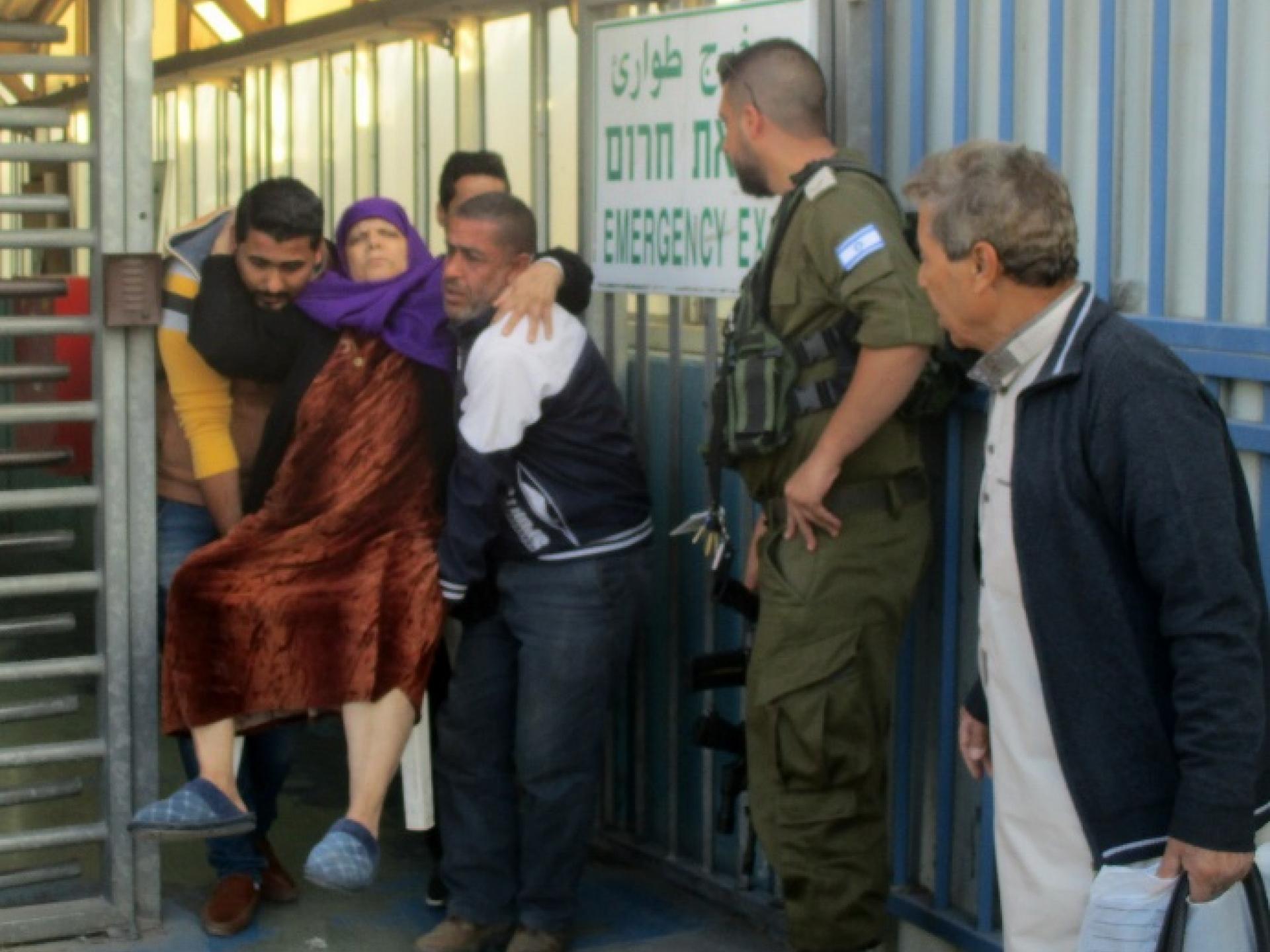
Last was a woman whose heart was ailing and was forbidden to walk, and even if she were allowed to do so, the way to the vehicle was too much for her. Three men, the transport driver and two of the other patients carried her out on a plastic chair. For some unclear reason, the wheelchairs that are always available at the DCO office were nowhere to be found.
Seeing them eager to get back home to Gaza on such a day, when all day and all night the Israeli army was bombing the Gaza Strip from land and from the air, and where they have no protection or shelters from bombings, makes one wonder about their fate once back in Gaza, in such an ominous reality.
Qalandiya Checkpoint / Atarot Pass (Jerusalem)
See all reports for this place-
Click here to watch a video from Qalandiya checkpoint up to mid 2019 Three kilometers south of Ramallah, in the heart of Palestinian population. Integrates into "Jerusalem Envelope" as part of Wall that separates between northern suburbs that were annexed to Jerusalem in 1967: Kafr Aqab, Semiramis and Qalandiya, and the villages of Ar-Ram and Bir Nabala, also north of Jerusalem, and the city itself. Some residents of Kafr Aqab, Semiramis and Qalandiya have Jerusalem ID cards. A terminal operated by Israel Police has functioned since early 2006. As of August 2006, northbound pedestrians are not checked. Southbound Palestinians must carry Jerusalem IDs; holders of Palestinian Authority IDs cannot pass without special permits. Vehicular traffic from Ramallah to other West Bank areas runs to the north of Qalandiya. In February 2019, the new facility of the checkpoint was inaugurated aiming to make it like a "border crossing". The bars and barbed wire fences were replaced with walls of perforated metal panels. The check is now performed at multiple stations for face recognition and the transfer of an e-card. The rate of passage has improved and its density has generally decreased, but lack of manpower and malfunctions cause periods of stress. The development and paving of the roads has not yet been completed, the traffic of cars and pedestrians is dangerous, and t the entire vicinity of the checkpoint is filthy. In 2020 a huge pedestrian bridge was built over the vehicle crossing with severe mobility restrictions (steep stairs, long and winding route). The pedestrian access from public transport to the checkpoint from the north (Ramallah direction) is unclear, and there have been cases of people, especially people with disabilities, who accidentally reached the vehicle crossing and were shot by the soldiers at the checkpoint. In the summer of 2021, work began on a new, sunken entrance road from Qalandiya that will lead directly to Road 443 towards Jerusalem and Tel Aviv. At the same time, the runways of the old Atarot airport were demolished and infrastructure was prepared for a large bus terminal. (updated October 2021)
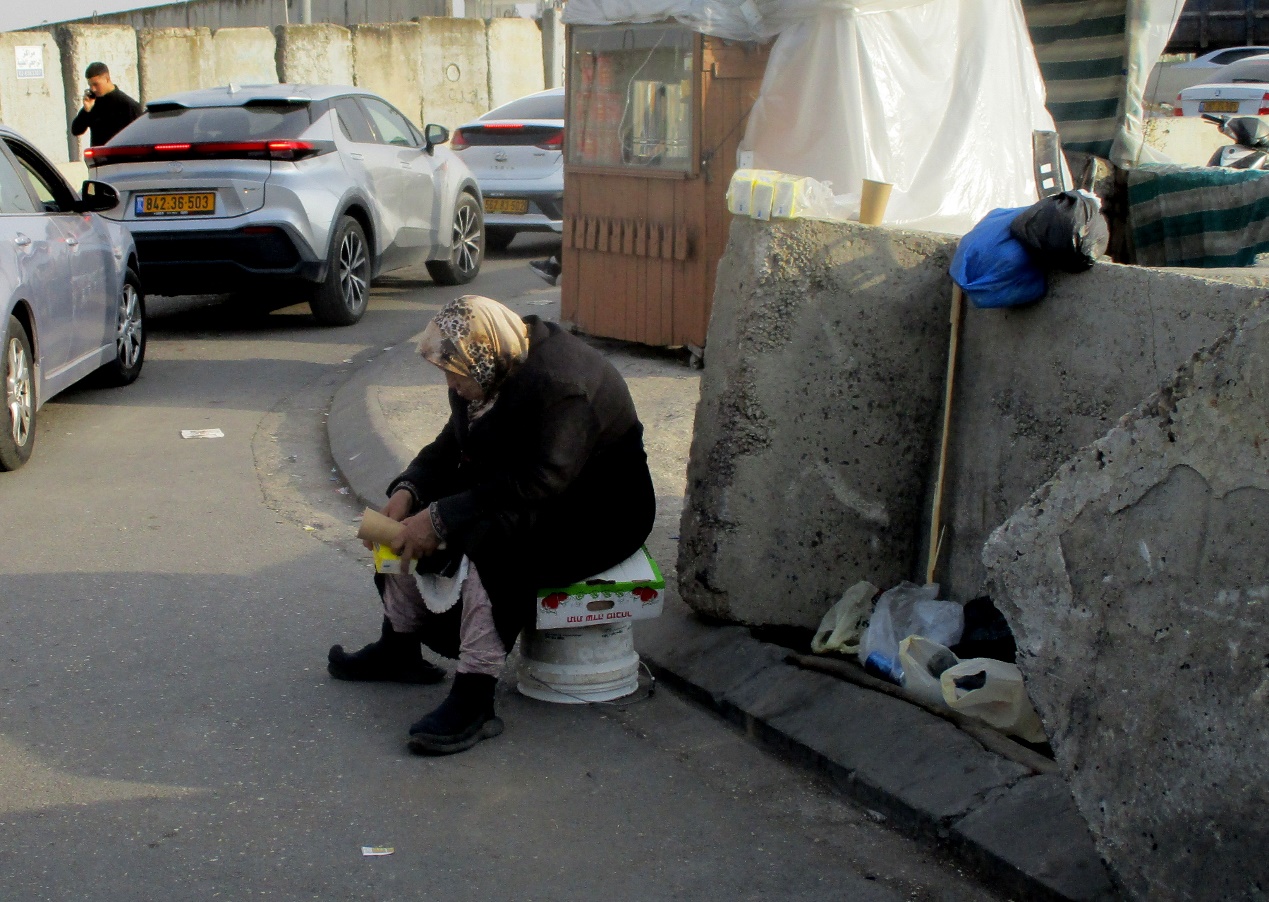 Tamar FleishmanOct-11-2026Qalandiya. Female Beggar
-
