
Qalandiya


The designated transport vehicle to Gaza was full to bursting. “No room left for you, ma’am,” said a young man back from hospital in Ramallah where he was operated on his shoulder and belly for gunshot wounds.
The ones always standing out in the human combination headed for home in Gaza are the children.
There were two of them – a 9-month old baby girl operated in her eye protected with a plastic cup, and a tiny baby boy, a feeding tube stretched under his nose – whose age is still counted in weeks. 6-weeks old.
The two are on their way to begin their lives under conditions of want with polluted water, lacking medical equipment, and a neglected health system, in a place where 2 million human beings are under siege, living the life of prisoners.
Some minutes before 4 p.m., with dozens still waiting in front of the DCO offices in order to get the services they expect by “law” – the gates were closed.
Those who found themselves outside the iron bars continued to hold out hands with papers, but no hand was held out back to them. Others yelled out their troubles through the bars but no one was there to listen.
In Shuafat, at the home of the Abu Khdeir family, opposite the wall commemorating Mohammad, the child who was “incinerated while still alive”, I sat with the mother whose child died in her arms, the tormented father, and Mohammad’s little sister, who will always remain the little sister even if her age now exceeds his when he died. We spoke of the years that have flown by, about the first time I came to their home, about the hole that is bored in one’s chest, the ever-unhealed wounds of the heart, the longing, the no-more joie de vivre, and even about the Israeli TV series “Our Boys”.

כמה דקות לפני השעה 4.00, כשעשרות עדיין מחכים בסככת ההמתנה שלפני משרדי המת”ק כדי לקבל את השירות שמגיע להם על פי חוקי המקום – נסגרו השערים.
אלו שמצאו את עצמם מחוץ לסורגים המשיכו להושיט ידיים אוחזות בניירות אבל לא שום יד לא הושטה אליהם, ואחרים צעקו מבעד לסורגים את מצוקותיהם אבל לא הייתה אוזן שתשמע את שוועתם.
בשועפאט, בבית משפחת אבו-ח’דיר, מול קיר הנצחה למוחמד, הילד ש”שרפו אותו והוא עוד היה חי”, ישבתי עם האם שילד מת בחיקה, האב המיוסר והאחות הקטנה של מוחמד, שתמיד תהייה האחות הקטנה אפילו ששנותיה כבר רבו משלו, דיברנו על השנים שחלפו ביעף, על הפעם הראשונה שבאתי אל סיפם, על החור שנפער בחזה, על האין מרפא, על הגעגועים, על האין יותר שמחה ועל סידרת הטלוויזיה “הנערים” גם.
Qalandiya Checkpoint / Atarot Pass (Jerusalem)
See all reports for this place-
Click here to watch a video from Qalandiya checkpoint up to mid 2019 Three kilometers south of Ramallah, in the heart of Palestinian population. Integrates into "Jerusalem Envelope" as part of Wall that separates between northern suburbs that were annexed to Jerusalem in 1967: Kafr Aqab, Semiramis and Qalandiya, and the villages of Ar-Ram and Bir Nabala, also north of Jerusalem, and the city itself. Some residents of Kafr Aqab, Semiramis and Qalandiya have Jerusalem ID cards. A terminal operated by Israel Police has functioned since early 2006. As of August 2006, northbound pedestrians are not checked. Southbound Palestinians must carry Jerusalem IDs; holders of Palestinian Authority IDs cannot pass without special permits. Vehicular traffic from Ramallah to other West Bank areas runs to the north of Qalandiya. In February 2019, the new facility of the checkpoint was inaugurated aiming to make it like a "border crossing". The bars and barbed wire fences were replaced with walls of perforated metal panels. The check is now performed at multiple stations for face recognition and the transfer of an e-card. The rate of passage has improved and its density has generally decreased, but lack of manpower and malfunctions cause periods of stress. The development and paving of the roads has not yet been completed, the traffic of cars and pedestrians is dangerous, and t the entire vicinity of the checkpoint is filthy. In 2020 a huge pedestrian bridge was built over the vehicle crossing with severe mobility restrictions (steep stairs, long and winding route). The pedestrian access from public transport to the checkpoint from the north (Ramallah direction) is unclear, and there have been cases of people, especially people with disabilities, who accidentally reached the vehicle crossing and were shot by the soldiers at the checkpoint. In the summer of 2021, work began on a new, sunken entrance road from Qalandiya that will lead directly to Road 443 towards Jerusalem and Tel Aviv. At the same time, the runways of the old Atarot airport were demolished and infrastructure was prepared for a large bus terminal. (updated October 2021)
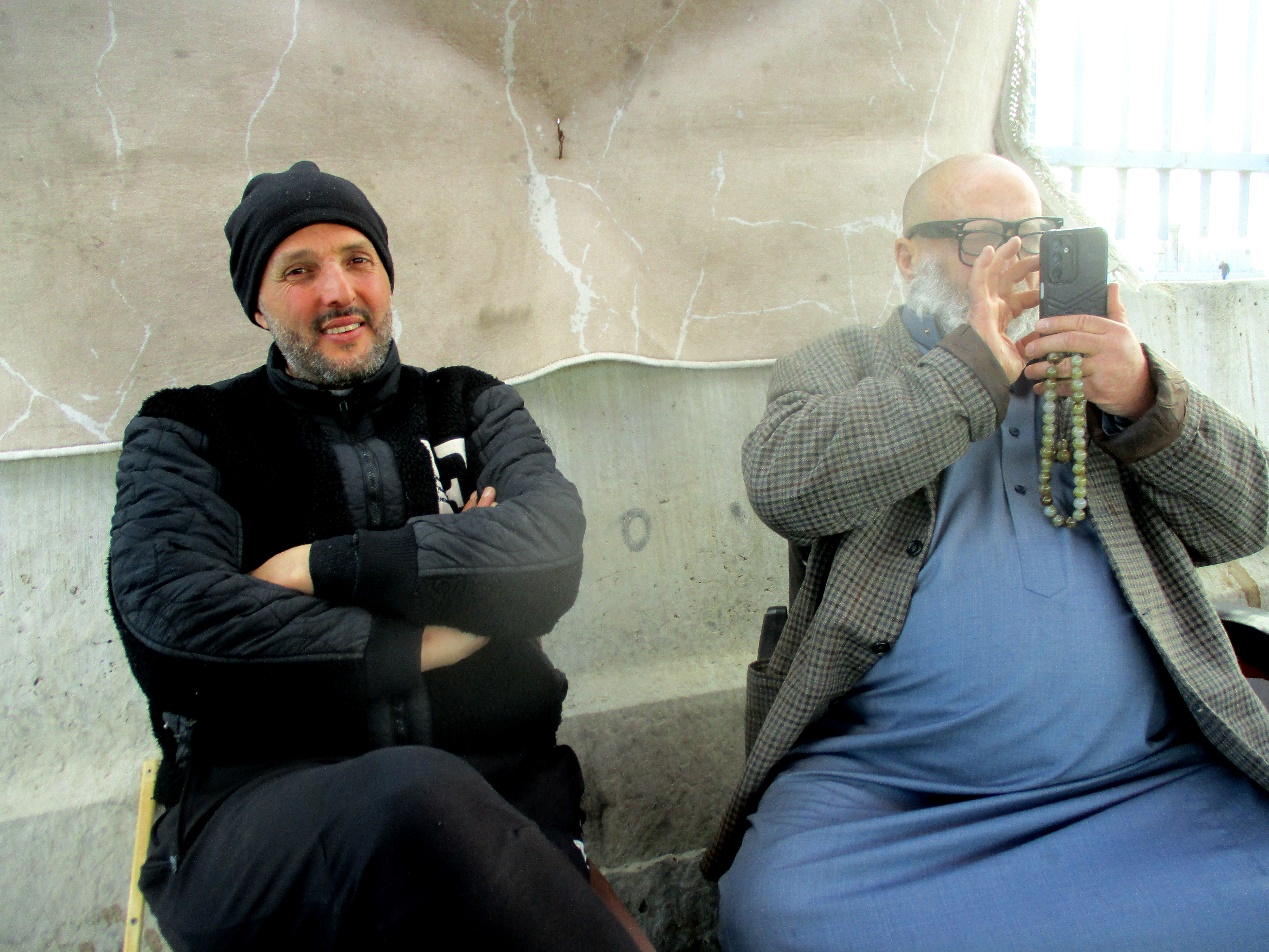 Tamar FleishmanApr-12-2026Qalandiya. Abdallah at his fruit stand
-