
Qalandiya & Kufr Aqab: In the Shadow of the Wall and the Empty UNRWA Compound
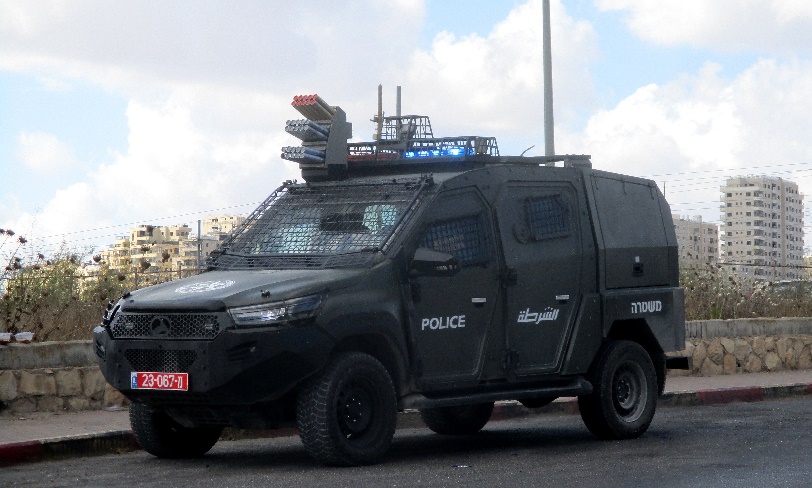
An armored vehicle near the Apartheid Wall that surrounds A-Ram was lurking in anticipation for Palestinians, on its roof a weapon called “Malkosh”, with multiple barrels and much firepower
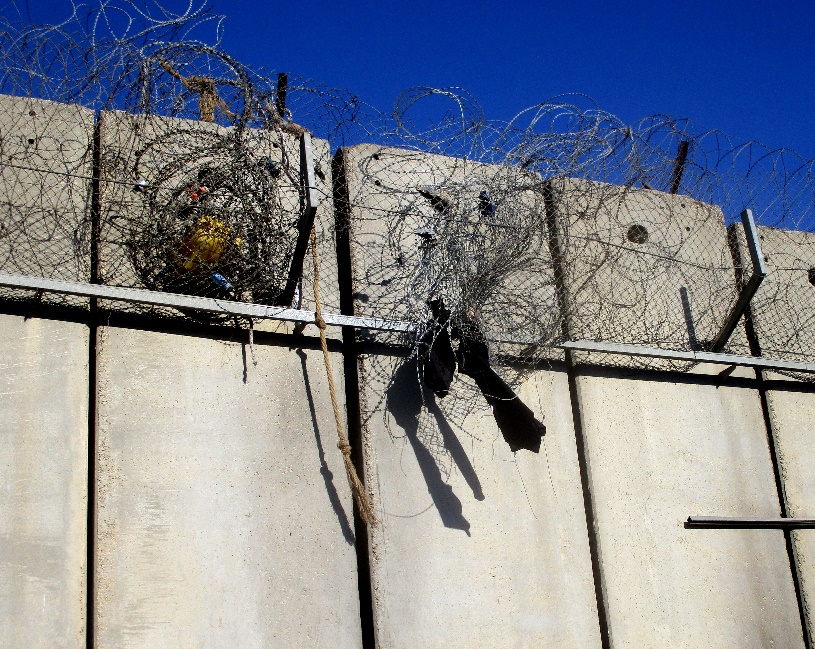
One says in Qalandiya one often hears shooting at youngsters trying to cross the wall and pass over to its other side to find work with which they could silence the hunger pangs of their family members.
A week ago, dum-dum bullets injured the leg of a young man who tried to jump the wall. Following this injury, the hospital to which the young man was rushed was forced to amputate him. What will now happen with his family’s livelihood?
It was also said that at noon a colonist lost his way and happened to find himself there. Upon realizing he was near the refugee camp, he panicked, called the army, and soldiers in armored vehicles came to extricate him.
“How did you know he was a colonist?”, I asked.
“He was wearing a skullcap which he very quickly took off”, the speaker said.
Following knowledge that the army charged the UNRWA compound at Kufr Aqab, I hired a cab and went to see with my own eyes and hear with my own ears what actually happened.
So here goes: On Tuesday, August 25, on instructions of Minister Ben Gvir and approval of Prime Minister Netanyahu, Border Police and soldiers charged into the UNWRA compound at Kufr Aqab in order to annihilate it. The persons who did the practical work on the ground were Thai workers.
Mister Lion, Mayor, also joined the fun, declaring he would transform the structure into a school for Kufr Aqab children.
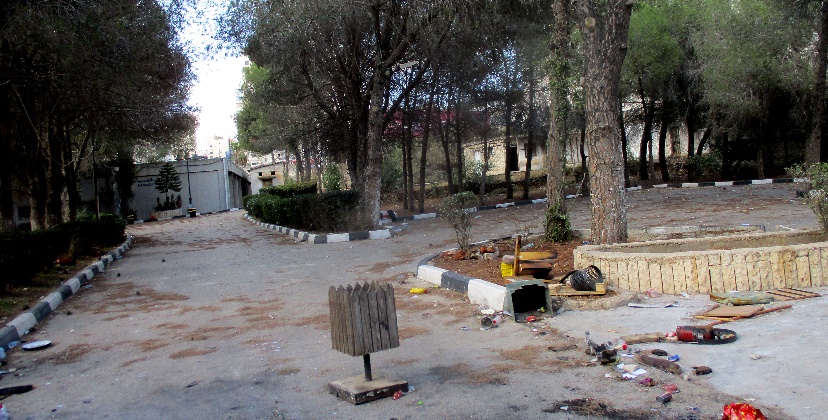
What remained were signs, the structure emptied of persons and contents, and a locked gate at the center of which a silent bell and trails filled with evidence were witnesses of past activity.
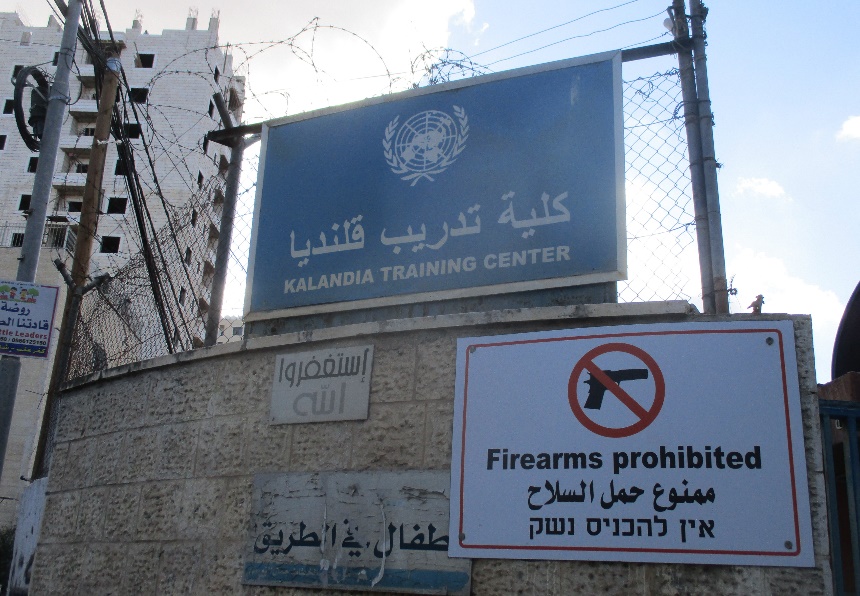
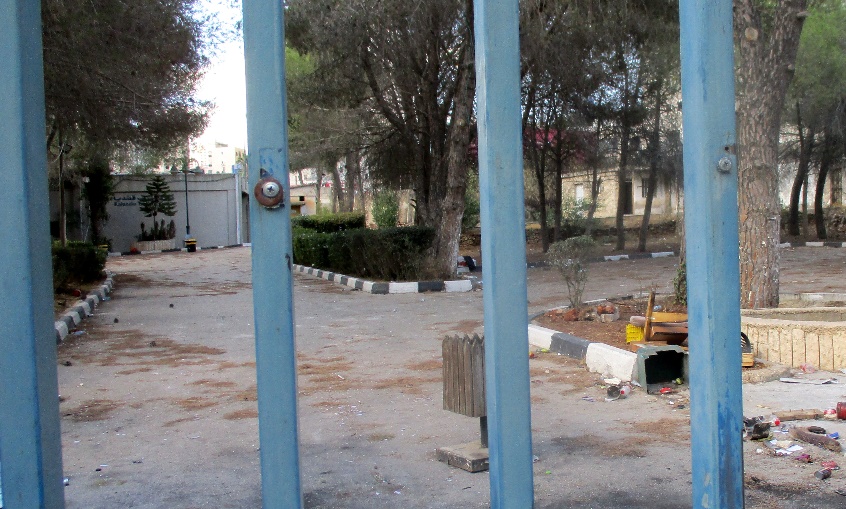
Back at Qalandiya, I sat in the shade of a friend’s stand, unable to stop thinking of Israel’s obsession against UNWRA – The UN Agency of Welfare and Employment for Palestinian Refugees, I repeated my question again and again: “Why?… Why do they do that?…”
- “Because they want us to be unhappy”, the friend answered.
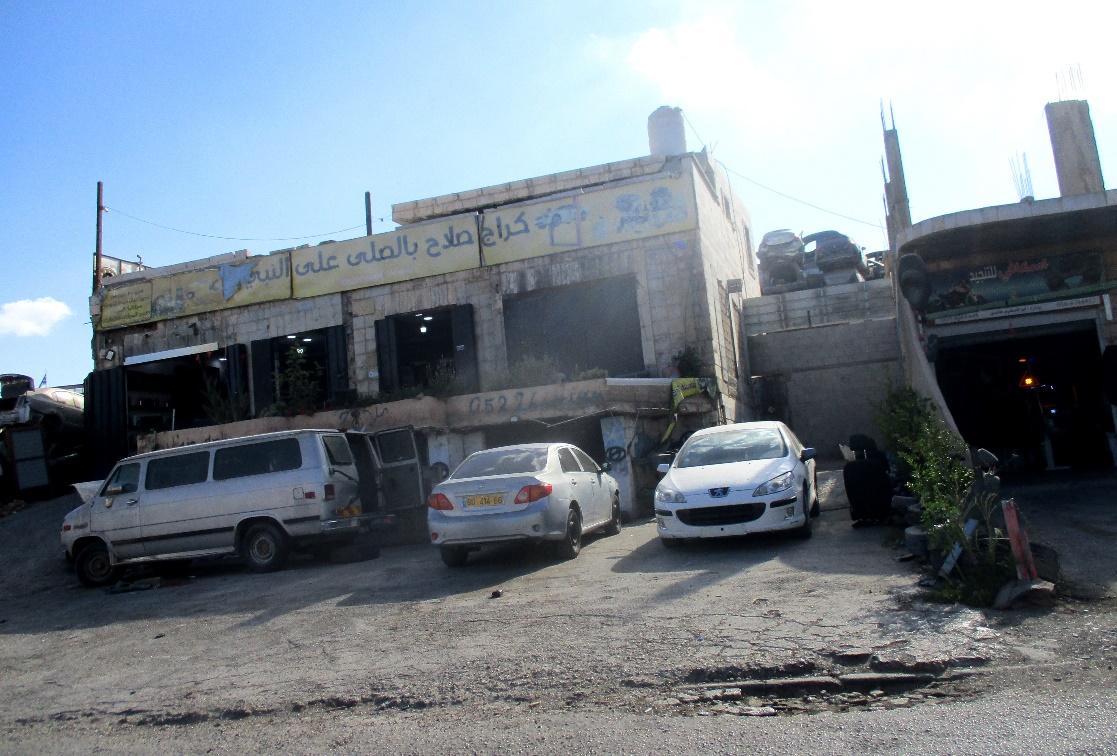
Another friend pointed to a row of shops and homes located near the road leading to Ramallah and said that their owners have received demolition orders. They have another day or two before bulldozers carry out the destruction.
Location Description
A-Ram
See all reports for this place-
two kilometers south of Qalandiya and 300 metres north of Neve Yaacov Junction, in Dahiyat el-Barid Quarter. Checkpoint has operated since 1991, in a Palestinian area annexed to Jerusalem in 1967. The checkpoint has been inactive since the middle of 2009.
The wall was built on the road that led to Jerusalem. Since then the situation in the town has deteriorated. Houses are abandoned and half finished, most of the businesses have closed. Severe neglect around the fence and on the streets. Those who could left. Updated January 2024
-
Kufr 'Aqab
See all reports for this place-
Kufr 'Aqab
25,000 people live in this village, and since the erection of the Separation Wall, it has been disconnected from Jerusalem and become a neighborhood totally abandoned as far as law enforcement and planning and construction are concerned. The thousands of inhabitants of this undefined urban area pay municipal taxes to the city of Jerusalem but the Israeli authorities – municipality, police, and various service companies – hardly enter these places, and the Palestinian authorities avoid them too since the Oslo Accords forbid them to act within Jerusalem’s jurisdiction.
MachsomWatch teams coming to their Qalandiya vigils sometimes go through the village itself, and the organization’s tours include the enclaves north of Jerusalem.
-
Qalandiya Camp
See all reports for this place-
Qalandiya Camp The camp was founded east of the village of Qalandiya in 1949 and became inhabited by Palestinian refugees from Jerusalem and the surrounding villages whose homes had remained on the Israeli side of the armistice lines. The camp was included in Jerusalem’s municipal jurisdiction after 1967, and since the erection of the Separation Wall has been disconnected from the city and become no-man’s-land between Jerusalem and Ramallah. It numbers about 10,000 inhabitants and many of them hold a Jerusalem ID. It is considered one of the most difficult camps both from a criminal and a ‘security’ standpoint, and also one of the most neglected and impoverished. It suffers from poverty, neglect, crime, illegal construction, and the lack of proper municipal services. Terrorist attackers have come from there, and it often seems ‘security’ incidents, numerous incursions, and arrests, including the killing of youths following stone-throwing.
-
