
Back to reports search page
Donate
Qalandiya, Mon 20.10.08, Afternoon
Observers: Soli (reporting) with a Spanish television crew and a Spanish volunteer , Regina
On this day, there was not a scheduled shift, but the Spanish television
crew wanted to film the activities of Machsomwatch. We arrived at 16:00 and the
checkpoint was quiet because of the holiday. Therefore, we postponed the
filming until the following Wednesday. When we were ready to leave, we detected
a Palestinian ambulance that was transporting a child with heart problems and
was delayed by the soldiers while an Israeli ambulance that was supposed to be
there to pick up the sick person was held up on the way. We tried to convince
the soldiers to allow the ambulance to cross, and the meanwhile the Spanish crew
started to film. The meanwhile, the sick child was transferred to the Israeli
ambulance. While I was still speaking with the soldiers, the Spanish
photographer was stopped and screamed at. I ran to the place where he was
filming, identified myself as a member of machsomwatch and said that the crew
was functioning according to the law and was not filming any secret military
site. The soldiers continued screaming and a confrontation between me and them
developed which was recorded but not filmed. After some time, the soldiers grew
weary, ordered us to leave and not to bother them and and released the
photographer. The crew is interested in returning to Qalandiya next Wednesday
and is especially interested in interviewing those coming and going. They were
impressed by the aggression exhibited by the soldiers toward them and the
derogatory way in which they behaved.
Qalandiya Checkpoint / Atarot Pass (Jerusalem)
See all reports for this place-
Click here to watch a video from Qalandiya checkpoint up to mid 2019 Three kilometers south of Ramallah, in the heart of Palestinian population. Integrates into "Jerusalem Envelope" as part of Wall that separates between northern suburbs that were annexed to Jerusalem in 1967: Kafr Aqab, Semiramis and Qalandiya, and the villages of Ar-Ram and Bir Nabala, also north of Jerusalem, and the city itself. Some residents of Kafr Aqab, Semiramis and Qalandiya have Jerusalem ID cards. A terminal operated by Israel Police has functioned since early 2006. As of August 2006, northbound pedestrians are not checked. Southbound Palestinians must carry Jerusalem IDs; holders of Palestinian Authority IDs cannot pass without special permits. Vehicular traffic from Ramallah to other West Bank areas runs to the north of Qalandiya. In February 2019, the new facility of the checkpoint was inaugurated aiming to make it like a "border crossing". The bars and barbed wire fences were replaced with walls of perforated metal panels. The check is now performed at multiple stations for face recognition and the transfer of an e-card. The rate of passage has improved and its density has generally decreased, but lack of manpower and malfunctions cause periods of stress. The development and paving of the roads has not yet been completed, the traffic of cars and pedestrians is dangerous, and t the entire vicinity of the checkpoint is filthy. In 2020 a huge pedestrian bridge was built over the vehicle crossing with severe mobility restrictions (steep stairs, long and winding route). The pedestrian access from public transport to the checkpoint from the north (Ramallah direction) is unclear, and there have been cases of people, especially people with disabilities, who accidentally reached the vehicle crossing and were shot by the soldiers at the checkpoint. In the summer of 2021, work began on a new, sunken entrance road from Qalandiya that will lead directly to Road 443 towards Jerusalem and Tel Aviv. At the same time, the runways of the old Atarot airport were demolished and infrastructure was prepared for a large bus terminal. (updated October 2021)
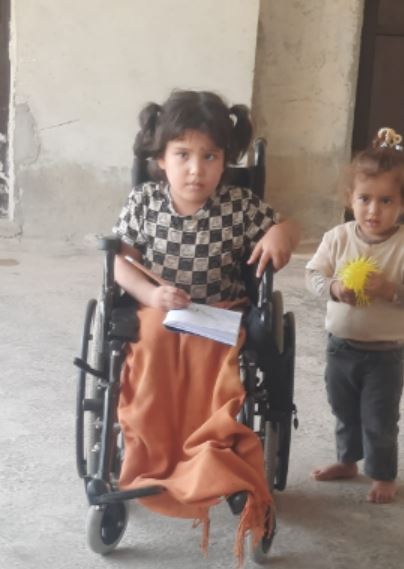 Daphne BanaiOct-21-2026Aisha – She was not allowed to pass through for a medical examination at a hospital in Jerusalem
-
