
Qawawis: Four settlers from Mitzpe Avigail went over the Palestinian fields with their sheep
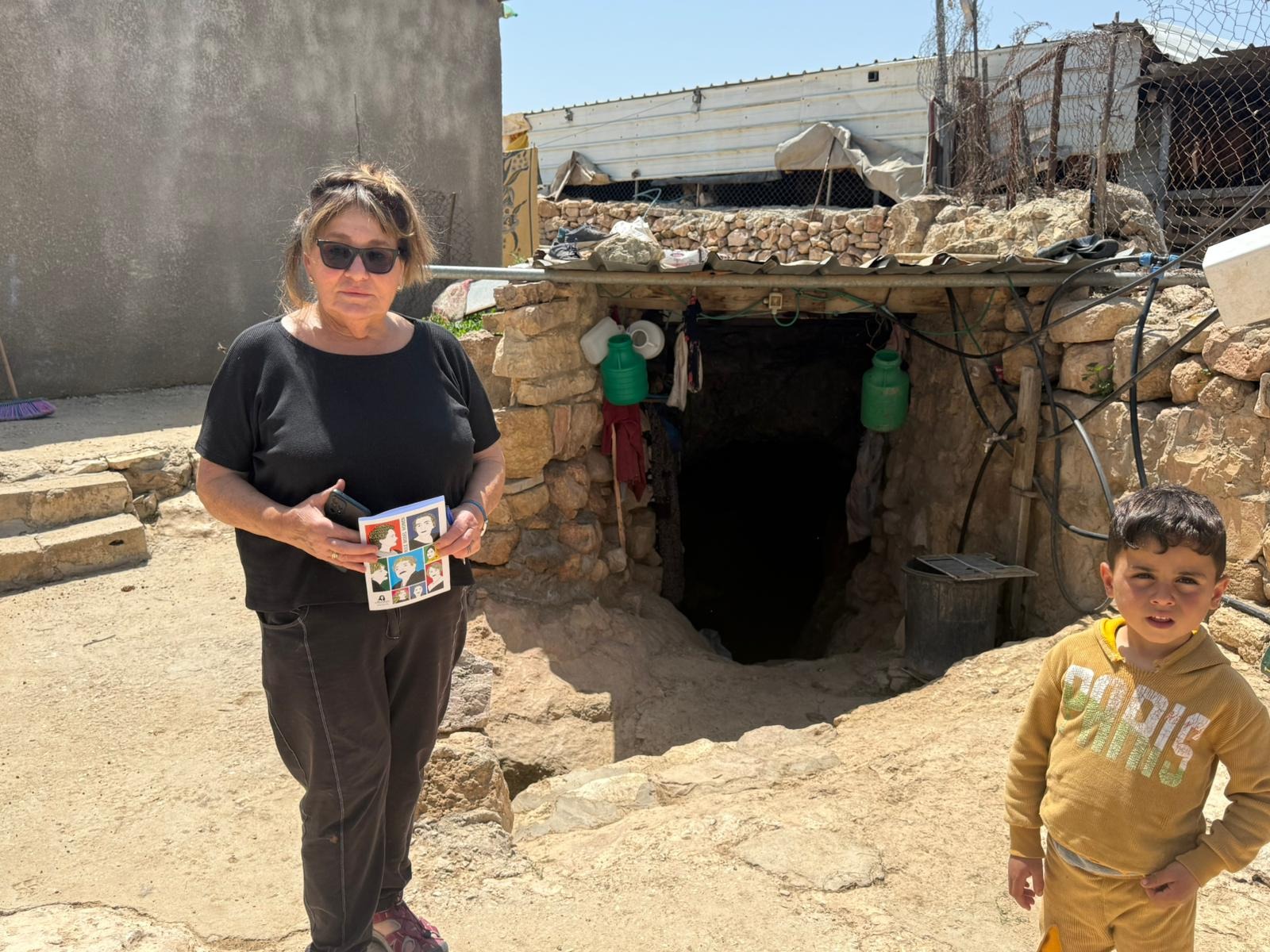
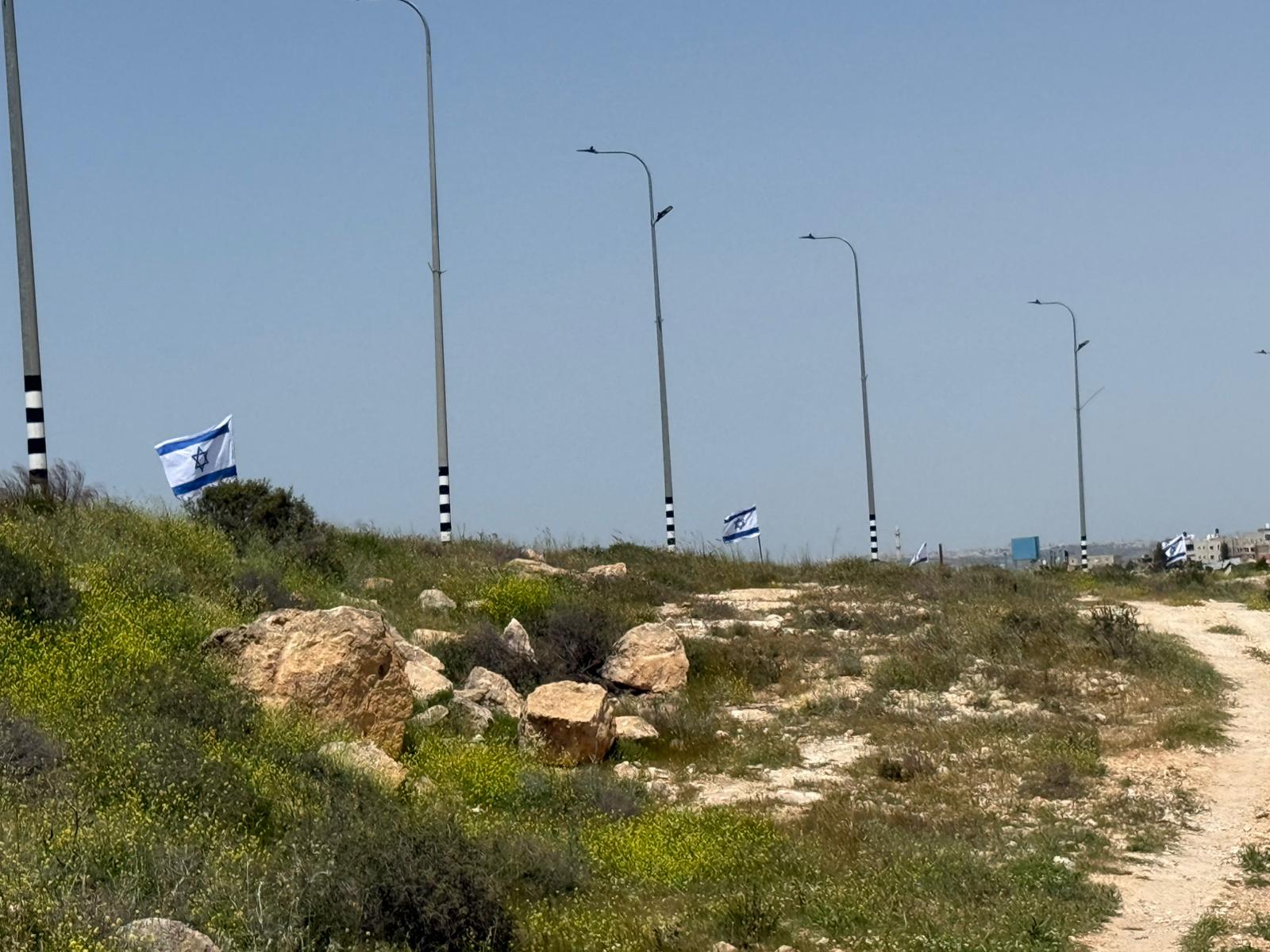
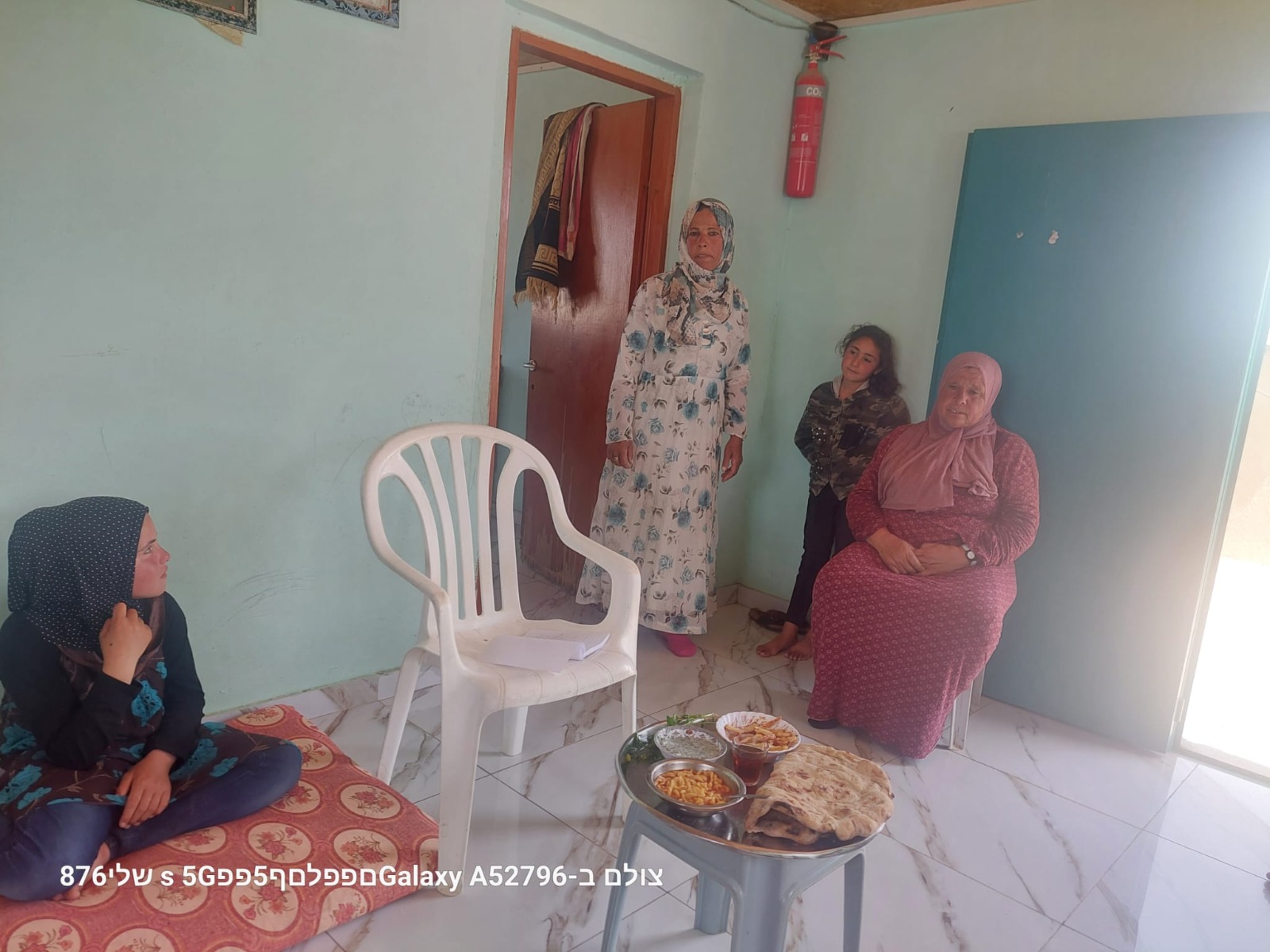
We finally got to our shifts after this 40-days war. We drove out to visit N.’s family living in a tiny cluster of structures not far from Sha’ab al-Butum, from where one can see the settlement of Mitzpe Avigail, origin of the harassing settlers. T. guides M. how to get to the track that is still not blocked and make his way to them from there. “Hurry up before the army arrives and prevents your coming”.
15 days ago, the usual ways from road 317 – to them and their neighbors – were blocked with stones and dirt piles. It was not the army that did this but rather soldier-clad settlers wearing army uniforms. They are identified by their vehicles, which they received as a gift from Smotrich and Struck – 4×4 Rangers. This has been passed on for legal treatment by Attorney Qamar Masharqi. T. lives there with his wife and 2 of their 11 married offspring, with their wives and children. And an uncle with his family. A total of 19 persons. “Now because of the situation, we are just a few who live here, watching over our land”, says T. “Most are staying in nearby Karmil. The Israeli army enters much less there and it’s more relaxed. They [the settlers] are trying to break our spirit and make us leave”. He is a strong 58-years-old man who speaks good Hebrew thanks to his years of work inside Israel. “The settlers come here and yell ‘Got away, this is our land’.”
“Today before your arrival here, there were four settlers from Mitzpe Avigail with their sheep. They walked over the J. family’s fields as they always do. They come here every day to feed their sheep flocks with everything that sprouts and grows. Our barley, our olive and vine leaves – everything is eaten or trampled by the settlers’ flocks.
The police, army and DCO people arrive when summoned, but then ask us again and again to check whose land this is, as if they don’t know…
3 days ago, they came to the J. family, our neighbors, picked up two men, shackled and blindfolded them, and took them to the Susiya army base. Why? Just like that. 8 hours later they were released with no explanation or investigation. Today the family members went to Kiyat Arba police station to lodge a complaint, although obviously nothing will happen with it.”
“As for me” says T., smiling, “they haven’t ‘visited’ me for a week. I have a vehicle and a permitted tractor but I park them in Karmil. I’m afraid the settlers would vandalize them. Luckily, we have donkeys which we ride to Karmil to do our shopping for food and everything else we need.
Since A. has not been working for two and a half years, we have time to get to Karmil in half an hour instead of the 5-minute drive. And we keep selling more sheep in order to live.
The situation is harsh, as you know”, he says, reminding me that we visited him after August 26, 2025, after an attack by 30 settlers. The settlers had then cruelly beaten up their Palestinian victims as well as Israeli volunteers, broke doors, windows, cameras, and solar panels. Then too, Palestinians chased the assailants away and no one was arrested.
“The Palestinian Authority is no help either. Abu Mazen gets help from your army and government in order to stay in office. Schools are open three days a week and the teachers receive 2000 shekels every two months.”
Location Description
Sha'ab al-Butum
See all reports for this place-
This is one of the small Palestinian communities in Masafer Yatta in the southern Hebron Hills, near the settlement of Mitzpe Avigail.
Since the outbreak of the October 7, 2023 war, settler violence against residents has escalated greatly, as in the entire Palestinian community. This violent conduct receives full backing from the state and full cooperation from the IDF. The goal is to make the lives of the Palestinian residents miserable and make them abandon and leave.
The population consists of mostly shepherds who peacefully seek to cultivate the land and graze their sheep, whom the settlers treat as a dangerous enemy. They prohibit them from any movement related to herding sheep and cultivating the land and harm everything: trampling crops, breaking olive trees, smuggling herds, scaring shepherds, conducting wild searches of houses, shouting, cursing and threatening - at all hours of the day. "We are Besieged, but will not move from our land," says Lila G. New settlements are springing up around them. At first it's a bus or a truck that turns into residential buildings, on top of which every week more residential buildings and animal sheds are added. With the open encouragement of the current government, Jewish terrorism is raising its head, with authority and permission. The settlers have received army uniforms and weapons, and no one is stopping them. The police, who are supposed to protect the Palestinians from the settlers' riots, sometimes respond to calls for help, but in practice they don't do much more than provide them with a report, and they are required to go and file a complaint in Kiryat Arba Settlemnt police station . Though the settlers' identities are known, they are !never arrested.
-
South Hebron Hills
See all reports for this place-
South Hebron Hills
South Hebron Hills is a large area in the West Bank's southern part.
Yatta is a major city in this area: right in the border zone between the fertile region of Hebron and its surroundings and the desert of the Hebron Hills. Yatta has about 64,000 inhabitants.
The surrounding villages are called Masafer Yatta (Yatta's daughter villages). Their inhabitants subsist on livestock and agriculture. Agriculture is possible only in small plots, especially near streams. Most of the area consists of rocky terraces.Since the beginning of the 1980s, many settlements have been established on the agricultural land cultivated by the Palestinians in the South Hebron Hills region: Carmel, Maon, Susia, Masadot Yehuda, Othniel, and more. Since the settlements were established and Palestinians cultivation areas have been reduced; the residents of the South Hebron Hills have been suffering from harassment by the settlers. Attempts to evict and demolish houses have continued, along with withholding water and electricity. The military and police usually refrain from intervening in violent incidents between settlers and Palestinians do not enforce the law when it comes to the investigation of extensive violent Jewish settlers. The harassment in the South Hebron Hills includes attacking and attempting to burn residential tents, harassing dogs, harming herds, and preventing access to pastures.
There are several checkpoints in the South Hebron Hills, on Routes 317 and 60. In most of them, no military presence is apparent, but rather an array of pillboxes monitor the villages. Roadblocks are frequently set up according to the settlers and the army's needs. These are located at the Zif Junction, the Dura-al Fawwar crossing, and the Sheep Junction at the southern entrance to Hebron.
Updated April 2022
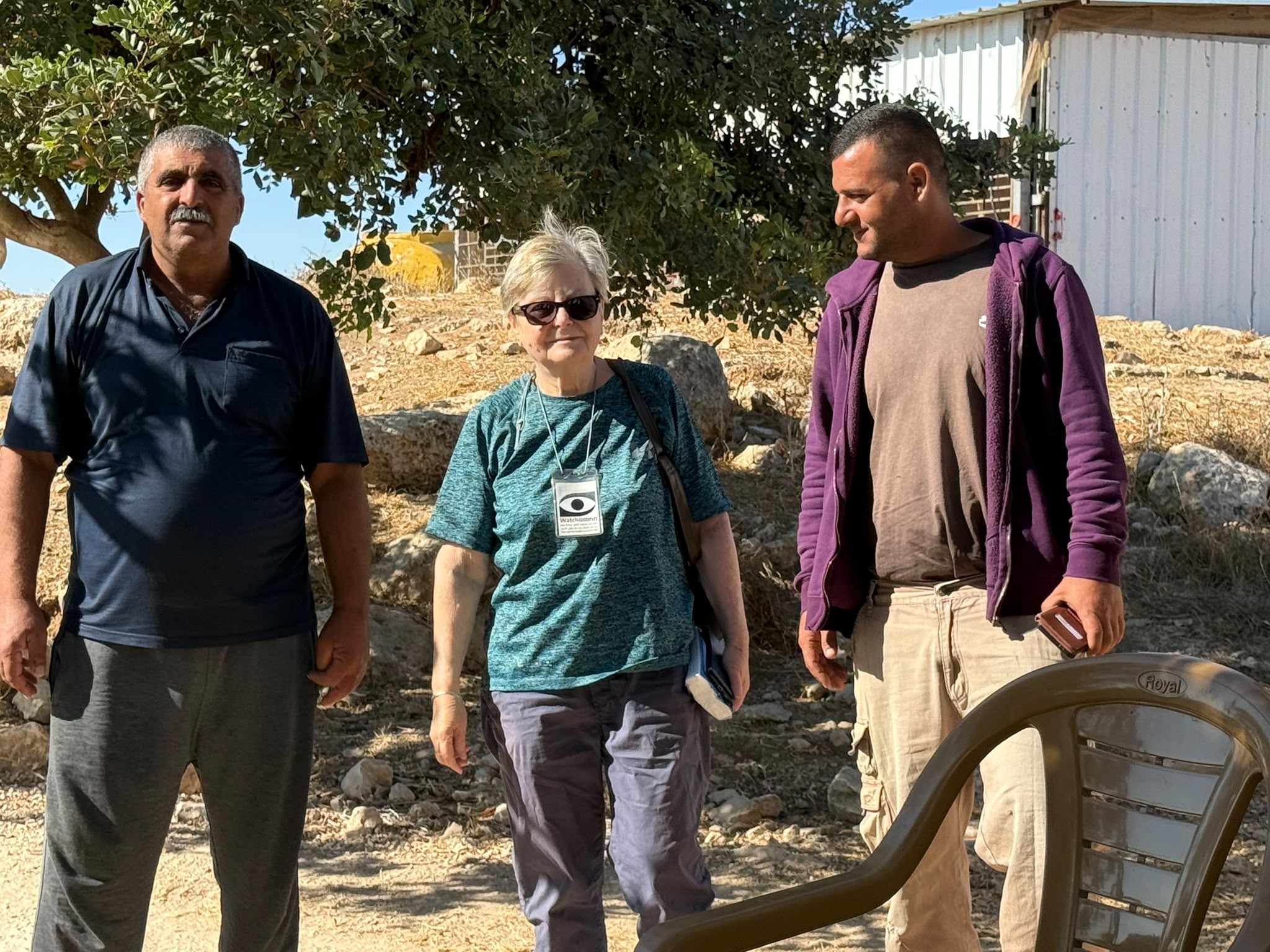 Muhammad D.Sep-20-2026Smadar in Khirbet al-Kharabah
-
