
Samra: Protective Presence and other business
Works on Road 505 from Ariel to Tapuach Junction are ongoing at breath-taking speed. The road is widened, the olive tree groves uprooted, as well as new roads opened for new settlers outposts. We see the whole region taking on a new face. They must be working full steam ahead to arrive at the election date with facts on the ground.
Scary.
They are also preparing for the next battles…
As one drives down to the Palestinian Jordan Valley, the Allon Road is being renewed and another road being paved, parallel to the eastern Allon Road and the village range on the west, the “Scarlet Thread” road. In fact, it divides the Palestinian Jordan Valley lengthwise. This is an opportunity to cut the water pipes that used to carry water from side to side, and disconnect the water supply that used to water the Atouf area close to the new road, on its eastern side. This entire fertile area will apparently die out. The settlers’ greenhouses of Beqa’ot and Ro’i, on the other hand, are increasing irrationally. Huge areas of greenhouses as well as fields filled with solar energy.
New problem – shortage of fuel because of a combination of too many shekels, movement restrictions, logistic hangups and the PA’s financial difficulties (according to Gemini). This shortage threatens regular water supply.
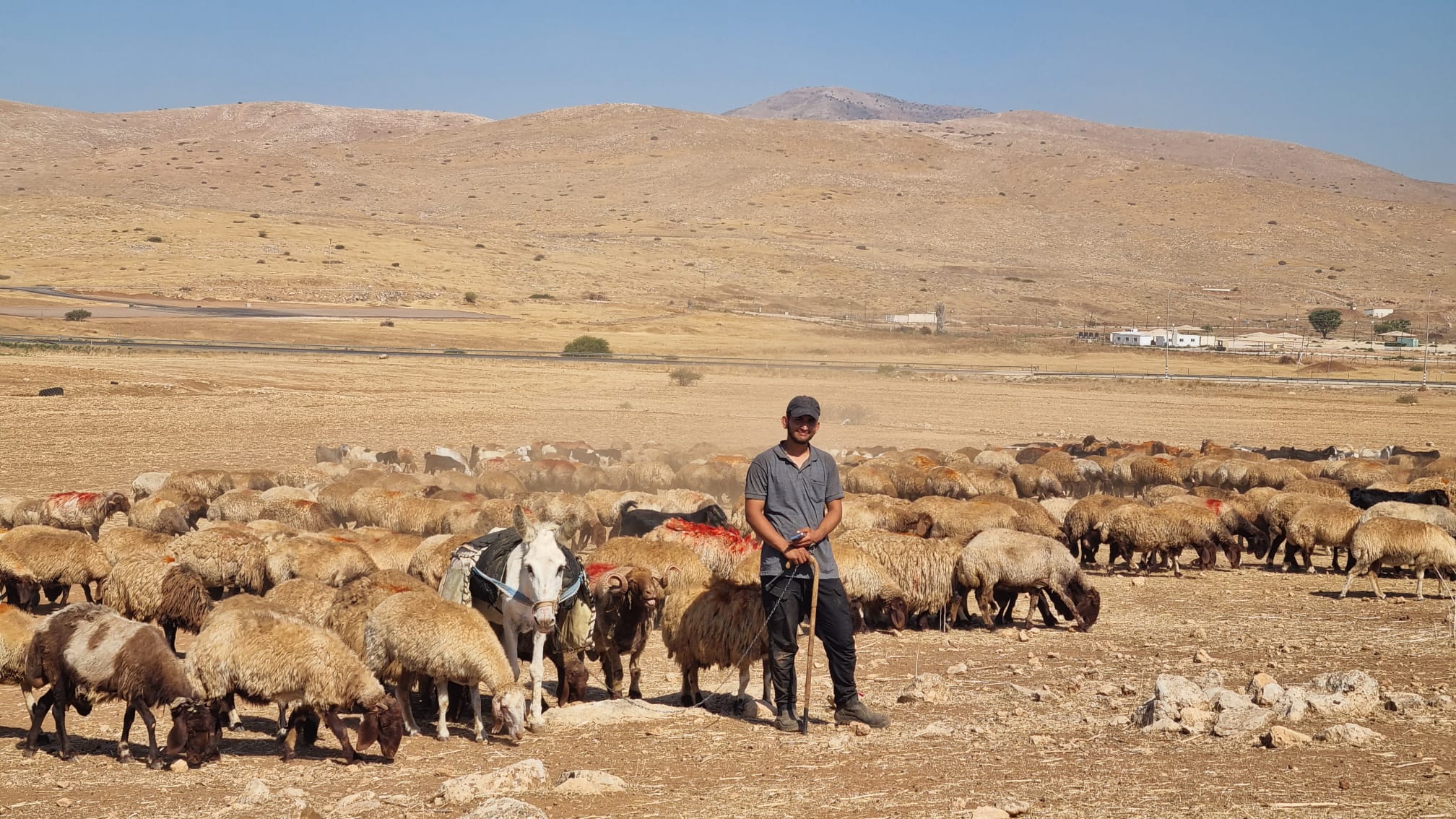
Today we are with the shepherds for the morning grazing. The field has been harvested, and the sparse remains serve as feed. It is very hot, but bearable, and there is no settler activity this morning.
After two hours in the sun, we return to Samra. The place is almost deserted; most of the family is in the village of Tubas.
In the hot summer, the sheep are pregnant. There is no milk, and there is much less work, a time to rest and reorganize.
We arrived at En al Hiwa in the afternoon – this is a community that husbands cattle and these days suffers repeated destruction of residences, pens and fences, water tanks – anything liable to be destroyed. The whole area looks bombed-out. But they remain to look after the herd and arrange possibilities to spend the night. The women and children have moved to reside in the Tamun, Tubas and Tayassir, and the four-five brothers swamped us with requests for food. These requests became unpleasant and we took our leave feeling accordingly.
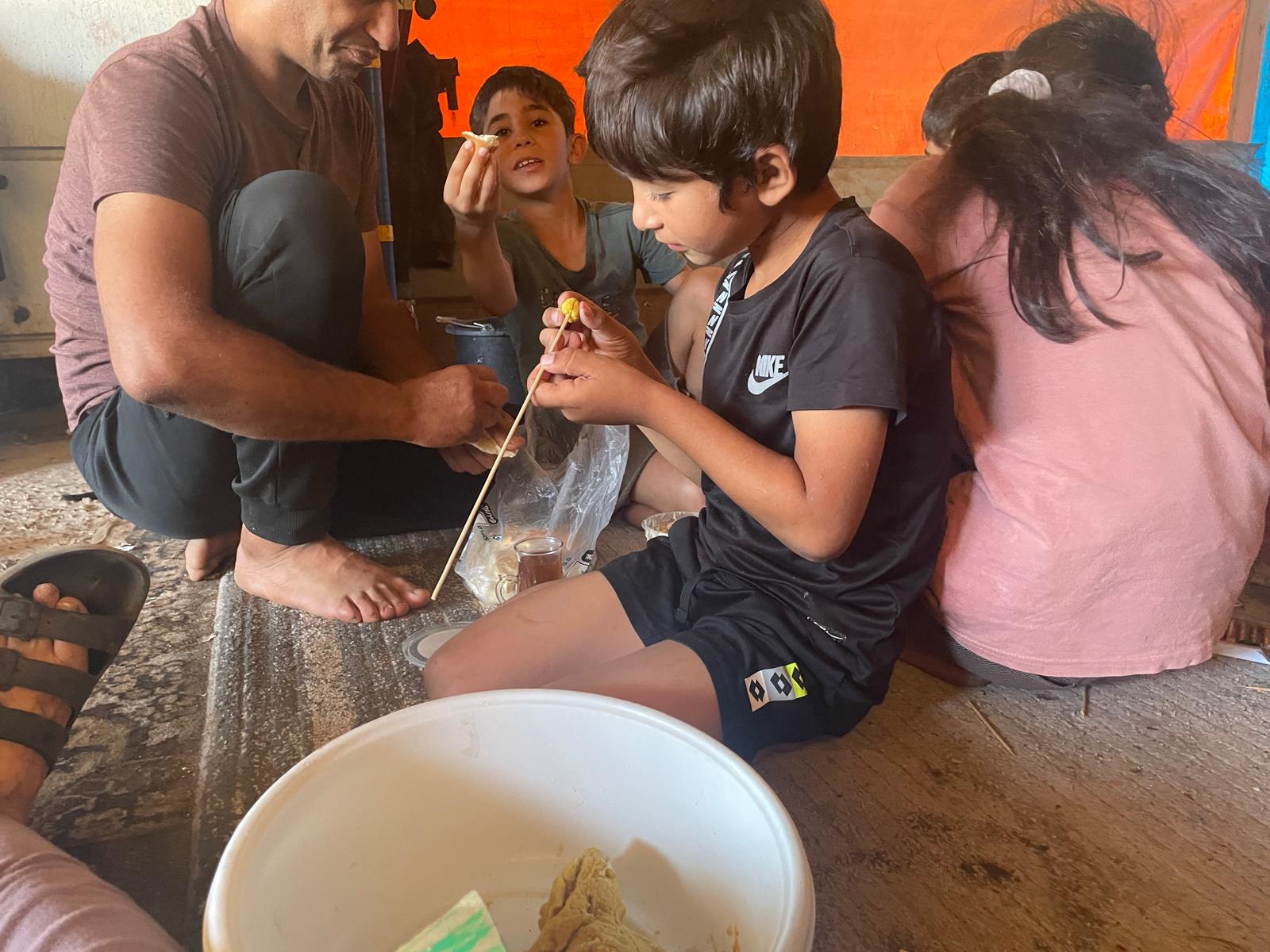
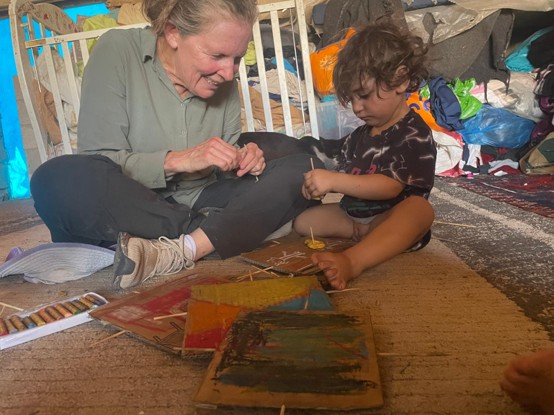
A visit of families in Makhoul, and playing with their children, fixed us.
Location Description
'Ein al-Hilwe
See all reports for this place-
Ein al-Hilwe is a natural spring and a Palestinian grazing area in the Jordan Valley that was used by the Palestinian shepherd communities for watering their flocks and for daily use. As of 2021, settlers from the Maskyot settlement took control of the spring: they fenced it off, built a wading pool and a mikveh, and installed flags and recreational facilities.
Palestinians are effectively denied access to the spring, and are forced to make do with running water in a remote wadi or, when the road is blocked, buy water from vendors at high prices.
The spring is located in the heart of an area where illegal outposts are being established, as part of a broader trend of pushing Palestinian communities away by denying them access to essential resources. Neighboring communities such as Umm Jamal and Khirbet Samra have already left due to the pressure.
Over the years, MachsomWatch members have reported arrests on false claims by settlers, harassment and violence, including damage to herds, intrusion into homes, and the intimidation of children. MachsomWatch volunteers participate in a protective presence in areas around the spring to prevent harassment of shepherds due to the presence of settlers.
-
Jordan Valley
See all reports for this place-
Jordan Valley The Jordan Valley is the eastern strip of the West Bank. Its area consists of almost a third of the West Bank area. About 10,000 settlers live there, about 65,000 Palestinian residents in the villages and towns. In addition, about 15,000 are scattered in small shepherd communities. These communities are living in severe distress because of two types of harassment: the military declaring some of their living areas, as fire zones, evicting them for long hours from their residence to the scorching heat of the summer and the bitter cold of the winter. The other type is abuse by rioters who cling to the grazing areas of the shepherd communities, and the declared fire areas (without being deported). The many groundwaters in the Jordan Valley belong to Mekorot and are not available to Palestinians living in the Jordan Valley. The Palestinians bring water to their needs in high-cost followers.
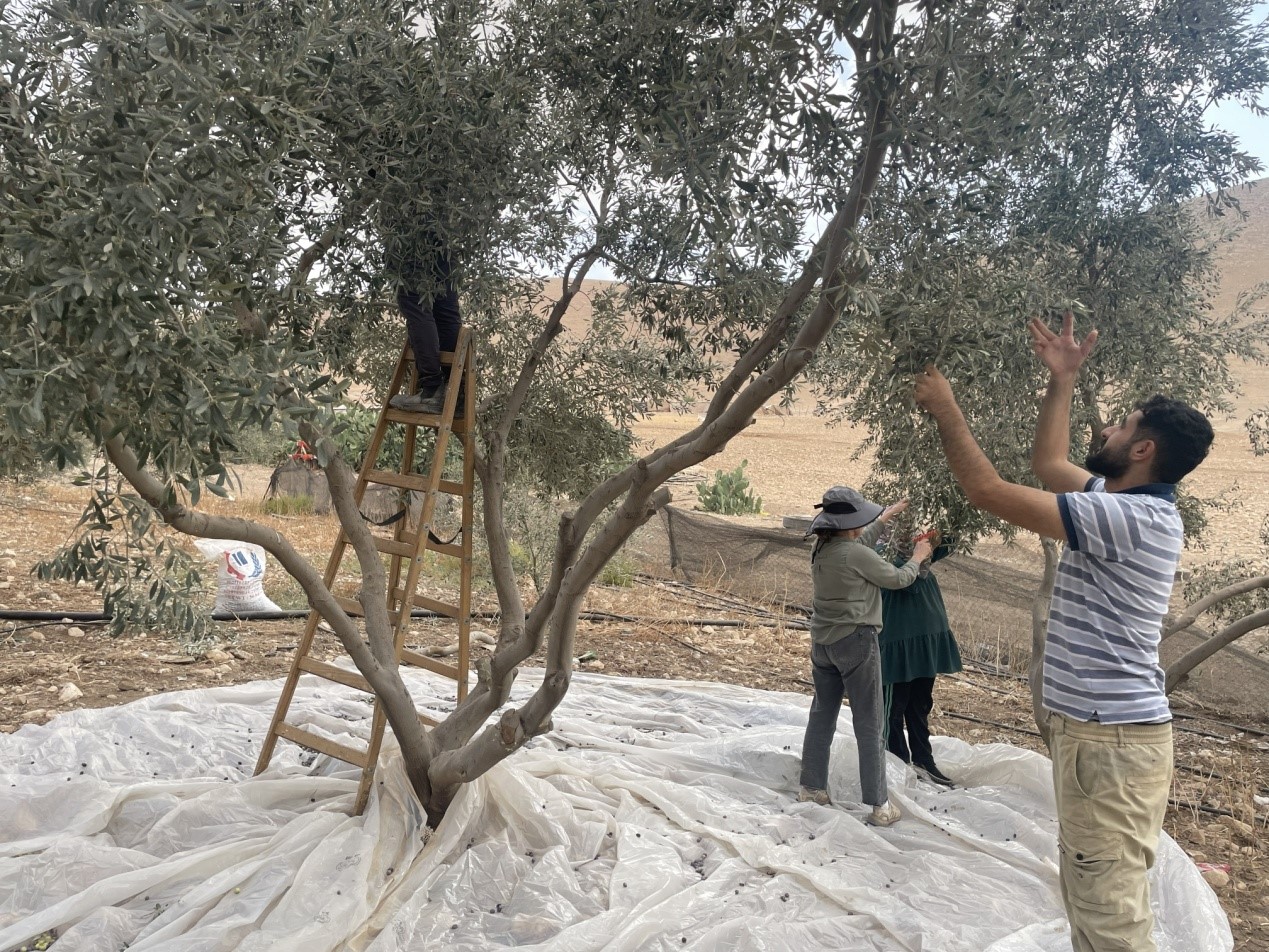 Rachel AfekOct-15-2026Olive Harvest in the Jordan Valley
-
Khalet Makhul
See all reports for this place-
Khalet Makhul
A small settlement of a shepherd community located on the way to the settlement of Hemdat. Two nearby outposts make life miserable for the Palestinians, who make a living from grazing, and the army backs the settlers. As a result, the possible grazing areas are getting smaller.
The local children attend school in the settlement of Ein Al-Beida. Long lines of 3 hours sometimes stretch out at the Hamra and Tayasir checkpoints leading to the town of Tubas, making it difficult to get water, supplies, and sell the cheese, milk, and meat that the residents produce for their living.
Following a deadly attack at the Tayasir checkpoint in February 2025, the checkpoint was closed completely for the time being.
(Updated March 2025)
-
Khirbet Samrah
See all reports for this place
