
Shuafat: A destructive “Beautification” operation for a refugee camp
A Devastated Palestinian Economy, a “Beautification” Operation in Shuafat Refugee Camp, and a Visit to the Home of N., Threatened with Demolition Near the Northern Access Road to Efrat
The economic situation in the West Bank has reached an unprecedented low, to the point that workers who have been barred from entering Israel for employment stand at checkpoints and ask the few who pass for a handout. In villages, tables are brought out into the streets to sell gold, household items, clothing, pictures, and more, in order to buy food for families. Dozens of shops have closed, there are no street vendors, no construction – an economy in the process of collapse. There is no doubt that the destruction of the economy is part of a comprehensive strategic plan to remove Palestinians from the West Bank – at minimum into isolated enclaves, and at maximum through transfer outside the West Bank. Five main reasons for the economic disaster in the West Bank:
Loss of the main source of income for tens of thousands of families – before October 2023, approximately 170,000–200,000 Palestinians from the West Bank worked in Israel and the settlements. Wages in Israel were significantly higher than in the West Bank – and the economy advanced. The closure of checkpoints caused many households to lose their primary source of livelihood.
Sharp rise in unemployment – the closure of the Israeli labor market led to a significant increase in unemployment.
Damage to local businesses – many businesses reported a decline in sales, difficulties transporting goods, and partial or complete shutdowns due to reduced demand and movement restrictions.
Decline in economic output – reports by international bodies point to a sharp contraction of the West Bank economy. According to a UNCTAD report, in 2024 the West Bank’s GDP contracted by about 17%, and GDP per capita fell by about 18.8%, partly due to restricted access to work in Israel, movement limitations, and reduced revenues of the Palestinian Authority.
Impact on the Palestinian Authority – declining household income reduced local tax collection and deepened the Authority’s fiscal crisis, alongside delays in the transfer of tax revenues collected by Israel.
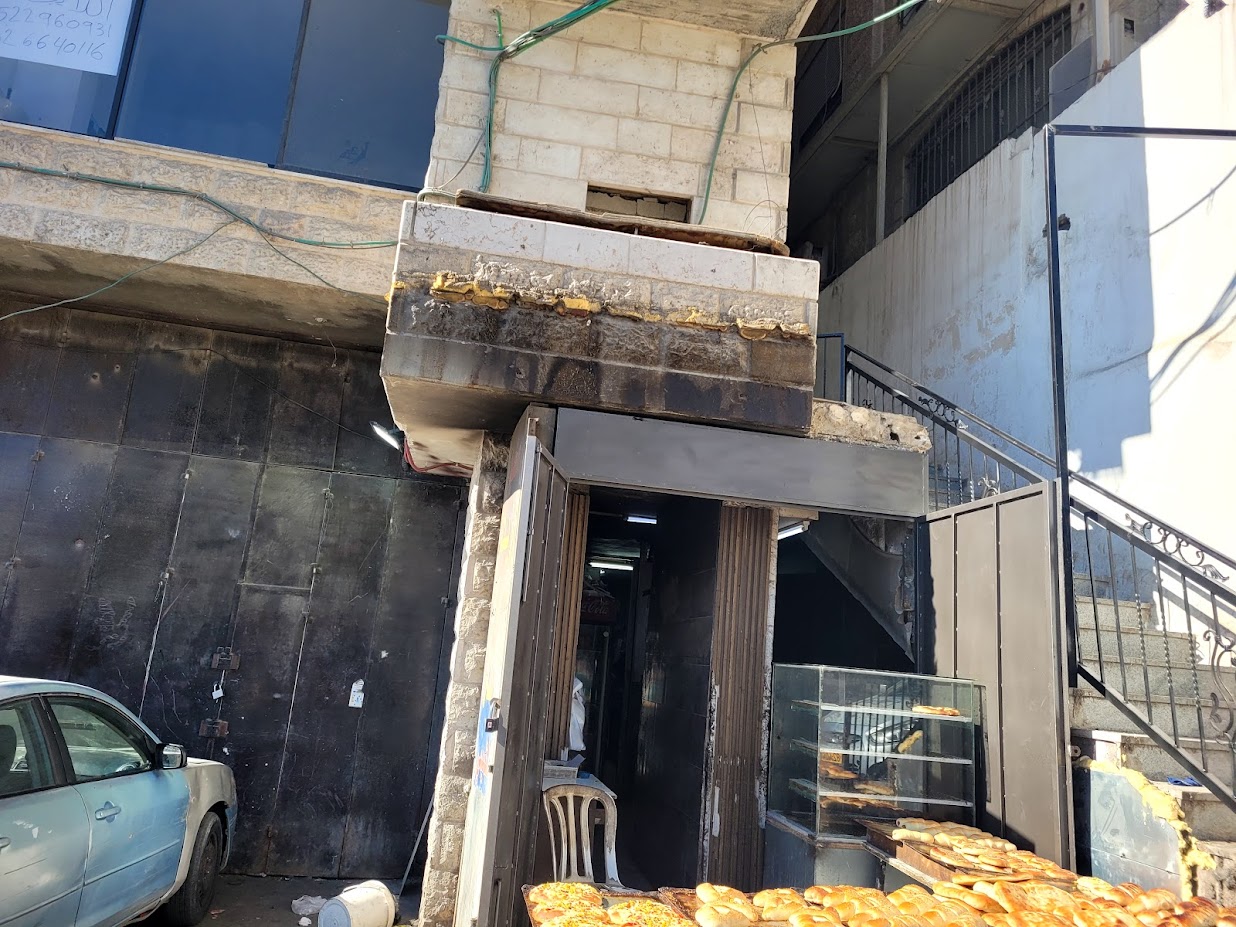
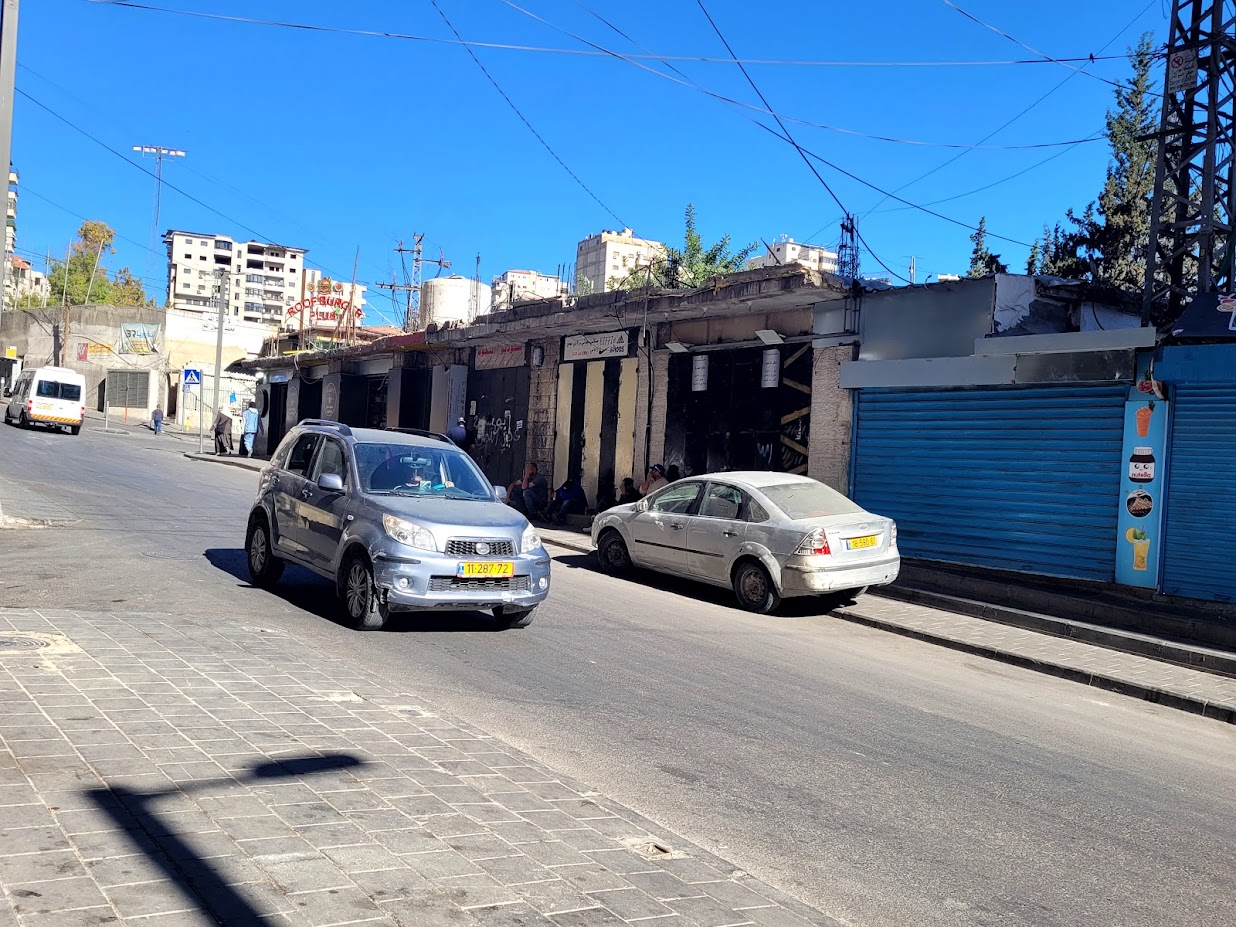
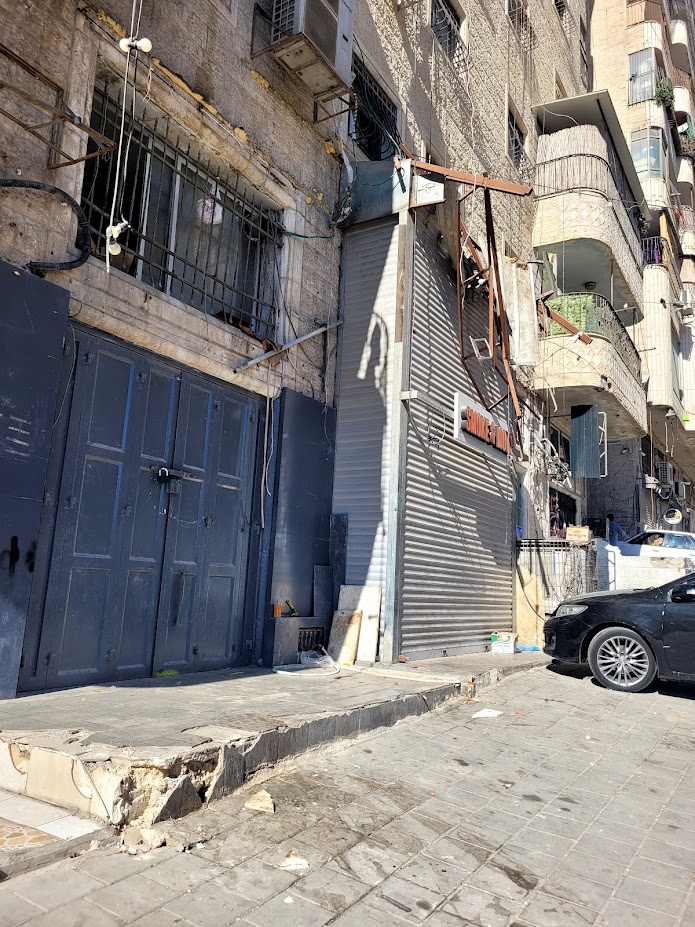
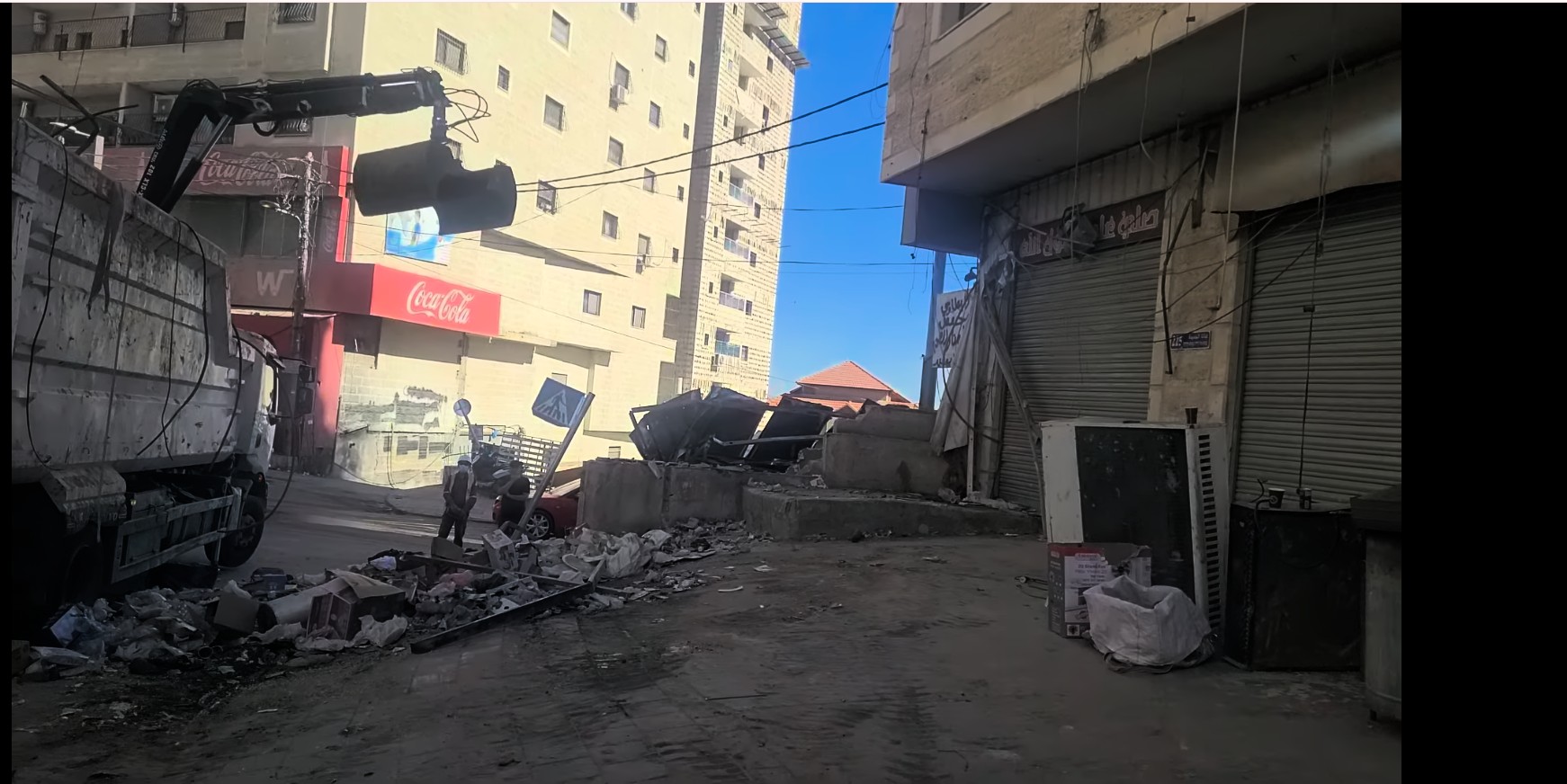
Shuafat Refugee Camp: On 23.6.26, the Jerusalem Municipality launched its own “operation,” contributing its share to the Palestinian economic crisis. In the neighborhood we visit regularly, demolition bulldozers appeared one morning and uprooted shop signs along the main street, damaged street-facing facades, and destroyed stalls. We received reports from acquaintances, passed the information to Nir Hasson, who investigated and published that this was a municipal-police operation. The camp was closed for many hours to entry and exit – from the checkpoint to the neighborhood boundary near the Anata schools. There were many police officers, and a helicopter hovered overhead.
It was a brutal uprooting that left shop fronts “bleeding.” In some places they entered shops and destroyed everything in sight. An entire street looked as though it had undergone a pogrom. No warnings or explanations were given. We heard that Shuafat Refugee Camp was not the only place where this occurred; it also happened in Kafr Aqab a week earlier.
When we arrived a week later, many shops along the main road were still closed, sidewalks were destroyed, and many facades had their signs torn off and were vandalized (some had already installed new signs). In conversations with passersby, we mostly heard suppressed anger and ongoing despair. Once again, we realized that one can “kill” without shedding blood.
The declared goal of “improving the appearance of refugee camps” is a cruel mockery. These neighborhoods lie within the municipal boundaries of Jerusalem but are trapped behind the separation barrier for demographic reasons. Most residents hold blue Jerusalem residency IDs and pay full municipal taxes – yet there is no effective policing, no efficient garbage collection, ambulances do not enter, there is water scarcity, and no building plans. What is there? Demolitions of homes and schools built without permits – while the municipality does not grant such permits in the first place. These neighborhoods are neglected in every sense, including visually. They are also plagued by crime and lack schools. No one in the municipality cares.
So how did they intend to improve appearances? By demolishing stalls and shop signs along the main street? Residents themselves did not understand why some signs were removed and others left intact. There were guesses that those removed were newer. We spoke with a municipal demolition-clearing contractor who has been working day and night for over a week because only one bulldozer was sent. The conclusion: the municipality mainly wanted to show “who is in charge.” It succeeded in showing that the one in charge is cruel, and that the goal is to make residents’ lives harder so that they will leave.
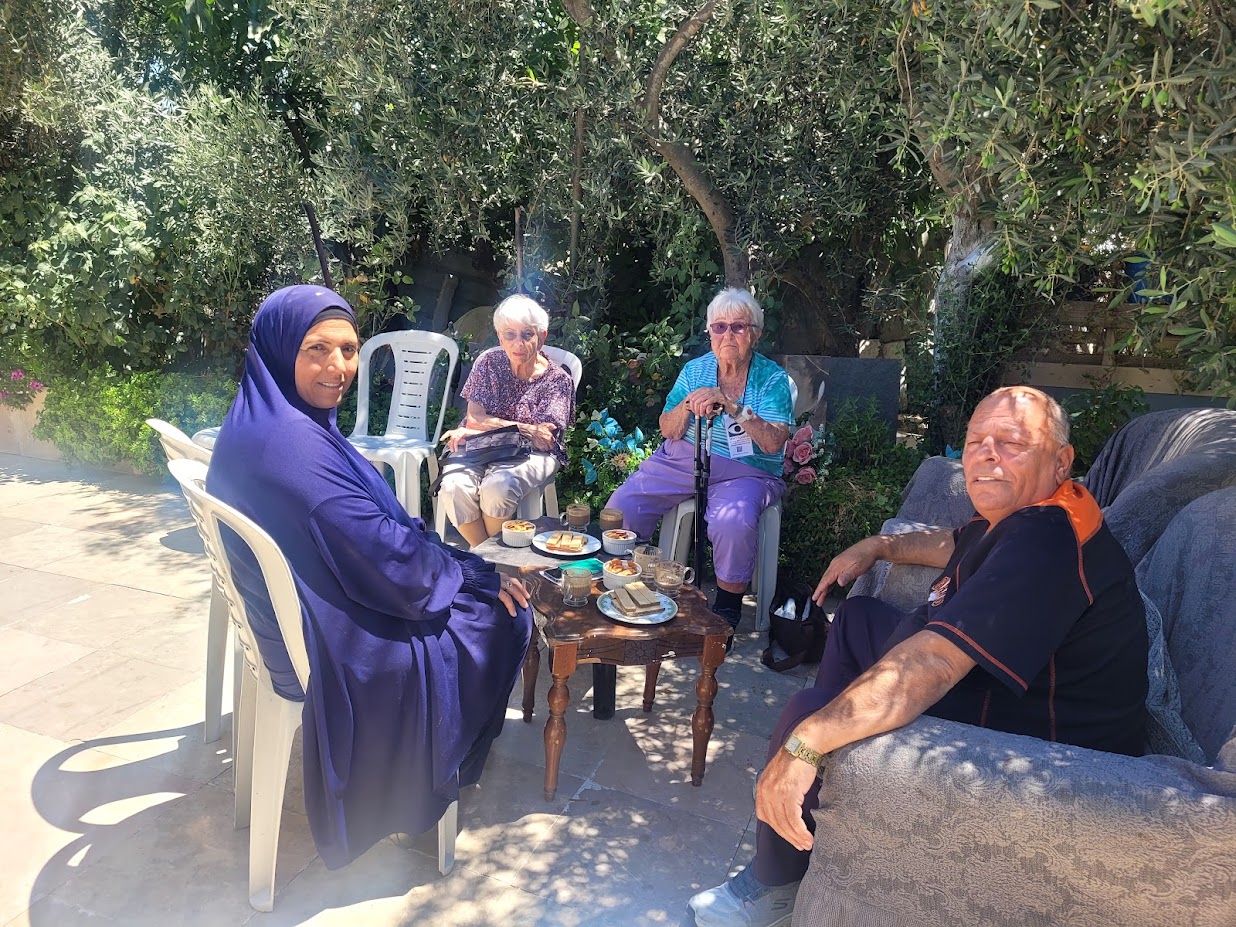
Visit to N.’s home – we arrived at the home of our wonderful friend N., a widow and mother of seven children: five daughters (one married) and two young sons. We came to encourage and express solidarity with the family, who are frightened by the threat of their home being demolished. We brought a soccer ball, chocolates, and financial assistance.
N.’s husband, who died of cancer about two years ago, was married to two women. The wives did not get along, and living near each other was a continuing nightmare. The husband, who inherited a plot of land, built for N. and her children – without a building permit, of course, which is nearly impossible to obtain in the West Bank (for settlers, of course, the situation is entirely different) – a small house on the plot. Not a spacious home with a red roof, but a tiny space that barely housed the family. When they tried to expand it slightly, a first demolition order was issued and carried out. At that stage, a British/Palestinian support organization, recruited with the help of our friends, renovated the house without expanding it and made it livable. Shortly afterward, another demolition order was issued, this time for the entire house. The organization St. Yves filed a humanitarian appeal to the Supreme Court, and an interim order delayed the demolition. However, the humanitarian petition was rejected, and the demolition threat remains without a set date. Demolition orders were also issued for several other houses in the area.
Now, two and a half years later, the authorities claim that the proximity of N.’s home to the planned route of a future road—intended to connect the northeastern entrance of Efrat to Route 60 (recently renamed the “Bible Road”)—poses a danger to Efrat’s residents. The head of the Efrat council even appeared in a video expressing satisfaction with the demolition orders, saying that this would “prevent another October 7 here.”
Good people are trying to help, but N. and her children do not sleep at night, fearing that the bulldozers will arrive at dawn. Meanwhile, new settlements continue to be built alongside existing ones, all considered illegal under international law, yet no demolition orders are issued against them, of course.
Without making comparisons, we too wake up at night and think each evening about what will happen to N. and her children the next morning.
Location Description
Al-Khader
See all reports for this place-
Al-Khadr served as transit from Bethlehem to Route 60. A dirt mound prevent vehicular traffic from and to Bethlehem from the west. A small market developed there. Taxi ranks were on both sides of the obstruction. It was replaced by a similar obstruction at Al Nashash which has recently been removed and thus the way from Bethlehem to Hebron through Route 60 is now free.
-
Checkpoint Shu'afat camp / Anata-Shu'afat (Jerusalem)
See all reports for this place-
The Shu’afat checkpoint is located in the northern part of East Jerusalem at the exit from the village of Anata and the Shu’afat refugee camp, which are located in the area annexed to Jerusalem in 1967. The refugee camp borders the Shu’afat neighborhood to the west, Pisgat Ze’ev to the north, the French Hill neighborhood to the south and the planned expansion of Ma’aleh Adumim to E-1 in the east. It was established in 1966 for 1948 refugees from the West Bank and was populated after the Six Day War by persons who had been expelled from the Jewish Quarter. Today its population comprises some 25,000 people holding blue ID cards and some 15,000 people with Palestinian ID cards. The camp lacks adequate infrastructure and services, and suffers from poverty, neglect and overcrowding. All its buildings are connected to the public electricity and water infrastructure, but not all are connected to the sewer system. The camp’s services are provided by UNRWA, except for those such as health clinics and transportation of pupils to schools in Jerusalem. In 2005, the Israeli High Court of Justice rejected a suit by the residents requesting that the route of the separation fence be drawn such that the camp would remain on the Israeli side, but conditioned its approval of the route on the establishment of a convenient and rapid crossing facility for the inhabitants of the neighborhood, most of whom are residents of Jerusalem.
A temporary checkpoint operated there until December, 2011. It was extremely congested during rush hours, and dangerous for pedestrians (especially children) because of inadequate safety provisions. The new checkpoint was inaugurated south of the old one, for public and private transportation and for pedestrians, intended solely for the residents of the camp – holders of blue ID cards, and those with Palestinian ID cards who possess appropriate permits. There are five vehicle inspection stations at the checkpoint, and two for pedestrians (one of which is currently closed) where scanners have been installed but are not yet operating. According to the army, representatives of government agencies will also be present to provide services to residents of the neighbourhood. The pedestrian lanes are very long, located far from the small parking lots, and accessible through only a single revolving gate.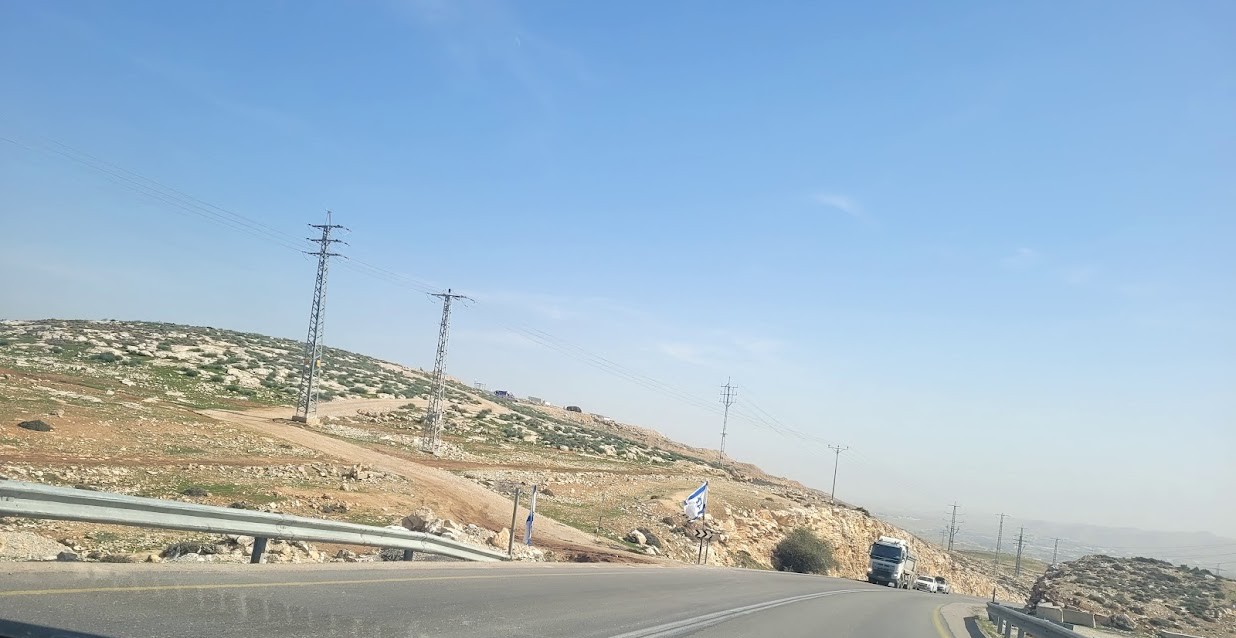 Anat TuegJan-25-2026Anata: A new outpost has been built south of the junction
-
