
South Hebron
Hebron Hills Sunday 23/10/05 AMObservers: Yeela L (reporting in Hebrew) Elena L,(reporting in English)6:45- 10:00Summary The army presence is a somehat less than it was in the first days after the killing of the settlers, but traffic is still sparse, Hebron is encircled, and the limitations imposed on movement remain severe. Routes 35 and 317 (south of Zif Junction) remain closed to Palestinian vehicles. The UmmTuba school children continue to come to school in Tawani by the long route without a military or police escort. [NOTE: These escorts, recently discontinued, had protected the schoolchildren from settler attacks.]Sansana CP – there are no detainees and we were not stoppedCongo CP – no cars and no detainees.The CP at the turn-off to Beth Yatir – The soldiers reported that yesterday (Saturday) they had prevented a car with 4 persons who said they taught at the school in Dirijat village from going through the CP (they were coming from Yatta). The soldiers said that they have updated lists of authorized teachers and the 4 persons were not on them. Tawani – We saw the Umm Tuba children coming to the Tawani school on donkeys and on foot by the long way and without an army escort. The children from Susiya had already arrived by the tractor-drawn cart. The driver told us that 14 children had come today. He said that his salary (still unpaid) and the money for petrol comes from a European organization.We again met F’, the girl who could not go to school because her father couldn’t pay the fees- her mother told us that the reason why they couldn’t pay the fees was that both she and her husband have been without any source of income since the beginning of the intifada. We must try to get hold of schoolbooks in Arabic suitable for a 12 year old. Zif Junction: The CP is closed. Soldiers were standing on the road and preventing every Palestinian vehicle going south from continuing. The reason may well be to prevent them from driving near Carmel and Ma’on. The soldiers had no idea what the reason was. There were 7 detainees who wanted to enter Yatta via the CP (they had come from Ramallah) whose IDs had been taken for checking. They later phoned to tell us that their IDs had been returned and they had been let through. They had been detained for about 20 minutes altogether.Shiyuch –Hebron Crossing ( the girls’ school): There were no soldiers on the ground. The crossing was open to pedestrians as usual. There were taxis on the near side of the roadblock to Shiyukh –with access to route 60. Usually we see taxis only on the far side of the roadblock.Sair-Halhul East Crossing –the access to both Sair and to East Halhul was blocked. The barbed wire that had blocked the entrance to East Halhul last Thursday (20/10) has been replaced by cement blocks. At the centre of the crossing there is a road block and soldiers are checking motor traffic going along route 60. Pedestrians are randomly checked, especially men with bulging pockets. Palestinian taxis are allowed through in both directions (after IDs and the baggage trunk have been checked). Private Palestinian cars are not allowed through the roadblock. Palestinian trucks carrying “humanitarian” goods (this mainly means food) are allowed through after the driver’s papers have been checked and the truck’s license number has been registered on the police computer. This checking procedure can take from 10 minutes to three hours, according to the roadblock CO. The soldiers are polite and efficient.Route 35: is closed to all Palestinian vehicles.The Humanitarian CP is manned and the gate to Hebron is open. UN vehicles are observed coming through it from Hebron; also cars with yellow license plates ( by law they are not allowed to be in Hebron and the drivers are reprimanded by the soldiers). An ambulance was observed going through and even a Palestinian (yellow) taxi (perhaps a VIP was traveling in the taxi)Sheep’s Crossing: no military presence. Pedestrians crossing in both directions.At Beit Hagai –a female settler is standing on route 60 trying to hitch a ride – Incredible!Dura – Al Fawwar Crossing: Closed to cars. A barrier of cement blocks is manned by soldiers checking vehicles driving on route 60. They did not check the IDs of pedestrians.Dirt barriers have been topped up all along route 60 south of DuraDahariya- The gate is open but boulders bar the passage of vehicles.
Hebron
See all reports for this place-
According to Wye Plantation Accords (1997), Hebron is divided in two: H1 is under Palestinian Authority control, H2 is under Israeli control. In Hebron there are 170,000 Palestinian citizens, 60,000 of them in H2. Between the two areas are permanent checkpoints, manned at all hours, preventing Palestinian movement between them and controlling passage of permit holders such as teachers and schoolchildren. Some 800 Jews live in Avraham Avinu Quarter and Tel Rumeida, on Givat HaAvot and in the wholesale market.
Checkpoints observed in H2:
- Bet Hameriva CP- manned with a pillbox
- Kapisha quarter CP (the northern side of Zion axis) - manned with a pillbox
- The 160 turn CP (the southern side of Zion axis) - manned with a pillbox
- Avraham Avinu quarter - watch station
- The pharmacy CP - checking inside a caravan with a magnometer
- Tarpat (1929) CP - checking inside a caravan with a magnometer
- Tel Rumeida CP - guarding station
- Beit Hadassah CP - guarding station
Three checkpoints around the Tomb of the Patriarchs
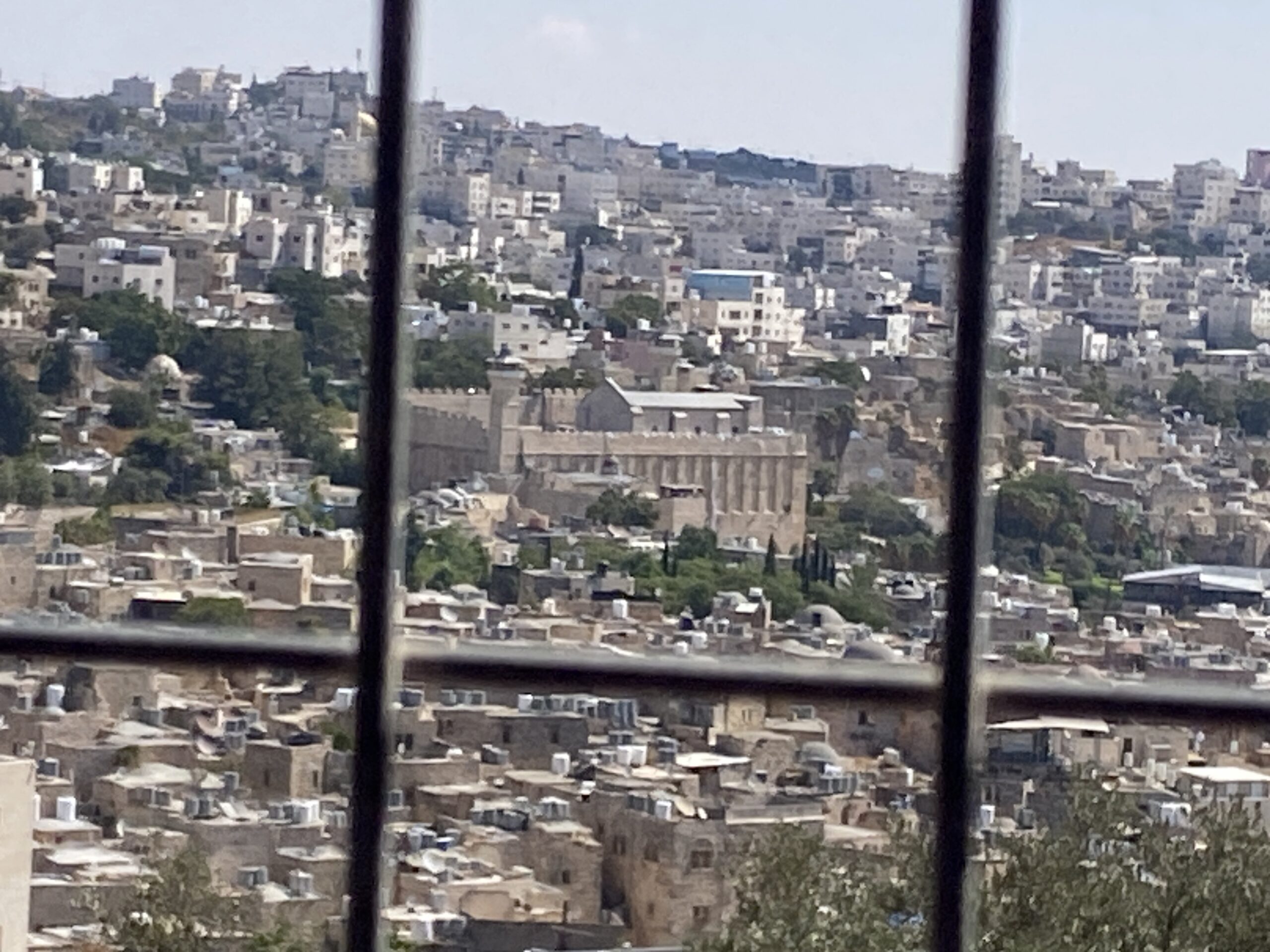 Yael ZoranSep-24-2026Hebron and the Cave of the Patriarchs from Beit Hashalom
-
Susiya
See all reports for this place-
Susiya The Palestinian area lies between the settlement of Susya and a military base. The residents began to settle in areas outside the villages in the 1830s and lived in caves, tents and sukkot. To this day they maintain a traditional lifestyle and their livelihood is based on agriculture and herding. Until the 1948 war, the farmers cultivated areas that extended to the Arad area. As a result of the war, a significant portion of their land left on the Israeli side was lost. After the 1967 war and the Israeli occupation, military camps were established in the area, fire zones and nature reserves were declared, and the land area was further reduced. The Jewish settlement in Susya began in 1979. Since then, there has been a stubborn struggle to remove the remains of Palestinian residents who refuse to leave their place of birth and move to nearby town Yatta. With the development of a tourist site in Khirbet Susya in the late 1980s (an ancient synagogue), dozens of families living in caves in its vicinity were deported. In the second half of the 1990s, a new form of settlement developed in the area - shepherds' farms of individual settlers. This phenomenon increased the tension between the settlers and the original, Palestinian residents, and led to repeated harassment of the residents of the farms towards the Palestinians. At the same time, demolition of buildings and crop destruction by security forces continued, as well as water and electricity prevention. In the Palestinian Susya, as in a large part of the villages of the southern Hebron Mountains, there is no running water, but the water pipe that supplies water to the Susya Jewish settlement passes through it. Palestinians have to buy expensive water that comes in tankers. Solar electricity is provided by a collector system, installed with donation funds. But the frequent demolitions in the villages do not spare water cisterns or the solar panels and power poles designed to transfer solar electricity between the villages. Updated April 2021, Anat T.
-
Zif Junction
See all reports for this place-
Zif Junction located on the crossroads that directs towards Road 356 to Yata. Yata is the district city of the southern Hebron Mountains. Usually, this junction is open to traffic. The nearby pillbox is unmanned. But the army and police are present occasionally, sometimes setting up a checkpoint and sometimes detaining residents from the big city. Often, the Israeli policemen inspect vehicles and distribute driving reports to Palestinian vehicles. s
-
