
South Hebron
SOUTH HEBRON Thursday 31/03/05, AMObservers: Edna S., Mira B.(Hebrew), Leah Y.(English)We left Tsomet Shoqet 6:45,returned 10:00.Sansana roadblock: we drive through without stopping,the soldiersknow us.Route 317: new mounds of earth along the way..Arad roadblock:notraffic,only soldiers. More fresh earth-mounds in the Yatadirection.(still,we saw a family with small children whose tendermanaged to get across and the kids climbed over, in its trail)TAWANI: villagers moved the large stones in the school-yard for paving the entrance into the village. (NB:they had intended to pave the road leading to their grazing land but the army forbade that,because:”this is a firing zone” -incredible..). The villagers told us about the following incidents:1. On 28/03/05,N.an Israeli boy(aged 16,born in Ramle)staying withhis brother in Tawani,was grazing sheep with another shepherd(alsoN.)in Haruba…land that belongs to Tawani(they claim). Soldiersarrived,blindfolded him,tied his hands behind his back and took himto the army base in Susiya (N.said he could peep so he could seewhere they were taking him).He was held there from 1:00pm.to 8:00pm.sitting on the floor,no water to drink and not allowed to the toilet;soldiers hit him in”sensitive parts”as he put it and asked about the names of the other shepherds. They warned him that if he grazes sheepin Haruba again,they will kill him. In the evening he was returned to Tawani in a Toyota (he peeped).N.thinks the Peace activists have photos of his arrest. He did not lodge a complaint:for that, he would have to go to the Hebron Police through all the roadblocks (the short way via Yata,is blocked) and then wait for hours; & even then it is highly unlikely that anything would be done about a complaint against the army.2. More stories about the poison spread on their land,apparently by settlers (“the monsters”, we shall call them)living in the wood between Tawani and the Maon Farm. The police took samples of the poison. More sheep and other animals have died. (The Nature Preservation Society takes interest in deer,not sheep.)3. ‘The monsters from the wood’ploughed up a Tawani field after the seeds had sprouted,and a “battle” ensued. The settlers from the “legal” Maon Farm came to the aid of their friends from the wood;the Tawanis described their strategy: they split their “forces”,some villagers stayed behind to defend their home (what does thatbring to mind?) Hard to understand why the army keeps protecting’the monsters’, there are soldiers around the wood.4. The schoolchildren from Um Tuba:At 8:30 am the children hadn’t arrived. The international peace volunteers(operational dove and CPT)tried to contact officials from the Un(?) and the Red Cross.Mira phoned Operations Hativat Yehuda. They knew nothing, beganenquiries,said there was a new convoy and that this was the reasonfor the delay. When asked for details,they reported the convoy would arrive in 5 minutes,but not where,exactly. Mira asked ifanyone had notified the children or their parents – even Palestinian children don’t wait more than an hour for nothing.We knew they’d have gone back to their village. The army had nophone numbers and didn’t know which villages the children comefrom. Finally, after 1 1/2 hours,but of course the children had left. Mira inquired:”Would children from Maon who needed to betaken to ballet class, have been left waiting in a dangerousplace for more than an hour without any message?”We left Tawani at 9:30 and cut short the rest of the watch,didn’t go to Halhul. Route60: Zif Junction, open; Sheeps’ Junction.open but stillnot for vehicles and one has to cross the whole area that separates the earth-mounds from the Yata side,to the main road.Dura-El Fawar: open to cars, the pillbox is manned.Karame: new gate, open; Dahariya:the blocks are still there.All the outposts are in place; many army vehicles, we sawcirca 6 Hummers and a police jeep.
Hebron
See all reports for this place-
According to Wye Plantation Accords (1997), Hebron is divided in two: H1 is under Palestinian Authority control, H2 is under Israeli control. In Hebron there are 170,000 Palestinian citizens, 60,000 of them in H2. Between the two areas are permanent checkpoints, manned at all hours, preventing Palestinian movement between them and controlling passage of permit holders such as teachers and schoolchildren. Some 800 Jews live in Avraham Avinu Quarter and Tel Rumeida, on Givat HaAvot and in the wholesale market.
Checkpoints observed in H2:
- Bet Hameriva CP- manned with a pillbox
- Kapisha quarter CP (the northern side of Zion axis) - manned with a pillbox
- The 160 turn CP (the southern side of Zion axis) - manned with a pillbox
- Avraham Avinu quarter - watch station
- The pharmacy CP - checking inside a caravan with a magnometer
- Tarpat (1929) CP - checking inside a caravan with a magnometer
- Tel Rumeida CP - guarding station
- Beit Hadassah CP - guarding station
Three checkpoints around the Tomb of the Patriarchs
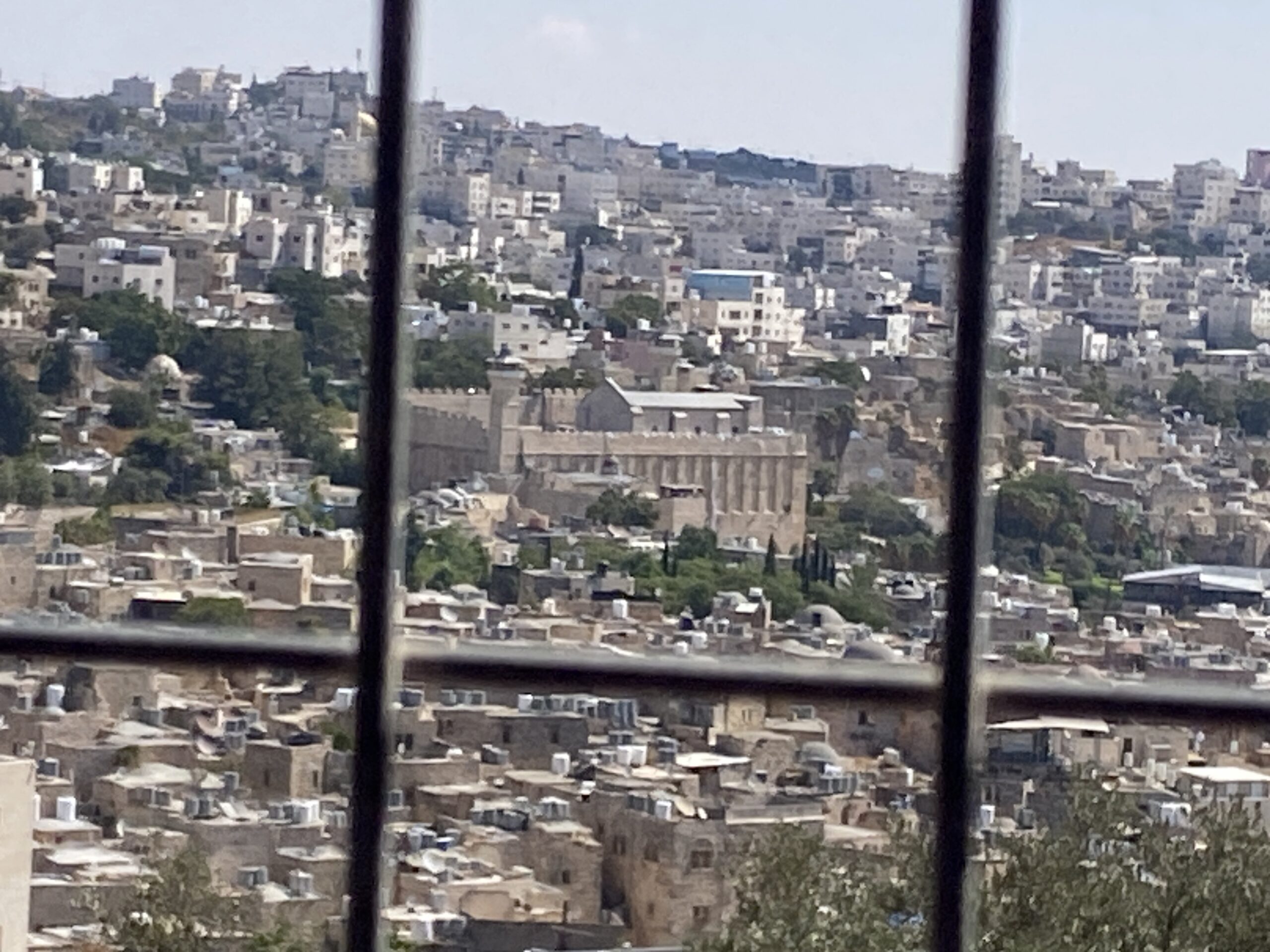 Yael ZoranSep-24-2026Hebron and the Cave of the Patriarchs from Beit Hashalom
-
Susiya
See all reports for this place-
Susiya The Palestinian area lies between the settlement of Susya and a military base. The residents began to settle in areas outside the villages in the 1830s and lived in caves, tents and sukkot. To this day they maintain a traditional lifestyle and their livelihood is based on agriculture and herding. Until the 1948 war, the farmers cultivated areas that extended to the Arad area. As a result of the war, a significant portion of their land left on the Israeli side was lost. After the 1967 war and the Israeli occupation, military camps were established in the area, fire zones and nature reserves were declared, and the land area was further reduced. The Jewish settlement in Susya began in 1979. Since then, there has been a stubborn struggle to remove the remains of Palestinian residents who refuse to leave their place of birth and move to nearby town Yatta. With the development of a tourist site in Khirbet Susya in the late 1980s (an ancient synagogue), dozens of families living in caves in its vicinity were deported. In the second half of the 1990s, a new form of settlement developed in the area - shepherds' farms of individual settlers. This phenomenon increased the tension between the settlers and the original, Palestinian residents, and led to repeated harassment of the residents of the farms towards the Palestinians. At the same time, demolition of buildings and crop destruction by security forces continued, as well as water and electricity prevention. In the Palestinian Susya, as in a large part of the villages of the southern Hebron Mountains, there is no running water, but the water pipe that supplies water to the Susya Jewish settlement passes through it. Palestinians have to buy expensive water that comes in tankers. Solar electricity is provided by a collector system, installed with donation funds. But the frequent demolitions in the villages do not spare water cisterns or the solar panels and power poles designed to transfer solar electricity between the villages. Updated April 2021, Anat T.
-
