
South Hebron Hills
Hebron and South Hebron Hills Monday, Nov.21Observers: Y.L. (Hebrew report); Z.B.P (English)Departure: Tsomet Shoket 07:00; Return: 10:30Hebron: A cold and rainy day. Few people on the road, Palestinians or soldiers. Nothing unusual. The watchman detains us a long time at the entrance to Kiryat Arba; it seems that he is obeying settlers’ orders. He claims he needs permission from the army or the police. Does not like the fact that we are not happy to move aside and wait. Says other women are nicer and behave better. A police car arrives, but after a short talk with the watchman the driver says that the police here is receiving orders from the army so he cannot help us. Another police car arrives, and this time an officer tries to figure out what is going on and why the watchman doesn’t let us go in when he permits it. An army Jeep stops and the soldier says he knows of no such orders. After a while the police officer says “follow me” and we do till we are out of Kiryat Arba. That is why we assume that the watchman has orders to detain us for as long as possible, probably in the hope that we would give up and go away.We were late, mostly because of time spent at the gate, and didn’t see the school girls. The street was empty because of the weather. The few stores that are sometimes open were open. We saw the woman who followed us last time, but this time she left us in peace. The soldier manning the checkpoint at the feet of Tel Romeida told us the girls were allowed to pass without going thru the magnometer. (That was before the last round of clashes and shooting.)Sansana: no detainees.Dahariya: Road probably closed, because people came off cars. We couldn’t see the roadblocks from the main road.Very few Palestinian cars. Dura-al Fawwar: road open; no soldiers; new concrete obstacles on the road. On our way back we saw a policeman watching the traffic (hoping to issue tickets?).Sheep junction: no soldiers. People crossing on foot. The vegetable vendor on Yata’s side tells us that during the day things are “normal”, except for the “terrible occupation” and the need to travel 2 hours from one place to another which is only 5 minutes away. He saw an old woman carried by hand because it is impossible to cross the road with a car. His stall (‘basta’) is actually in Hebron, but he cannot be part of Hebron because of the road blocks. He himself is working against the Hammas, as part of the Palestinian Authority security forces, but with this kind of occupation, how can you stop the emergence of new suicide bombers? He also told us that soldiers come at night just to show their presence, even when they are not looking after particular individuals. “Just a show of force.”Shiyukh-Hebron girls’ school: the usual. No police. People report occasional visits by soldiers who come to check the road-block and ascertain that there are no new or bigger openings and that no cars can get on route 60. When the soldiers come near children sometimes throw stones on them.East Halhul: open. A new traffic island in the middle of the road on the south side.Route 35: the Humanitarian roadblock is closed. Idna is open and soldiers are present.Ramadin: Still manned by Golani who allow only Ramadin people to go through. Soldiers behave efficiently and cordially. They say merchandise is passing thru.
Hebron
See all reports for this place-
According to Wye Plantation Accords (1997), Hebron is divided in two: H1 is under Palestinian Authority control, H2 is under Israeli control. In Hebron there are 170,000 Palestinian citizens, 60,000 of them in H2. Between the two areas are permanent checkpoints, manned at all hours, preventing Palestinian movement between them and controlling passage of permit holders such as teachers and schoolchildren. Some 800 Jews live in Avraham Avinu Quarter and Tel Rumeida, on Givat HaAvot and in the wholesale market.
Checkpoints observed in H2:
- Bet Hameriva CP- manned with a pillbox
- Kapisha quarter CP (the northern side of Zion axis) - manned with a pillbox
- The 160 turn CP (the southern side of Zion axis) - manned with a pillbox
- Avraham Avinu quarter - watch station
- The pharmacy CP - checking inside a caravan with a magnometer
- Tarpat (1929) CP - checking inside a caravan with a magnometer
- Tel Rumeida CP - guarding station
- Beit Hadassah CP - guarding station
Three checkpoints around the Tomb of the Patriarchs
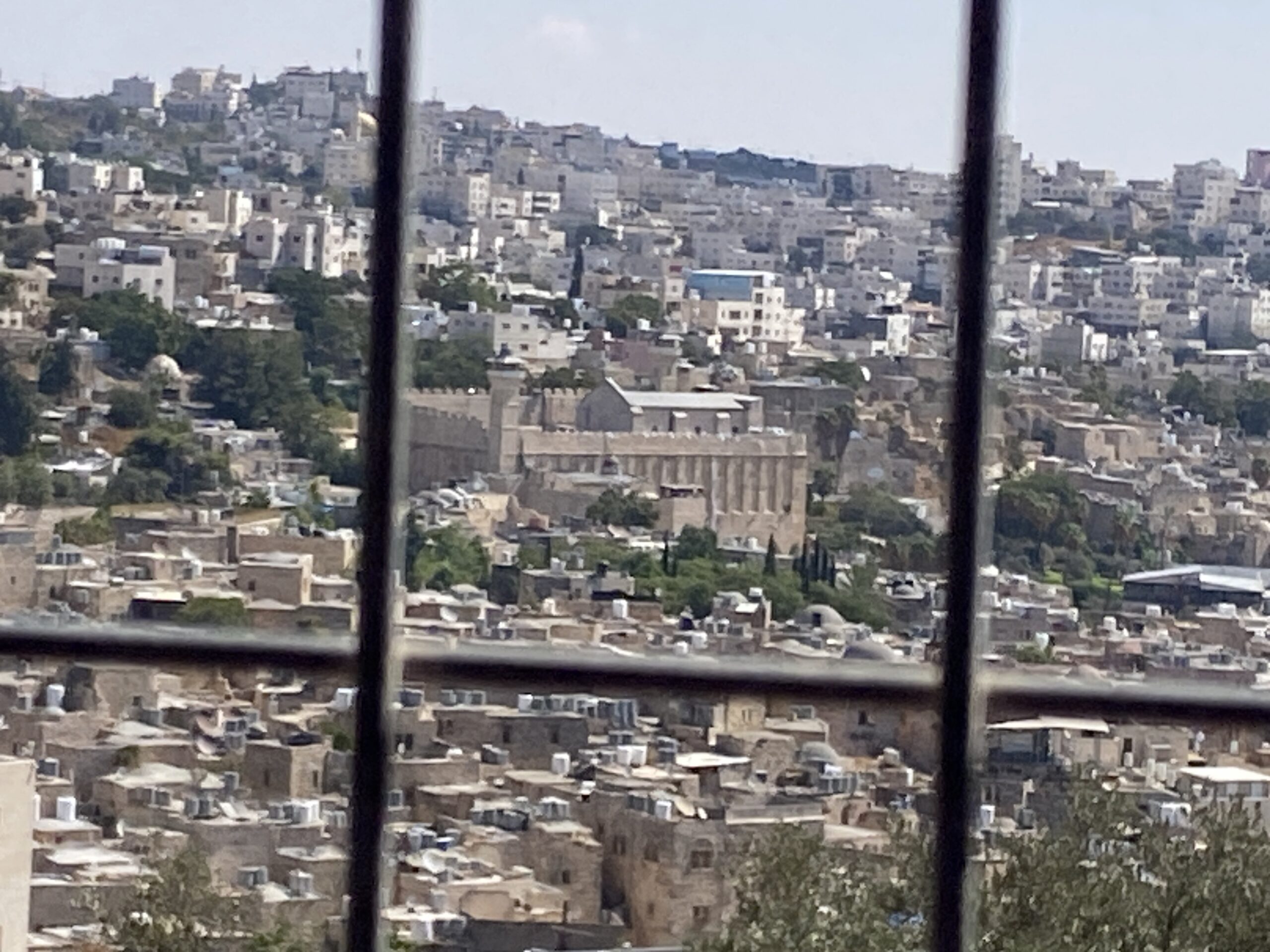 Yael ZoranSep-24-2026Hebron and the Cave of the Patriarchs from Beit Hashalom
-
South Hebron Hills
See all reports for this place-
South Hebron Hills
South Hebron Hills is a large area in the West Bank's southern part.
Yatta is a major city in this area: right in the border zone between the fertile region of Hebron and its surroundings and the desert of the Hebron Hills. Yatta has about 64,000 inhabitants.
The surrounding villages are called Masafer Yatta (Yatta's daughter villages). Their inhabitants subsist on livestock and agriculture. Agriculture is possible only in small plots, especially near streams. Most of the area consists of rocky terraces.Since the beginning of the 1980s, many settlements have been established on the agricultural land cultivated by the Palestinians in the South Hebron Hills region: Carmel, Maon, Susia, Masadot Yehuda, Othniel, and more. Since the settlements were established and Palestinians cultivation areas have been reduced; the residents of the South Hebron Hills have been suffering from harassment by the settlers. Attempts to evict and demolish houses have continued, along with withholding water and electricity. The military and police usually refrain from intervening in violent incidents between settlers and Palestinians do not enforce the law when it comes to the investigation of extensive violent Jewish settlers. The harassment in the South Hebron Hills includes attacking and attempting to burn residential tents, harassing dogs, harming herds, and preventing access to pastures.
There are several checkpoints in the South Hebron Hills, on Routes 317 and 60. In most of them, no military presence is apparent, but rather an array of pillboxes monitor the villages. Roadblocks are frequently set up according to the settlers and the army's needs. These are located at the Zif Junction, the Dura-al Fawwar crossing, and the Sheep Junction at the southern entrance to Hebron.
Updated April 2022
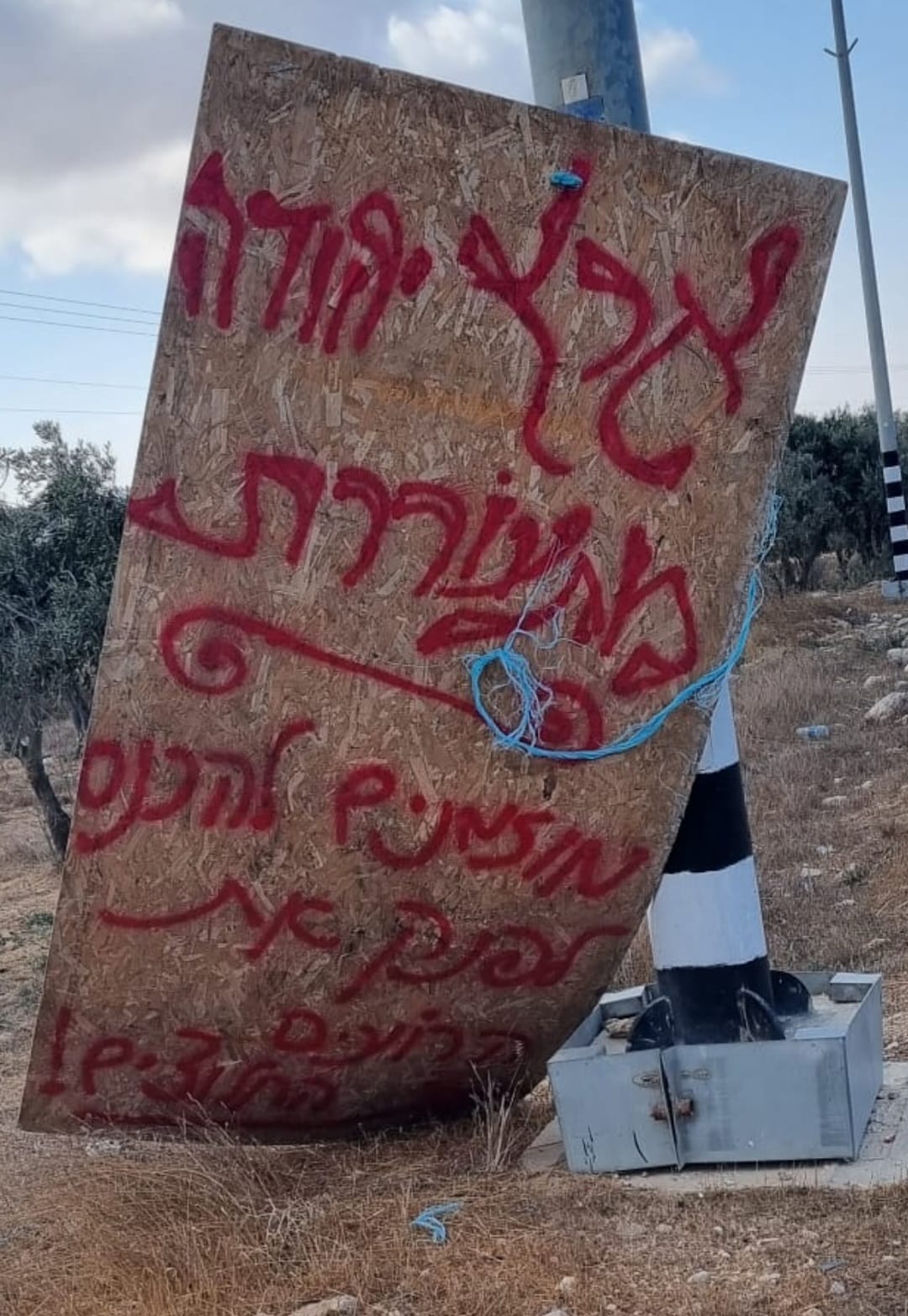 Smadar BeckerOct-17-2026A sign placed by those who call themselves the Pioneer Shepherds, at the outpost adjacent to Qawawis
-
