
South Hebron Hills
South Hebron Hills, Monday 9/1/06, AMObservers: Hagit B., Michal 10:30 – 14:45Summary: We didn’t enter Hebron today; the children are on holiday from school (Id el Idta) so there was no point. On the roads, there were very few taxis and, in general, no usual Palestinian traffic – complete Apartheid on the roads and the army is more than watchful!Throughout route 60, the Electric Company is busy measuring. We gavethat information to Dror from ‘Peace Now’ for him to find out what is being done and the reason for it . Route 317 Kongo Checkpoint – no people at the entrance to Samoa; the entrance to East Samoa is blocked with beautiful new stones. The Susiya Checkpoint is being moved close to the fence – from now on it is no longer on the main road towards Nazlan Village and near Beit Yattir – the Beit Yattir settlement has been placed into the State of Israel and thus, land is stolen from the Nazlan villagers at the same time. In military parlance the checkpoint is called the ‘Switzerland Checkpoint’. Near Hirbet Tawani, we meet the Amur Family, whose 120 olive trees were cut down; they guard the grove and await a visit from sympathizers this coming Shabbat. They ask us to help find volunteers who would be prepared to help them re-fence their grove. They say, it will take 5 years before it recovers its previous harvest – the destroyed olive grove was aged 15 years.The foundation for the new neighborhood in the Carmel Settlement is already complete – why spend money if they intend to move? And do they really have permits?Route 356Cameras by the pillbox, photograph the traffic 24 hours a day – the pillbox is manned as usual. Close to the shops at the Zif Junction, over the big grocery, there is a large army camouflage net with an Israeli flag – the house was occupied a week ago – the usual routine. We get out of our car and go to the other grocery, where the owner of the occupied grocery talks to us. Today, on the eve of a holiday, 21 family members –grandparents, 3 brothers, their wives and young children – were taken out of their house and are staying with other relatives. This was already nearly 2 weeks ago (since we began to enter Hebron, we don’t travel this road and they didn’t have our telephone numbers) We ring the army emergency center: N. the soldier who answers, speaks politely to us and also with Yusuf Abu Raj – the owner of the house. Yusuf says his grandfather returns from Mecca today and they can’t honor him the way he deserves. We ring Adi who can communicate further, but it is of no real interest to anyone. They tell us it is a necessary military operation – and I don’t understand why – 500 meters to the south-east, there is a pillbox, 500 meters North-west there is Karkum – the house does not have better look-out points – why enter a home and take away a most basic right –I don’t get it. Yusuf also complains of damage caused to the house –we ask him to photograph ‘before and after’ pictures – perhaps he will receive payment for damages. The soldiers in the house speak rudely to us when he comes to take pyjamas or a toy – the first floor of the house is the grocery shop – so his livelihood is also taken away from him – who will buy in a shop where the army is inside. And the most terrible thing, at least for me, is that Yusuf comes with 2 of his small children, aged 3 and 5 – and I can’t talk – they scream with fear… and cry… they know I’m a Jew. How can this contribute to our security, what will cause children not want to hurt us?Before completing this report, I ring army headquarters again – nothing new: they repeat, it is a military necessity.Route 60 Shimah – no laborers pass at this hour. In the parking lot, the heavy lorries building the fence start unloading. Junction route 60 – road 317: they are building a permanent checkpoint –a tent on the hill and stone blocks on the road.Samoa – See enclosed pictures, how blockages are erected.The army blocks our way and 5 enormous lorries with cranes are parked at the roadside, unloading huge stones – we don’t understand why – nor, why they change the geography with such ease.Karame – a checkpoint on the road – and blocks since the Beit Hagai attack.The checkpoint is permanent – they opened the yellow gate. Dura-El Fawar: The pillbox is manned, the road is cracked; traffic crosses Route 60.Beit Hagai: a permanent checkpoint on the road. On a house inside Hebron but close to the checkpoint, flies the Israeli Flag. Another house taken by our army – same old policy. The soldiers examine IDs belonging to Palestinians in a taxi – among them a family with a baby-girl who want to go to in the Samoa direction – no permit –the taxi turns around – and the soldiers? “We are only complying with orders “A Palestinian car approaching from the other side has a permit dated prior to the attack on Beit Hagai and it, too, is turned back – occupation routine.Junction Route 60 – Road 356 – a stone-block checkpoint on the road.Sheep’s Junction – pedestrians cross from side to side – high and muddy earth-mounds – no soldiers.Bni Naim – closed; a temporary checkpoint is on the road.Shiyuch –Hebron: Taxis on both sides of Route 60; new stones; no soldiers and the passage is very muddy.East Halhul: the road is cracked – giant yellow signs warn about checkpoints- the pillbox is manned but no soldiers at the bottom and traffic flows. The Humanitarian CP: the gate is closed, no cars, the pillbox is manned.Route 35Halhul-Hebron Bridge: traffic flows; a huge purple advert sign hangs over the bridge.Idna and Tarkumiya: Stones still block the way between villages and it is only via taxi from checkpoint to checkpoint that the local population can reach Hebron, the regional capital. Why allow traffic in other places and not here? This question too, goes unanswered by army personnel. 11 buses that took relatives to prisoners today are parked. Drivers waiting for the families to return, say things went slowly at the Tarkumiya crossing this morning but no special problems occurred. That’s it. We keep our military occupation and sacrifice our chance for peace.
Hebron
See all reports for this place-
According to Wye Plantation Accords (1997), Hebron is divided in two: H1 is under Palestinian Authority control, H2 is under Israeli control. In Hebron there are 170,000 Palestinian citizens, 60,000 of them in H2. Between the two areas are permanent checkpoints, manned at all hours, preventing Palestinian movement between them and controlling passage of permit holders such as teachers and schoolchildren. Some 800 Jews live in Avraham Avinu Quarter and Tel Rumeida, on Givat HaAvot and in the wholesale market.
Checkpoints observed in H2:
- Bet Hameriva CP- manned with a pillbox
- Kapisha quarter CP (the northern side of Zion axis) - manned with a pillbox
- The 160 turn CP (the southern side of Zion axis) - manned with a pillbox
- Avraham Avinu quarter - watch station
- The pharmacy CP - checking inside a caravan with a magnometer
- Tarpat (1929) CP - checking inside a caravan with a magnometer
- Tel Rumeida CP - guarding station
- Beit Hadassah CP - guarding station
Three checkpoints around the Tomb of the Patriarchs
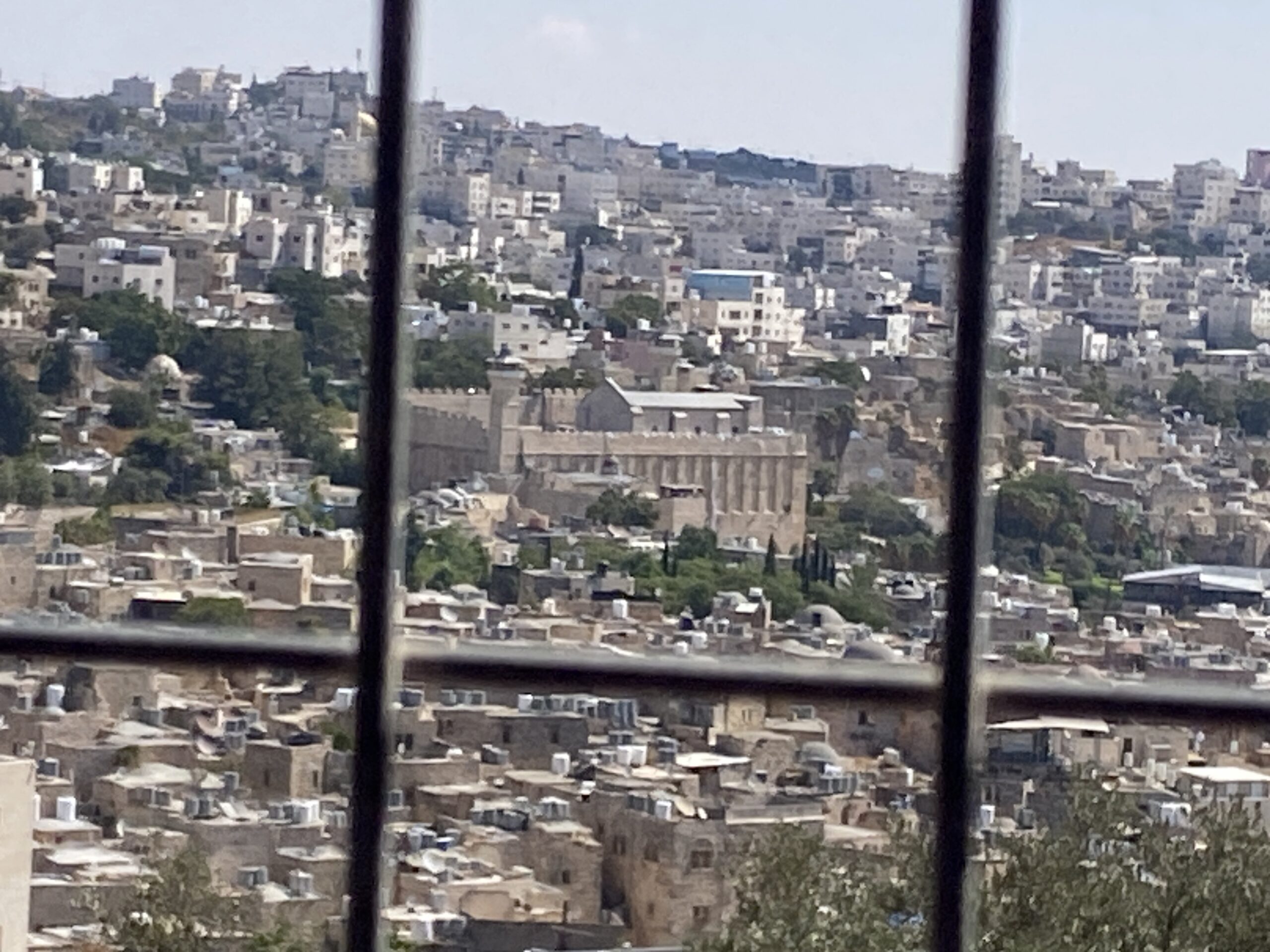 Yael ZoranSep-24-2026Hebron and the Cave of the Patriarchs from Beit Hashalom
-
South Hebron Hills
See all reports for this place-
South Hebron Hills
South Hebron Hills is a large area in the West Bank's southern part.
Yatta is a major city in this area: right in the border zone between the fertile region of Hebron and its surroundings and the desert of the Hebron Hills. Yatta has about 64,000 inhabitants.
The surrounding villages are called Masafer Yatta (Yatta's daughter villages). Their inhabitants subsist on livestock and agriculture. Agriculture is possible only in small plots, especially near streams. Most of the area consists of rocky terraces.Since the beginning of the 1980s, many settlements have been established on the agricultural land cultivated by the Palestinians in the South Hebron Hills region: Carmel, Maon, Susia, Masadot Yehuda, Othniel, and more. Since the settlements were established and Palestinians cultivation areas have been reduced; the residents of the South Hebron Hills have been suffering from harassment by the settlers. Attempts to evict and demolish houses have continued, along with withholding water and electricity. The military and police usually refrain from intervening in violent incidents between settlers and Palestinians do not enforce the law when it comes to the investigation of extensive violent Jewish settlers. The harassment in the South Hebron Hills includes attacking and attempting to burn residential tents, harassing dogs, harming herds, and preventing access to pastures.
There are several checkpoints in the South Hebron Hills, on Routes 317 and 60. In most of them, no military presence is apparent, but rather an array of pillboxes monitor the villages. Roadblocks are frequently set up according to the settlers and the army's needs. These are located at the Zif Junction, the Dura-al Fawwar crossing, and the Sheep Junction at the southern entrance to Hebron.
Updated April 2022
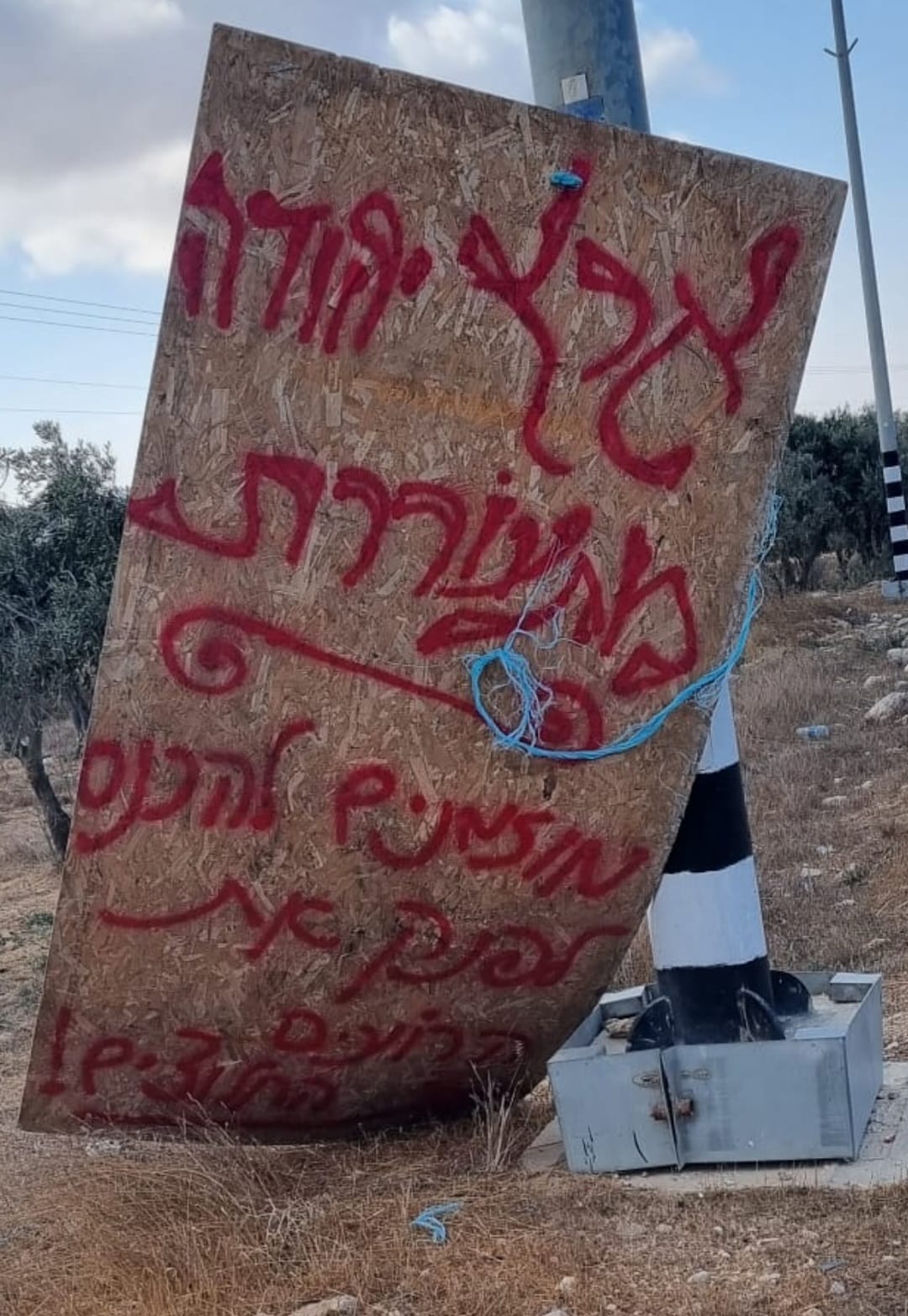 Smadar BeckerOct-17-2026A sign placed by those who call themselves the Pioneer Shepherds, at the outpost adjacent to Qawawis
-
