
South Hebron Hills, Zif Junction
It’s a time of examinations at the schools and winter break for students, apparently from today noon and until New Year.
On road 60 traffic is lively but not unusual, many cement mixers and trucks carrying construction materials. Indeed at the Sham’a settler-colony a whole new neighborhood is being constructed. We turned to the deserted road 317 and entered A-Tuwani. Rumor says a home was demolished there some days ago. We looked for the DOVE volunteers but they had already left for their day’s volunteering out in the field. A representative of Arik Ascherman’s Hakel (“field” in Arabic) association was sitting next to their house, apparently conducting a survey among the villagers. She actually refused to speak with us and the man she was interviewing did took, although he spoke plenty with her. He was also reserved with us when we tried to inquire what the survey was about. We could not locate the demolition, that no one knew a thing about, but we were told that settler-colonists from Ma’on had uprooted olive trees at the northern edge of the village. Several very little and unhappy children from Umm Tuba village sat on a bench, and told us that the army had not come to accompany them on their way to school today. It is the open-clinic day (located at the local council house) – a physician arrives once a week. This week it was an orthopedist, on behalf of the Palestinian Authority, and there’s also a pharmacist. The clinic is clean and orderly, but lacking hardly any basic equipment. And there were no patients either!
We continued through Zif village and went by Amal’s kindergarten – the children are already on vacation.
Settler-colony Carmel has more construction going on. We saw caravans on its south side, and in the settler-colony Susiya at least 2 bulldozers preparing the ground for more building. The man (Israeli Prime Minister) appears true to his word…
South Hebron Hills
See all reports for this place-
South Hebron Hills
South Hebron Hills is a large area in the West Bank's southern part.
Yatta is a major city in this area: right in the border zone between the fertile region of Hebron and its surroundings and the desert of the Hebron Hills. Yatta has about 64,000 inhabitants.
The surrounding villages are called Masafer Yatta (Yatta's daughter villages). Their inhabitants subsist on livestock and agriculture. Agriculture is possible only in small plots, especially near streams. Most of the area consists of rocky terraces.Since the beginning of the 1980s, many settlements have been established on the agricultural land cultivated by the Palestinians in the South Hebron Hills region: Carmel, Maon, Susia, Masadot Yehuda, Othniel, and more. Since the settlements were established and Palestinians cultivation areas have been reduced; the residents of the South Hebron Hills have been suffering from harassment by the settlers. Attempts to evict and demolish houses have continued, along with withholding water and electricity. The military and police usually refrain from intervening in violent incidents between settlers and Palestinians do not enforce the law when it comes to the investigation of extensive violent Jewish settlers. The harassment in the South Hebron Hills includes attacking and attempting to burn residential tents, harassing dogs, harming herds, and preventing access to pastures.
There are several checkpoints in the South Hebron Hills, on Routes 317 and 60. In most of them, no military presence is apparent, but rather an array of pillboxes monitor the villages. Roadblocks are frequently set up according to the settlers and the army's needs. These are located at the Zif Junction, the Dura-al Fawwar crossing, and the Sheep Junction at the southern entrance to Hebron.
Updated April 2022
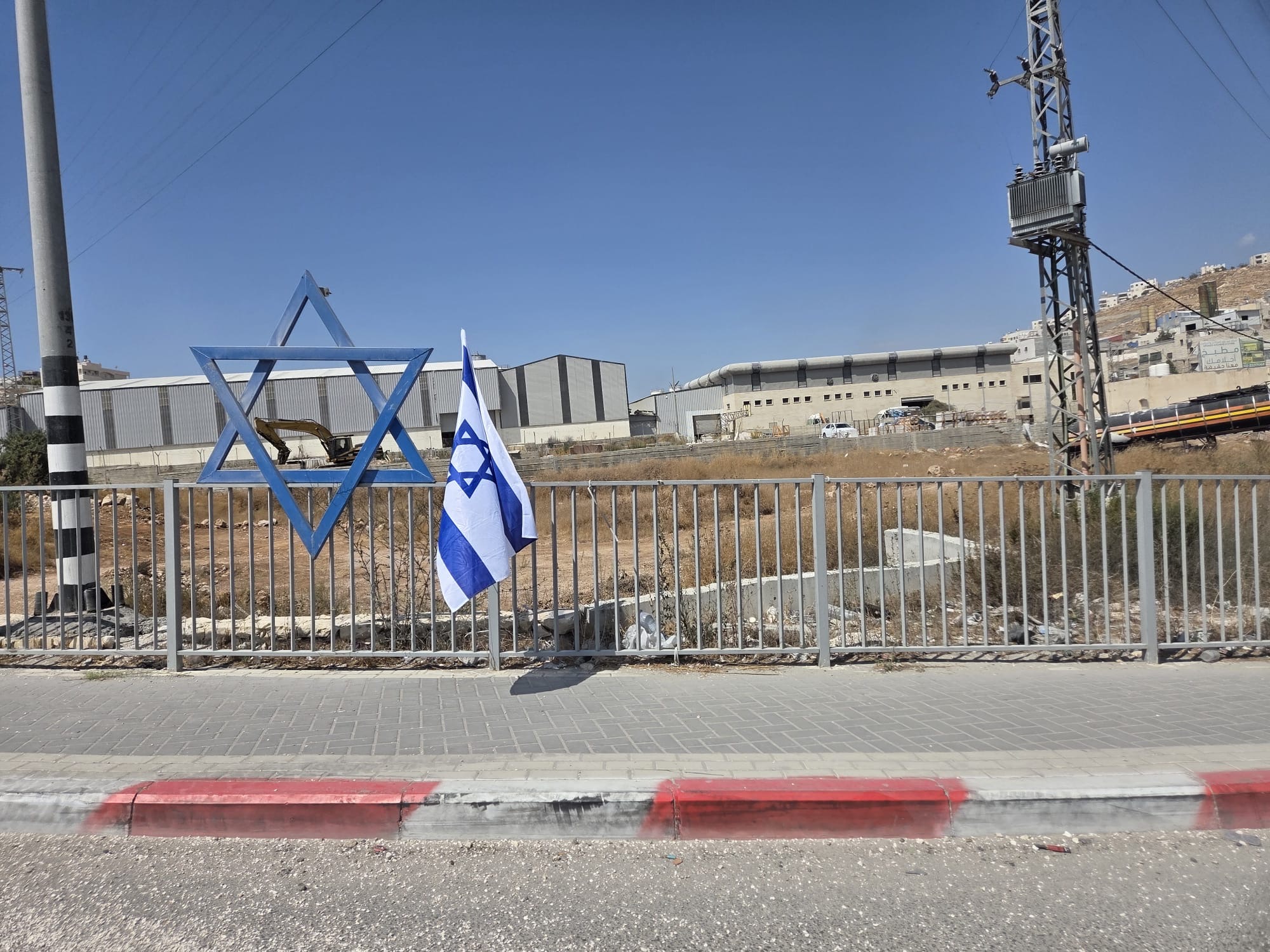 Timna OrevSep-24-2026Replacing flags on Highway 6
-
Zif Junction
See all reports for this place-
Zif Junction located on the crossroads that directs towards Road 356 to Yata. Yata is the district city of the southern Hebron Mountains. Usually, this junction is open to traffic. The nearby pillbox is unmanned. But the army and police are present occasionally, sometimes setting up a checkpoint and sometimes detaining residents from the big city. Often, the Israeli policemen inspect vehicles and distribute driving reports to Palestinian vehicles. s
-
