
The cave village Miqtal al Salalm
We went through the Meitar checkpoint and for the first time visited the village of Miqtal al Salam. It sits on the ridge to the left of the road about one kilometer past the checkpoint. The landscape is breathtaking, especially at this time of year. Two families live here the year round.
We met women from both families. They tell us that during the day their household activities take place outside. They sleep in the cave at night because Palestinians are forbidden to build in Area C.
A year ago the military came to the village. They left a demolition order in Arabic and Hebrew. The families are being helped by an attorney dealing with the order vis-à-vis the administration, but they have no idea what’s happening and what the future holds. The younger children live with their grandmother in nearby Samu’a during the week, where they attend school. All seven children from both families return here on weekends and during vacation. They live in their temporary huts. The women were surprised to receive visitors who asked how they were doing, and thanked us for our interest and for our visit.
They make a living from grazing, and also farm their land in the valley below.
Mira Balaban adds:
In addition to Raya’s description of the lives of the families who live in the caves, I want to mention the chilling statement by one of the Palestinians from a village beyond Tuwani, in the hills (I forgot its name), whose residents had also been expelled and then decided to return and live in the caves. He said, “You don’t allow us to live on our land, so we’ll live under it.”
There’s nothing more to say.
Meitar checkpoint / Sansana
See all reports for this place-
Meitar Checkpoint / Sansana The checkpoint is located on the Green Line and serves as a border crossing between Israel and the West Bank. It is managed by the Border Crossing Authority of the Defense Ministry. It is comprised of sections for the transfer of goods as well as a vehicle checkpoint (intended for holders of blue identity cards, foreign nationals or diplomats and international organizations). Passing of Palestinians is prohibited, except for those with entry permits to Israel. Palestinians are permitted to cross on foot only. The crossing has a DCO / DCL / DCL / DCL (District Coordination Office), a customs unit, supervision, and a police unit. In the last year, a breach has been opened in the fence, not far from the crossing. This breach is known to all, including the army. There does not appear to be any interest in blocking it, probably as it permits needed Palestinian workers without the bureaucratic permits to get to work in Israel. Food stalls and a parking area economy have been created, but incidents of violent abuse by border police have also been recorded. Updated April 2022
-
South Hebron Hills
See all reports for this place-
South Hebron Hills
South Hebron Hills is a large area in the West Bank's southern part.
Yatta is a major city in this area: right in the border zone between the fertile region of Hebron and its surroundings and the desert of the Hebron Hills. Yatta has about 64,000 inhabitants.
The surrounding villages are called Masafer Yatta (Yatta's daughter villages). Their inhabitants subsist on livestock and agriculture. Agriculture is possible only in small plots, especially near streams. Most of the area consists of rocky terraces.Since the beginning of the 1980s, many settlements have been established on the agricultural land cultivated by the Palestinians in the South Hebron Hills region: Carmel, Maon, Susia, Masadot Yehuda, Othniel, and more. Since the settlements were established and Palestinians cultivation areas have been reduced; the residents of the South Hebron Hills have been suffering from harassment by the settlers. Attempts to evict and demolish houses have continued, along with withholding water and electricity. The military and police usually refrain from intervening in violent incidents between settlers and Palestinians do not enforce the law when it comes to the investigation of extensive violent Jewish settlers. The harassment in the South Hebron Hills includes attacking and attempting to burn residential tents, harassing dogs, harming herds, and preventing access to pastures.
There are several checkpoints in the South Hebron Hills, on Routes 317 and 60. In most of them, no military presence is apparent, but rather an array of pillboxes monitor the villages. Roadblocks are frequently set up according to the settlers and the army's needs. These are located at the Zif Junction, the Dura-al Fawwar crossing, and the Sheep Junction at the southern entrance to Hebron.
Updated April 2022
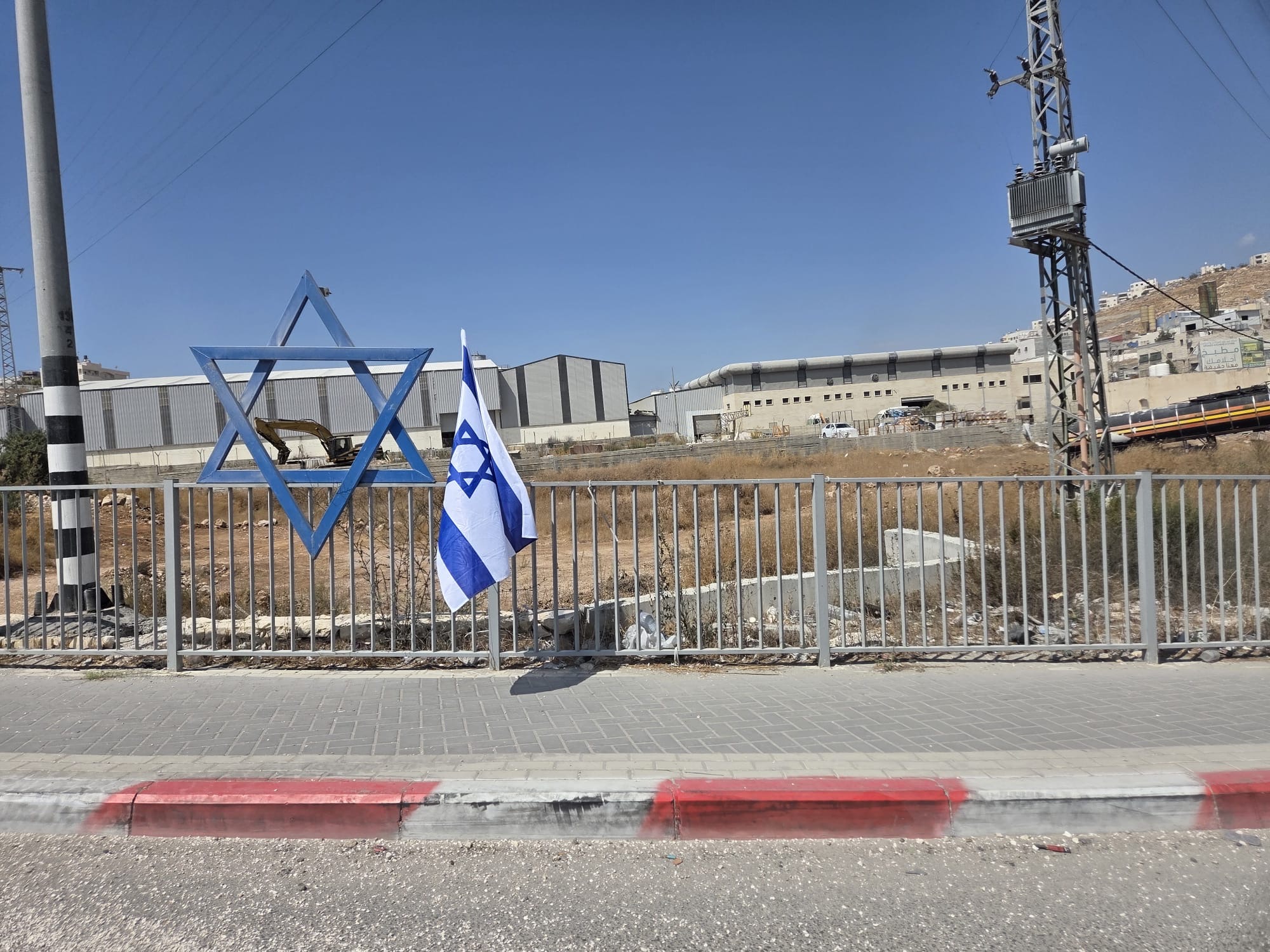 Timna OrevSep-24-2026Replacing flags on Highway 6
-
