“I do not carry a gun, I am someone who smiles and talks with you”···An Israeli woman who has been seeking out Palestinian children for 20 years
“I do not carry a gun, I am someone who smiles and talks with you”···An Israeli woman who has been seeking out Palestinian children for 20 years

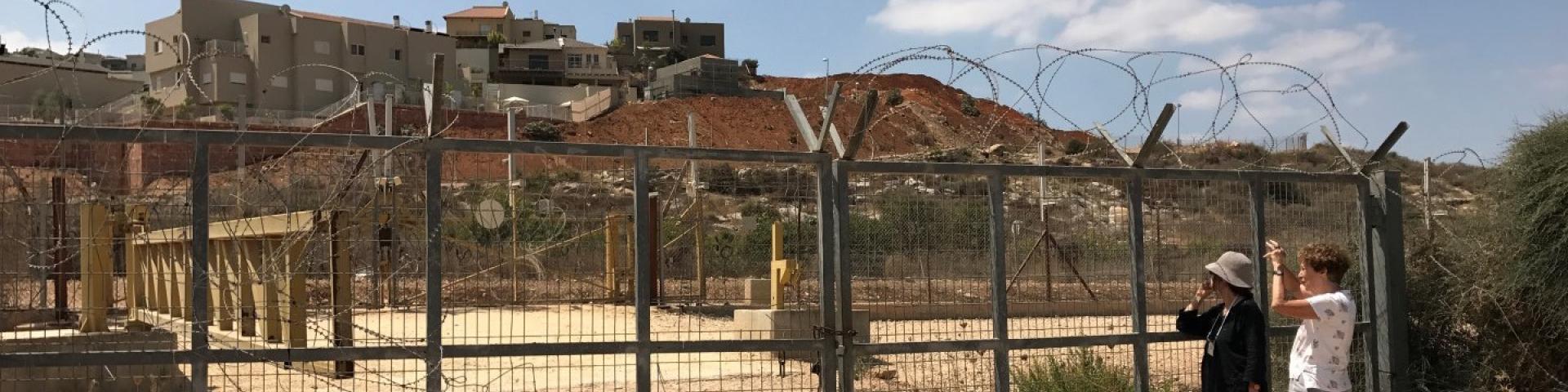
On the 27th (local time), Tamar Fleishman (79) walks along the fence at the Qalandia checkpoint north of Jerusalem. Qalandia|Reporter Cho Hyung-guk
“Not this one, not this one. Here it is, your photo.”
Around 4 p.m. on the 27th (local time), on the road heading to Ramallah in the West Bank after passing the Qalandia checkpoint north of Jerusalem. Israeli woman Tamar Fleishman (79) rummaged through a bundle of photos she had brought in a plastic bag, picked one out, and handed it to Hamit (14). A broad smile spread across the face of the Palestinian boy Hamit. Staring intently at the photo Tamar had given him, Hamit said to her, “Please take another.”
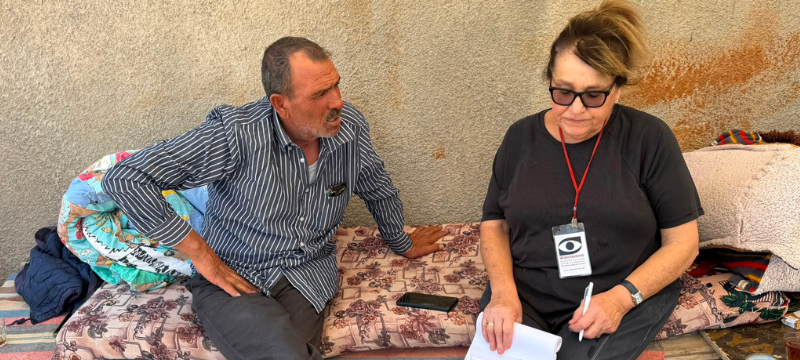
Tamar is active with the Israeli women’s human rights group ‘Machsom Watch’. Founded in 2001, Machsom Watch is a group of Israeli women that has observed, documented, and reported human rights violations against Palestinian residents occurring at West Bank checkpoints and elsewhere.

On the 27th (local time), near the Qalandia checkpoint in northern Jerusalem, Tamar Fleishman (79) and taxi driver Musa (60·right) talk. Qalandia|Reporter Cho Hyung-guk
Following Tamar, the reporter walked past the Qalandia checkpoint toward Ramallah. Skirting the vehicle checkpoint to the left, you pass a bus stop used by Arab residents and come to stairs that climb to the bridge spanning above the checkpoint. Crossing the bridge leads to the entrance toward Ramallah. From the bridge, Israeli soldiers with guns slung were controlling the vehicles entering and exiting at the checkpoint below.
After passing the turnstile, rows of taxis came into view. The drivers recognized Tamar and greeted her warmly. Tamar approached taxi driver Musa (60) and asked after him. “Has anything happened since the Hebron incident?” In a shooting on the 23rd in Hebron in the West Bank, two Israel Defense Forces (IDF) soldiers were killed, and the two Palestinian perpetrators were shot dead. Musa replied as if it were nothing special: “More than that, there is far too little work. People are not taking taxis.”
There was no one who did not know the blonde woman who moves through Qalandia. Kebab vendors, taxi drivers, and the kid selling keychains all welcomed Tamar like a friend. When Hamit repeatedly pressed the reporter to buy the water he was selling, Tamar said firmly, “He is my friend.” Pulling back with a regretful look, Hamit bounced the tennis ball Tamar had given him and sprinted down the roadway with his friend. Other children chased after Tamar, asking her to take their pictures.
For Tamar, the photographs are the gaze she offers to Palestinian children. “You are not invisible. I am saying that someone is looking at you and not forgetting you.” Her touch also carries a wish to change the image of Israelis (mainly soldiers) that the children have. “I do not carry a gun. Instead I smile, I touch you, and I talk.”
Tamar believes she reaches into their lives by stroking their hair, tugging their arms, and clasping their hands. In those gestures are guilt felt as an Israeli, a sense of responsibility not to turn away from life here, and a pledge of solidarity to stay by their side.

On the 27th (local time) in northern Qalandia, Palestinian boys play by tossing a tennis ball on the roadway. Qalandia|Reporter Cho Hyung-guk
A tie with one boy became the turning point. While attending hearings in cases in which Palestinians were apprehended, held every other week, Tamar came upon a face she had never wished to see in court. It was Ibrahim, a boy she used to meet as she went to and from Qalandia. His family, who live in the Qalandia refugee camp, could not come to the Jerusalem courtroom. Shocked, Tamar and Ibrahim locked eyes. Whereas Tamar was dismayed, Ibrahim could not hide his joy. “In the Israeli courtroom where he had no one, he had found someone he knew.” Even after returning home, the face of Ibrahim did not leave her mind. From then on, she photographed the children of Qalandia.
At the edge of Ramallah, Tamar bought two packs of cigarettes and a can of soda at a small store, then stepped behind a stall across the road to light one. Adam (14), blue-eyed, approached carrying a basket of biscuits. Tamar said, “Adam does not go to school. His family is too poor to afford it. He works like this from morning till night.” The closer you get, the hardships of life stand out more starkly. That is also why Tamar does not look to the future with optimism. “Well. The children will go back, eat the same food as always or go without, and once again come out to the roadway with water and sweets. Nothing will get better.” A young man she had known since he was seven and who is now twenty, she said, is still peddling goods just as he did thirteen years ago. The only thing that changes is the items he sells with the seasons, from water to corn and then to watermelons.

For Tamar, her Jewish identity was both a source of guilt and a wellspring of responsibility. Asked ‘why do you do this work,’ Tamar unfolded a long story. Her aunt, who passed away years ago at the age of 86, was a Holocaust survivor who had been taken to Auschwitz at age twelve. She narrowly escaped the gas chamber but was sent to a labor camp. A German soldier who opened the door for the girls heading to the workshop whispered in secret each day, “Be patient.” The girls called the nameless soldier ‘Moshe.’ It was the Hebrew form of Moses. Later, when Russian troops carried out a mass execution of German soldiers, the Jewish girls stood in front of Moshe.
Not long after she began coming to Qalandia, Tamar told her aunt about her activities. Her aunt, unfamiliar with politics and the question of occupation, asked two questions. “Are you safe?” Tamar said yes. “Does it help them?” Tamar said she was not sure. She added only that she thought it was meaningful for Palestinian children to meet an Israeli who did not carry a gun. Then her aunt said, “Tamar. You are Moshe.”
The shock of that moment became a force that kept bringing her back to Qalandia. With her eightieth birthday three days away, Tamar has come close to the age of her aunt, yet she still does not feel she can face her aunt with pride. She said, “I am not Moshe. I do not risk my life for them.”
Saying, “Nothing will change unless Palestinians are given rights,” she is more at home with pessimism than optimism. She also knows that as a socialist who supports Palestine, her convictions place her among a tiny, ostracized minority in Israel. She had gone to the polling place early in the morning, but it was an election irrelevant to Palestinian lives. Asked what message she wanted to convey on the ballot, she answered, “Go to hell (Go to hell).” Ibrahim, the boy who put a camera in Tamar’s hands, served sixteen months in prison for shaking a road crash barrier. Since the trial, Tamar has not met Ibrahim again.
Turning back toward the checkpoint, a man selling washbasins saw Tamar and approached. “Bibi (the nickname of Israeli Prime Minister Benjamin Netanyahu) will end today.” “I hope so too.” Tamar said that everyone here had the same wish. Asked if she had anything to say to readers in Korea, a short answer came back. “Please apply pressure on Israel (Put a pressure on Israel). The future of Israel depends on the world.”
As Tamar was about to enter the turnstile, a youthful voice called her name from afar. It was Nadine (12), who sells slips of paper with Quranic verses together with her younger sibling. “Tamar. The photo you gave me last time, we framed it at home.” Once again, a smile spread across her face.

On the 27th (local time), near the Qalandia checkpoint in northern Jerusalem, Tamar Fleishman (79) hands a photograph to a Palestinian boy. Qalandia|Reporter Cho Hyung-guk