
The settler family Talia has been abusing the Abu Qbeita families for years
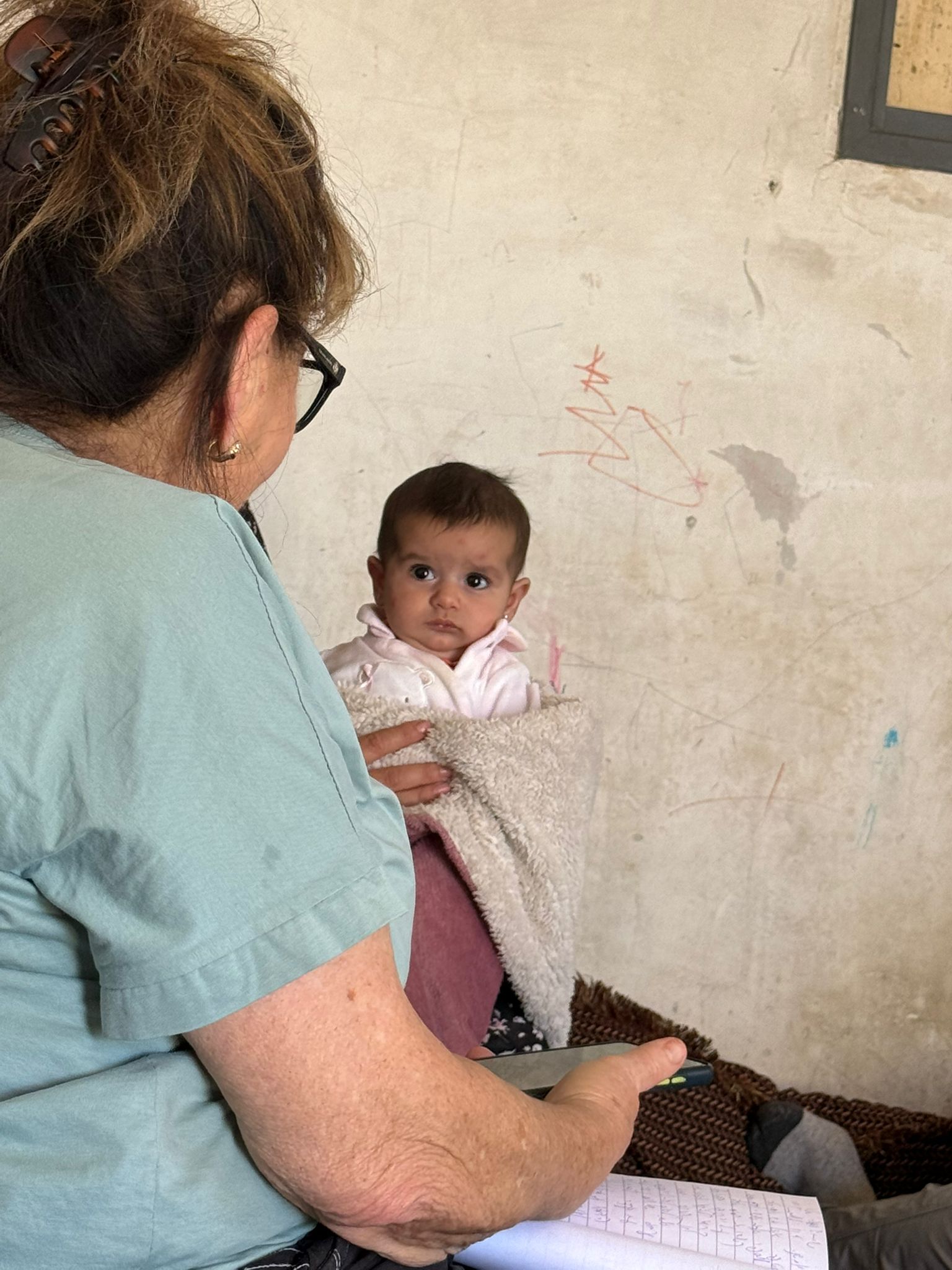
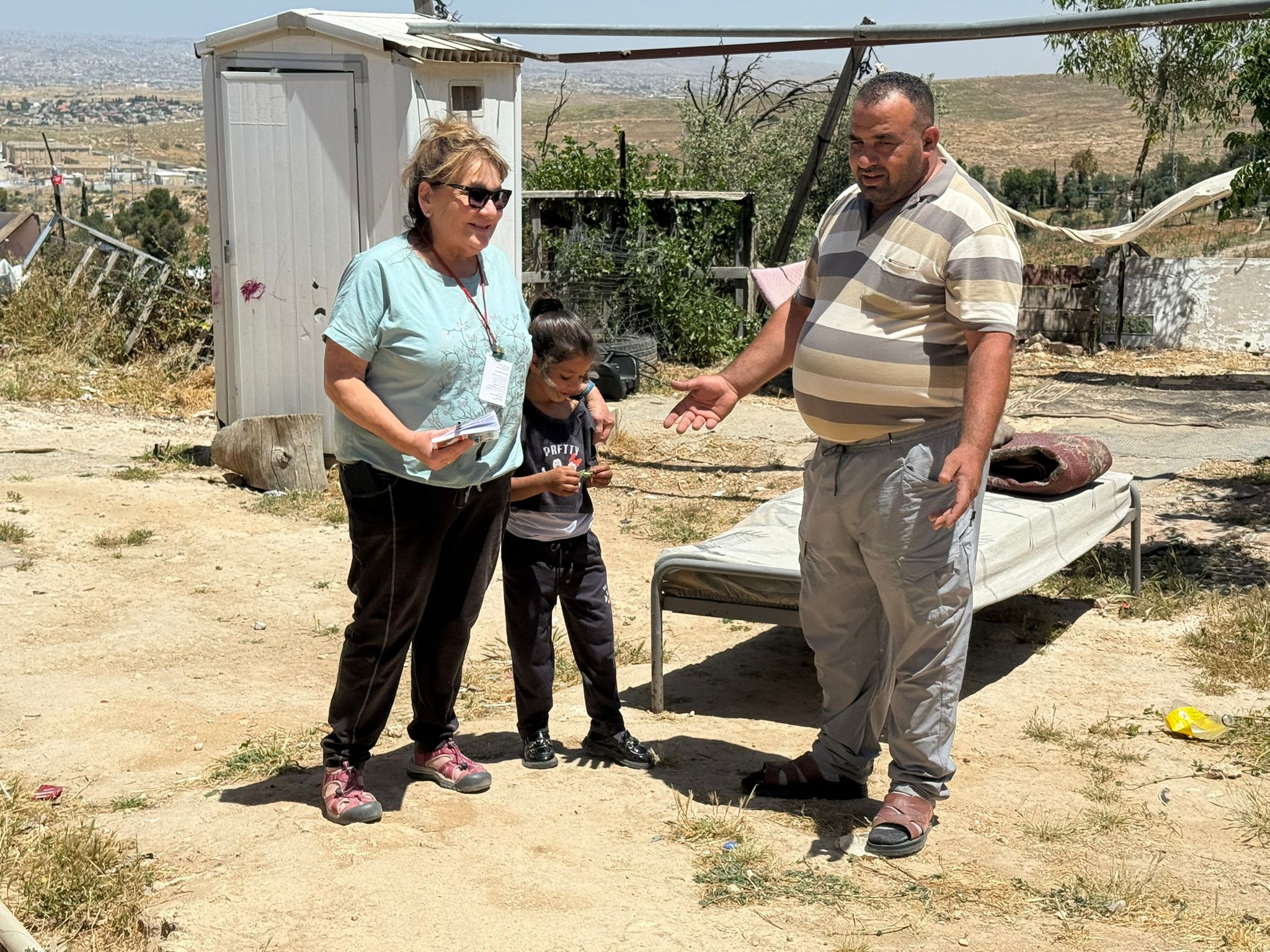
We drove to the Abu Qbeita family who live next to Beit Yatir, thus considered Israeli, except that they have no Israeli status and must therefore pass through the Metzudot Yehuda Checkpoint for every single thing – shopping, health, Yatta and school at Imnazil. The children to through there every morning and have to show their transit permit although it is always the same group of children. For the past two years they finally have transport of the PA.
Since they live in Israel, the Abu Kabtas can be visited through the Yatir woods, no need to go through Meitar Checkpoint. For us it is a pleasanter, prettier and easier way.
Over seven families of the Abu Kabta clan live in the compound, and only lately they have stopped being harassed by the Beit Yatir colony’s security official. But across the road live members of the colonist Talya’s family who make sure they are constantly remembered. We have often written about them: the offspring of the Ya’acov Talya, an Afrikaner who converted to Judaism and brought with him his racist views from apartheid South Africa to relate to his Palestinian neighbors. His sons – continuing his legacy – were made soldiers after October 7th, and went wild with their army garb and weapons. They make sure that the same narrative reigns here, this too is Hamas and therefore one must make sure, and if not expel them, at least make their lives unlivable.
This time it was Betzal’el Talya, an officer who constantly surrounds their lands but cannot actually take them by ruling of the court that this land belongs legally to the Abu Kabta family. He can however block their access to it on security grounds.
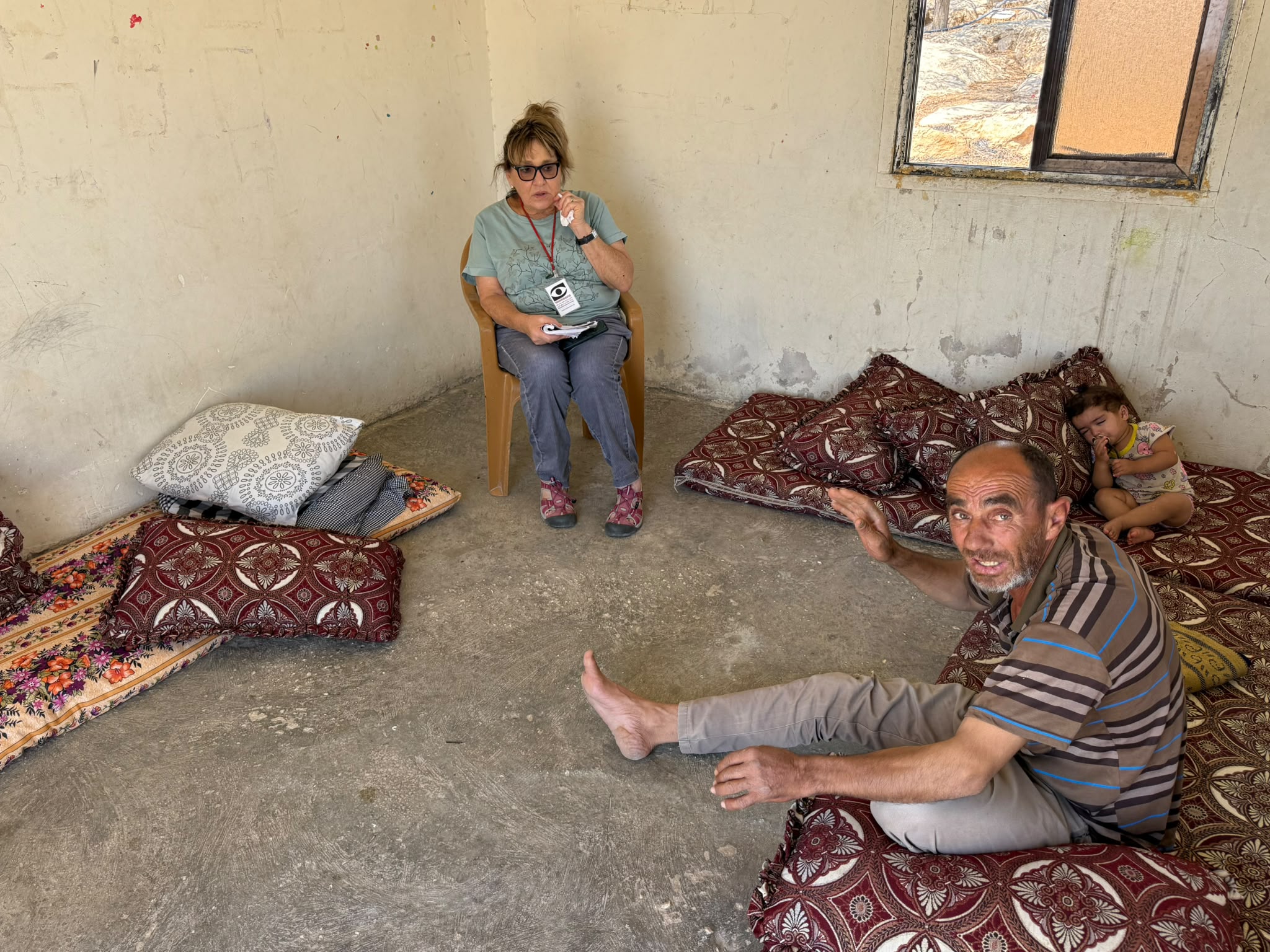
We brought food for the five families who share it, and sat with M. and his wife A.
- worked for years in Israel and speaks good Hebrew. He told us that last Friday one of them tied his horse to their fence. Betzal’el came there immediately, summoning the army. The soldiers released the horse claiming he too must not approach the fence which neighbors the colonists’ fields.
Another brother tried to take the flock out to graze. The authorities claim it is too close to the road. Again, Betzal’al came and with army support told A. that the sheep should be kept away, or else they and the shepherd will be run over. That’s the style.
The families may distance themselves up to 100 meters from their home. That belongs to them, by ruling of the court.
For the past two and a half years things have been so bad that several of the younger members tried to find work without permits. Of course, they were caught and put in prison. So even though nothing dramatic has happened to them lately, and the colonist and youngsters of Beit Yatir do not harass them, “our lives are in the gutter”, says M.
He shows me the new baby-girl, born 2.5 months ago. Her name is Idyan, meaning “religions”.
So, they live in Israel but have no Israeli status.
The small minutiae of terrible routine life.
Location Description
Beit Yatir / Metsadot Yehudah Checkpoint
See all reports for this place-
An terminal barrier towards Israel on the Separation Barrier (far from the Green Line) near the Beit Yatir settlement. Palestinian passage is prohibited, except for members of the Qabita family living on the western side of the separation fence (which are also not allowed movement in Israel).
-
South Hebron Hills
See all reports for this place-
South Hebron Hills
South Hebron Hills is a large area in the West Bank's southern part.
Yatta is a major city in this area: right in the border zone between the fertile region of Hebron and its surroundings and the desert of the Hebron Hills. Yatta has about 64,000 inhabitants.
The surrounding villages are called Masafer Yatta (Yatta's daughter villages). Their inhabitants subsist on livestock and agriculture. Agriculture is possible only in small plots, especially near streams. Most of the area consists of rocky terraces.Since the beginning of the 1980s, many settlements have been established on the agricultural land cultivated by the Palestinians in the South Hebron Hills region: Carmel, Maon, Susia, Masadot Yehuda, Othniel, and more. Since the settlements were established and Palestinians cultivation areas have been reduced; the residents of the South Hebron Hills have been suffering from harassment by the settlers. Attempts to evict and demolish houses have continued, along with withholding water and electricity. The military and police usually refrain from intervening in violent incidents between settlers and Palestinians do not enforce the law when it comes to the investigation of extensive violent Jewish settlers. The harassment in the South Hebron Hills includes attacking and attempting to burn residential tents, harassing dogs, harming herds, and preventing access to pastures.
There are several checkpoints in the South Hebron Hills, on Routes 317 and 60. In most of them, no military presence is apparent, but rather an array of pillboxes monitor the villages. Roadblocks are frequently set up according to the settlers and the army's needs. These are located at the Zif Junction, the Dura-al Fawwar crossing, and the Sheep Junction at the southern entrance to Hebron.
Updated April 2022
 Muhammad D.Sep-14-2026Mufaqara - Fadel tells about the events of Saturday 12.9
-
