
"Qawawis - why don't we live together?" he asked. "You will come to us and we will visit you - in peace and quiet."
“Only God Will Help Us”
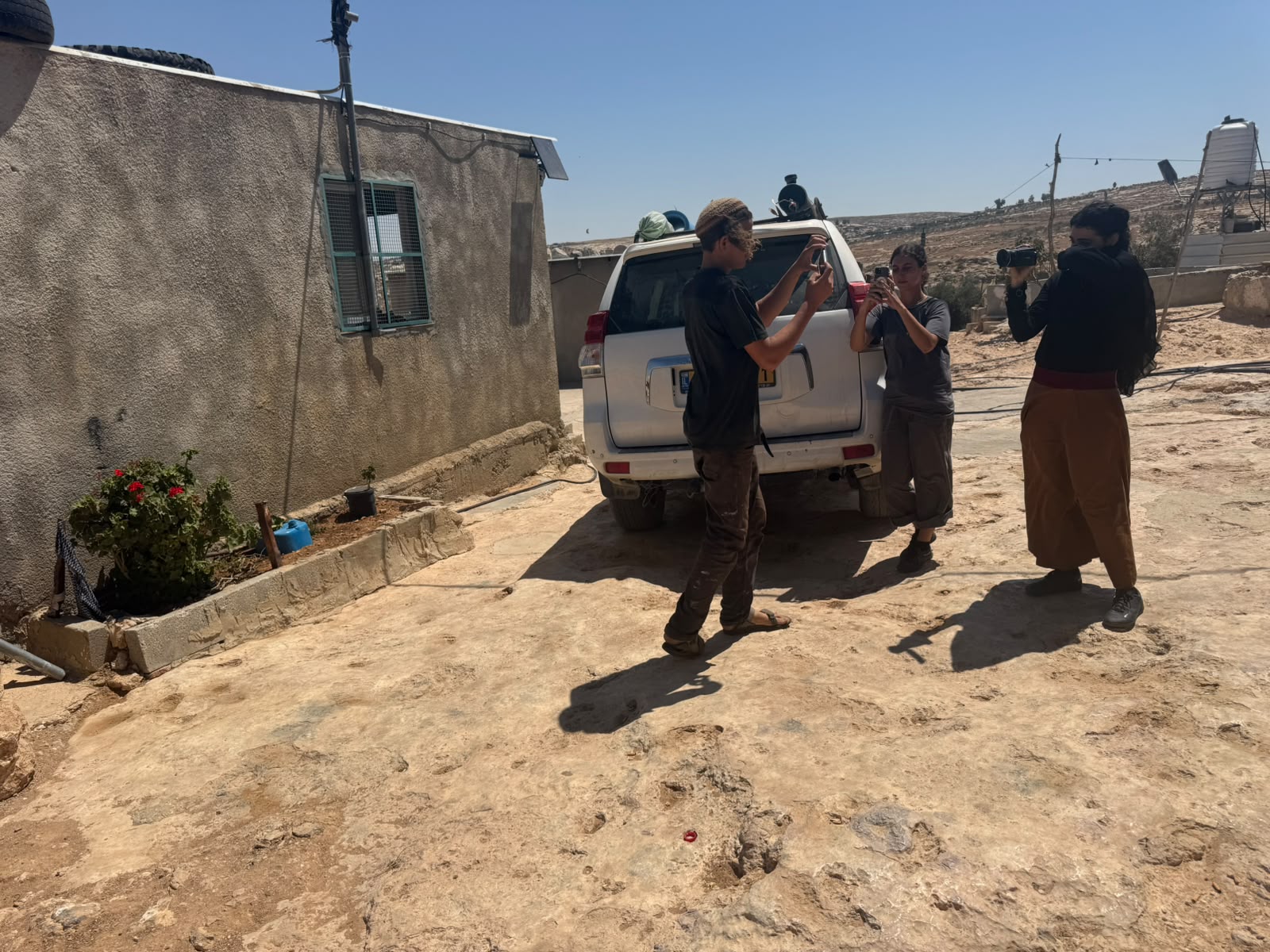
Today we returned to Kawawis to visit the family of Na’man Abu al-Haram. We had visited them several weeks earlier, and they asked us to return because they are extremely anxious about the harassment by the new settlers who arrived in the area about 80 days ago.
In the area known as Kawawis, families live in small clusters of two to five families, together with some of their children. As we reported previously, they have moved some family members to nearby Carmel because it is safer there. Nevertheless, four families, comprising a total of 30 people, still live in the compound we revisited.
On our way there, we inquired about the condition of Sheikh Sa’id al-Aqta, who had confronted young settlers in al-Rakeez the previous day. They beat him even though he is disabled and old enough to be their grandfather. We were relieved to hear that he had already been discharged from the hospital and that his condition was stable.
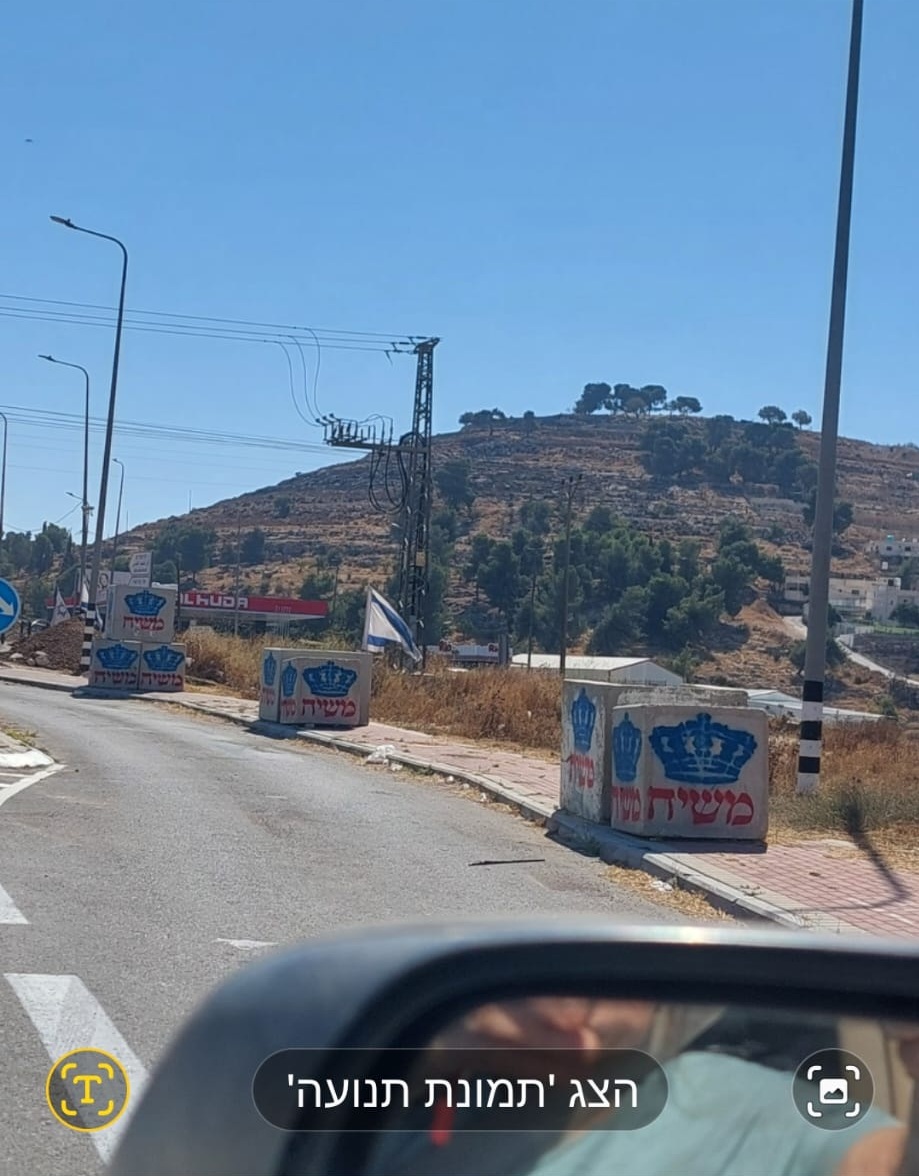
Concrete barriers used by soldiers as positions have been placed at every junction along Route 60, as well as where it meets Route 356. This time there were no soldiers stationed behind them, but a large crown and the word “Messiah” had been emblazoned on every one of them. This is in addition to the flags flying densely all along the road. Messianic nationalism cries out from every corner—there is no other name for it.
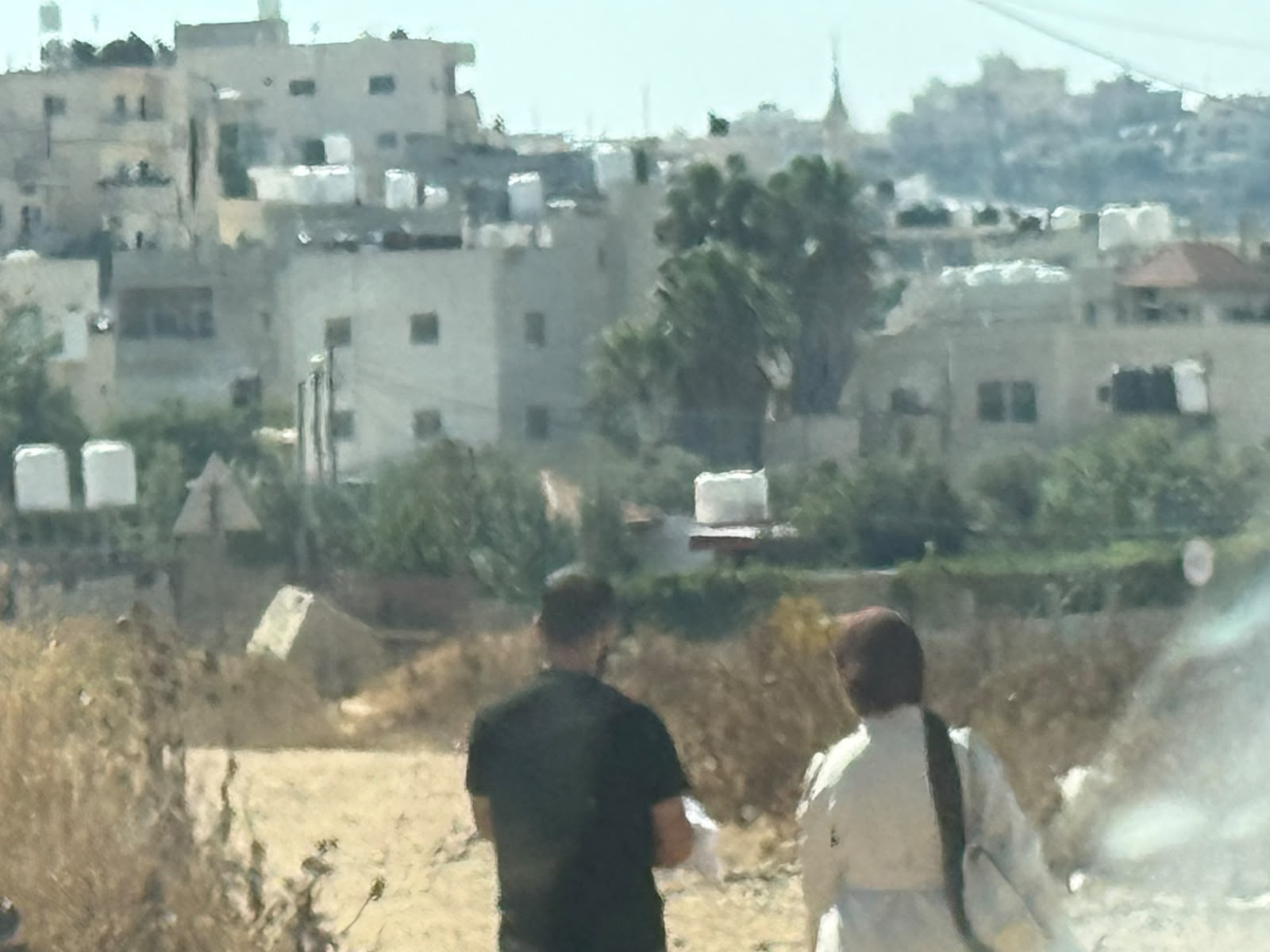
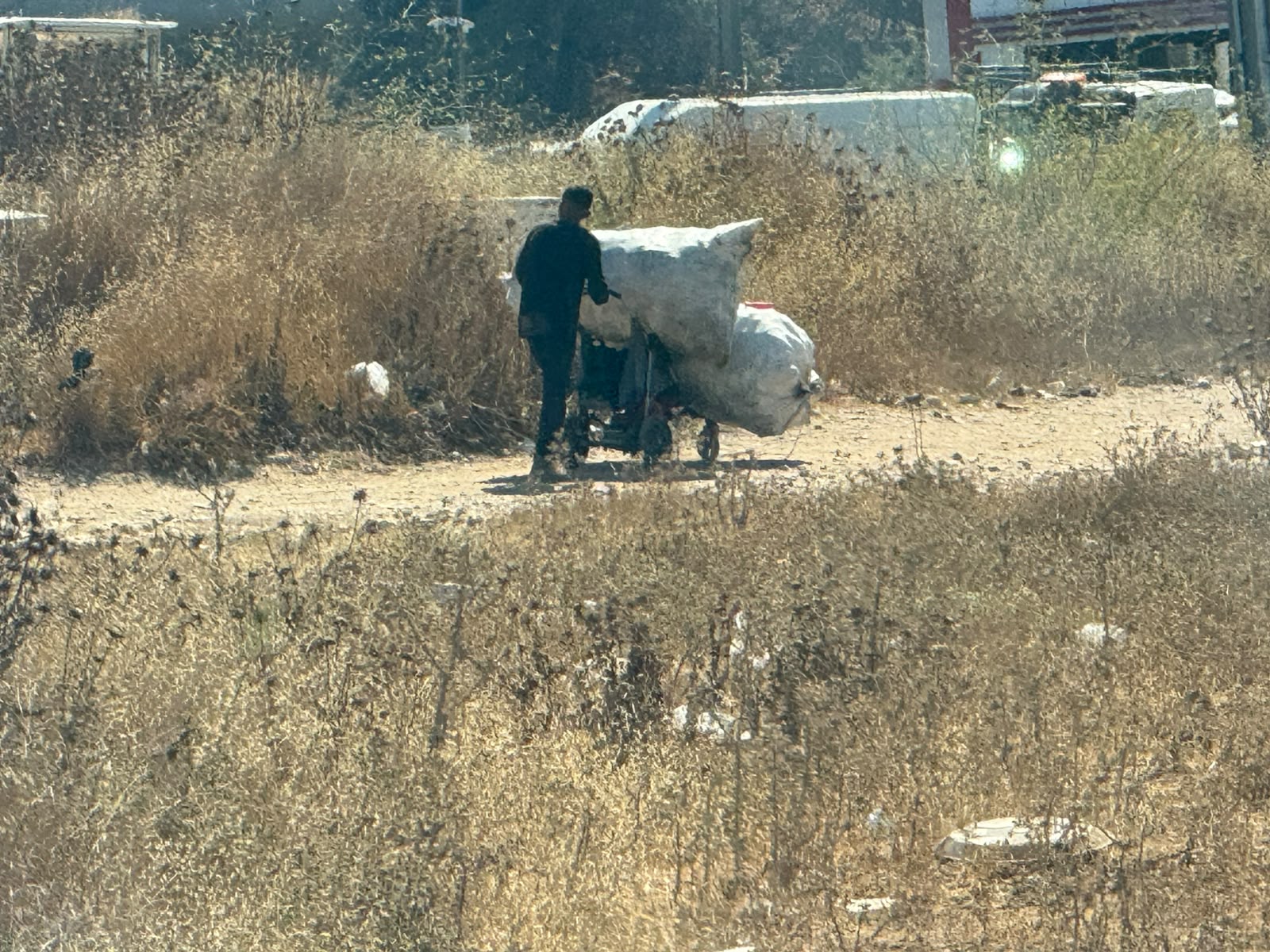
At the Dura–al-Fawwar junction, people are forced to walk long distances because the roads are closed to vehicles. Young parents can be seen struggling through the heat with tiny babies in their arms, while others push carts laden with goods from Dura to al-Fawwar.
When we arrived, we were pleased to see two volunteers from abroad who had come to provide a protective presence. We were told that they had spent the night there. Shortly afterward, two young Israeli women arrived to replace them. We were glad to see that the families were receiving continuous support.
T., with whom we had spoken during our previous visit, had gone to the Kiryat Arba police station to file a complaint about the events of the previous night, as the police officers had instructed him to do when they arrived at the scene.
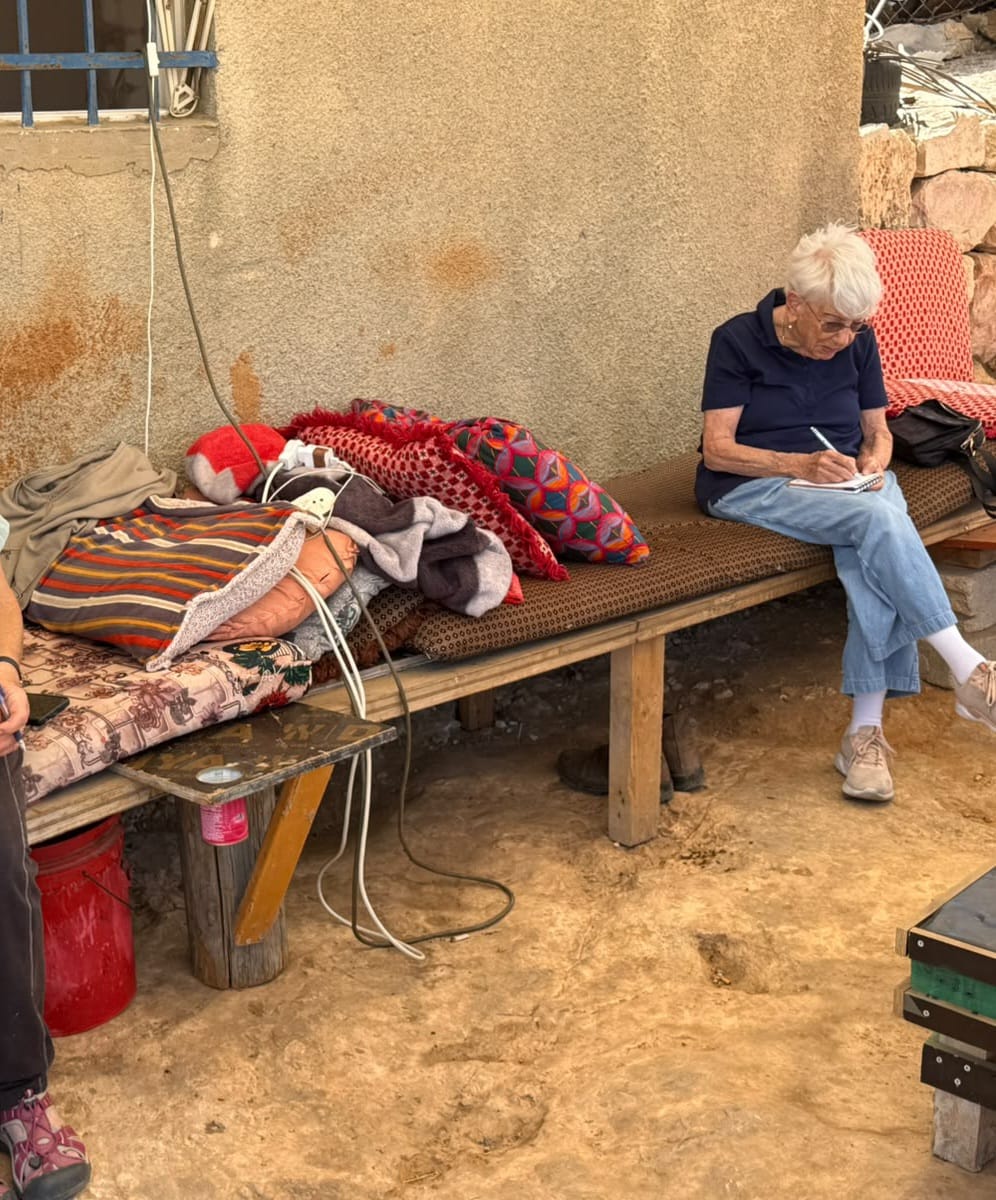
This time I spoke with A. A. Abu al-Haram. He was the only person there who agreed to be photographed and to tell his story. “I am the mukhtar,” he said. “I have no problem being photographed and speaking.”
According to him, two 17-year-old settler youths, named Dvir and Maoz, had arrived the previous day in the Ranger vehicle they regularly use to drive around the Palestinian community. They entered the yard, stood there, and tried to force their way into the house, but the residents prevented them from doing so. One of them was carrying a stick. They then went to the sheep pen and stood beside it. The residents feared that they intended to steal sheep and therefore called the police, who arrived only an hour later. When the police finally came, the youths fled. The officers did not pursue them, but instructed the residents to go to Kiryat Arba to file a complaint.
It remained quiet until two o’clock in the morning. Then the youths returned, drove around the house, and left. This happens constantly, at all hours of the day and night—a war of attrition.
What can the residents do other than file complaint after complaint with the police and take turns staying awake on night watch? That is all they can do. “Only God will help us,” they say.
And I think that they are fortunate to believe in someone or something, and to find comfort in the hope that one day help will come.
A. A. told us that until 7 October 2023, they had enjoyed 20 years of quiet. Their family has lived here for decades. One evening in 2000, settlers invaded their dwellings while they were temporarily empty. The police officers who came in response to their call told the family that they had to leave. They moved to Carmel and remained there for three years.
Attorney Shlomo Lecker filed a lawsuit and an appeal on their behalf. The court ruled that the land did indeed belong to them, but that the Palestinians were permitted to return and live only in the caves they had previously inhabited and were prohibited from constructing any buildings. I saw the documents.
They returned in 2003 and lived peacefully from then on. They cultivated their land, grew olives, raised sheep, and went about their lives. In recent years, however, they have been prohibited from moving about freely and from going to work in Israel.
The situation deteriorated about 80 days ago, when the new settlers arrived with large flocks and spread across the family’s 60 dunams of olive groves. The animals ate everything that grew there.
During the last olive harvest, the family was given only one day in which to harvest their olives. “How is that possible?” he asks.
During our conversation, we witnessed an example of the settlers’ provocations. A settler arrived in a Ranger vehicle. He looked like a wild child with sidelocks. He drove around, reached the main road, and returned without stopping. About half an hour later, we once again heard the rumble of the Ranger. This time three very young men were inside. They got out, ignored our presence, walked over to our car, photographed it, and left.
I photographed them and tried to start a conversation, but they ignored me and drove away.
We brought the families a large quantity of fruit and vegetables, as well as some money. They told us that in Yatta, 200 shekels would buy more than the goods we had planned to purchase for them.
We had one more brief conversation with the young Israeli volunteers, whom we were pleased to see, and then said goodbye to A. A.
“Why shouldn’t we live together?” he asked. “You will come to visit us, and we will visit you—in peace and quiet.”
“Yareit”—if only—I replied.
“Yareit,” he repeated.
We drove away with heavy hearts.
Location Description
Dura Al-Fawwar Junction
See all reports for this place-
Junction on Route 60: west - the town of El Dura, east - the Al Fawwar refugee camp. There is a manned pillbox at the junction. From time to time the army sets up flying checkpoints at the entrance to El Fawwar and Al Dura. Al-Fawwar is a large refugee camp (7,000 inhabitants in 2007) established in 1949 to accommodate Palestinian refugees from Be'er Sheva and Beit Jubrin and environs. There are many incidents of stone-throwing. In the vicinity of the pillbox there are excellent agricultural areas, Farmers set up stalls adjacent to the plots close to the road. In recent months the civil administration has set up dirt embankments thereby blocking access to the stalls, and making it impossible for the farmers to sell their vegetables. Updated April 2021, Michal T.
-
South Hebron Hills
See all reports for this place-
South Hebron Hills
South Hebron Hills is a large area in the West Bank's southern part.
Yatta is a major city in this area: right in the border zone between the fertile region of Hebron and its surroundings and the desert of the Hebron Hills. Yatta has about 64,000 inhabitants.
The surrounding villages are called Masafer Yatta (Yatta's daughter villages). Their inhabitants subsist on livestock and agriculture. Agriculture is possible only in small plots, especially near streams. Most of the area consists of rocky terraces.Since the beginning of the 1980s, many settlements have been established on the agricultural land cultivated by the Palestinians in the South Hebron Hills region: Carmel, Maon, Susia, Masadot Yehuda, Othniel, and more. Since the settlements were established and Palestinians cultivation areas have been reduced; the residents of the South Hebron Hills have been suffering from harassment by the settlers. Attempts to evict and demolish houses have continued, along with withholding water and electricity. The military and police usually refrain from intervening in violent incidents between settlers and Palestinians do not enforce the law when it comes to the investigation of extensive violent Jewish settlers. The harassment in the South Hebron Hills includes attacking and attempting to burn residential tents, harassing dogs, harming herds, and preventing access to pastures.
There are several checkpoints in the South Hebron Hills, on Routes 317 and 60. In most of them, no military presence is apparent, but rather an array of pillboxes monitor the villages. Roadblocks are frequently set up according to the settlers and the army's needs. These are located at the Zif Junction, the Dura-al Fawwar crossing, and the Sheep Junction at the southern entrance to Hebron.
Updated April 2022
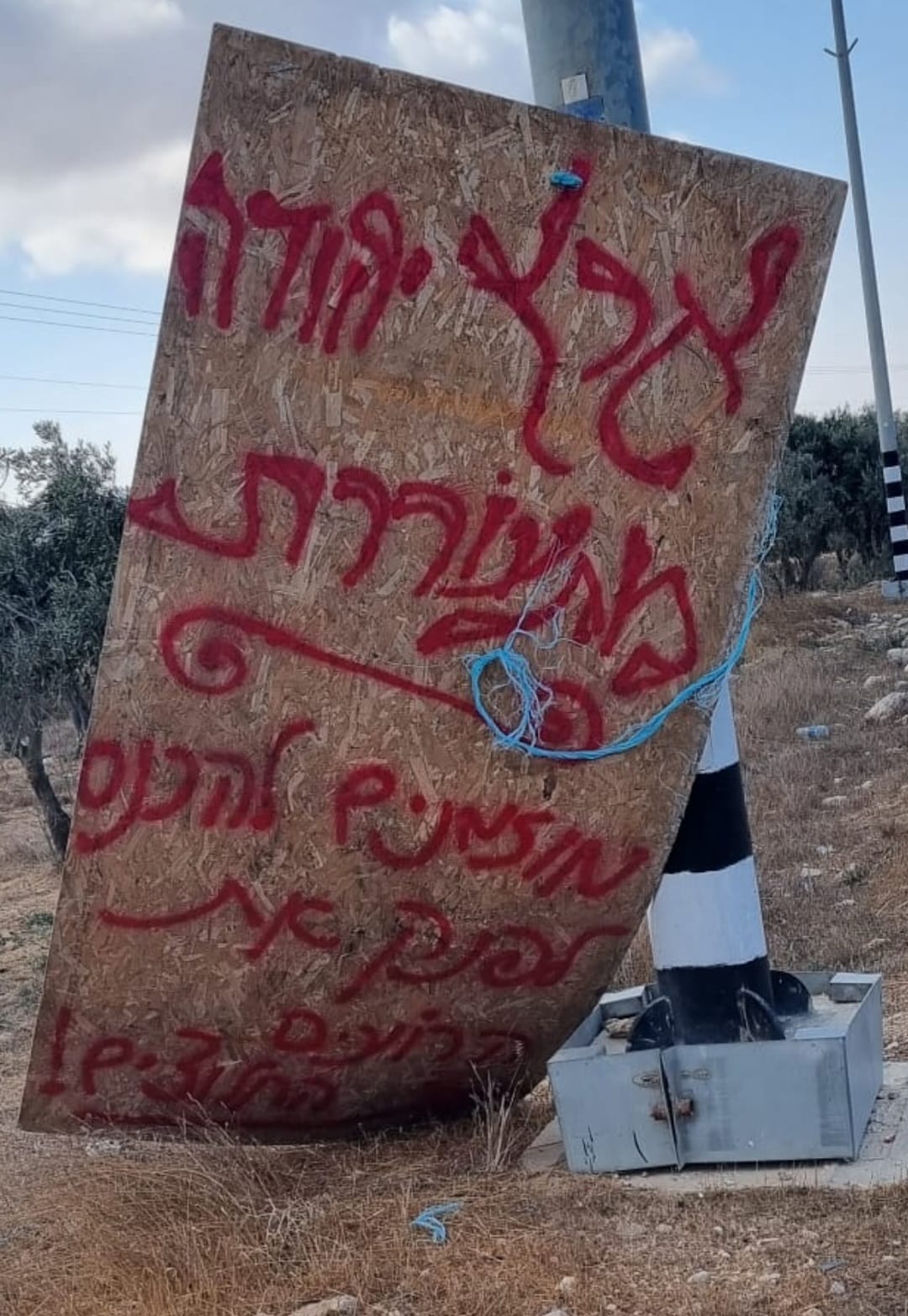 Smadar BeckerOct-17-2026A sign placed by those who call themselves the Pioneer Shepherds, at the outpost adjacent to Qawawis
-
