
Abu Dis, Container (Wadi Nar), Ras Abu Sbitan (Olive Terminal), Sheikh Saed, Mon 16.2.09, Afternoon
2:30-5:30 PM
An icy wind was blowing. On the way to and from Sheikh saed, we noted that many garbage containers were overflowing (they are emptied only once a week), but a few were completely empty which was an enigma to us. Of course on the slope from Sheikh Saed the usual display of colored plastic bags welcomed us.
We first spotted one bored soldier, but as we got closer a Border Police jeep pulled up and reinforcement had come. The soldier (commander of the CP) didn’t know whether to let us go up, but Y. from the jeep told him to call and find out: “Tell them the ‘watch women’.” After a long wait and yet another call from Y. too we were told that he had checked ‘against’ the army and the Jerusalem envelope and we could not go in. We thanked him and told him that we would report what he had said, but then he came after us on our way back to the car and explained how dangerous it would have been for us to go in and that they feel responsibil.
The pishpash was empty.
We parked outside the Olive Passage and walked towards the other side. The turnstiles move only a quarter turn (90 degrees) at the time to give one a feeling of being imprisoned, but mostly to give the soldier controlling it the feeling of being in power. We saw through the fences a big crowd of people waiting to get into Jerusalem. As we watched we were shouted at to move away and not remain where we were.
A Palestinian showed us the way out to the East. We saw three drivers who complained re lack of work and told us that in the morning it may get very busy with schoolchildren, etc. If the ‘officer; is not there the queues get long and the girl soldiers do not care a bit. We returned and there was hardly any queue left. Nevertheless we were shouted at not to linger, but when we passed the girls were friendly and asked us how we were. Then she wanted to know why we were wearing a tag and why we were against the checkpoints. But a male soldier behind her reprimanded her, so we couldn’t elaborate.
A few cars with drivers were awaiting people from within.
We drove down towards Mishor Adumim and turned around, then we took a right
turn (with a huge sign towards Mevasseret Adumim) to explore the completed
infrastructure and cut off mountains via the shiny roads with roundabouts
and lamp posts and yet another sign “Mevasseret Adumin is here!” to the
police station.
We didn’t wait in the long line turning left towards Maaleh Adumim to take the Kedar Road, but continued towards Azariya and made a U-turn there to save time. We parked near the houses of Sawahre before the CP and walked towards the left to have a good overview of the newly constructed road with its freshly pained arrows (a monkey moved according to instructions).
We then crossed over to the grocery store where some coiled barbed wire is left on the road. There was no queue in either direction but someone was working on one side of the road, so all traffic had to be directed through one lane which caused a short wait because every time a few cars were let through from either South or North. No cars were held up, the soldiers were wrapped in several layers of shawls and bonnets against the icy wind.
Abu Dis / Lazarus gate (formerly The Wicket)
See all reports for this place-
Abu Dis / Lazarus Checkpoint/Gate (east of the former “wicket”)
Construction of the wall in the Abu Dis area blocked all the gaps that allowed people to cross from al-Ezariya to the neighbourhoods of Abu Dis and Ras al 'Amud that are located within Jerusalem’s municipal boundary. The Lazarus checkpoint is a gate in the wall adjacent to the Lazarus Monastery. Until 2011 it had a door for pilgrims to al-Ezariya and for the monastery’s kindergarten pupils from al-Ezariya. The crossing is currently closed, but the site has infrastructure for conducting inspections.
-
Container (Wadi Nar)
See all reports for this place-
Wadi Nar Checkpoint ("Container", "The Kiosk") - a barrier for vehicles in Area B that is regularly manned - east of Abu Dis between Sawahra A Sharqiya and Bethlehem and its daughters. Controls Palestinian movement between the north and south West-Bank. Includes driving routes, access roads, spikes, traffic lights and signs. There is no pedestrian crossing. Open 24 hours a day with random checks enhanced on security alerts. The checkpoint is in Palestinian territory, allowing for separation between the north and the south Palestinian areas when necessary.
In 2015, the leading road from Azaria to Bethlehem was renovated, as well as the steep and narrow ascent to the Wadi Nar checkpoint, which was dangerously travelled in both directions! The temporary checkpoint was renovated and expanded, and pedestrian traffic was banned. From 2016, traffic travelling from the south bank to Azaria was directed to a one-way road near the Southern Keydar Jewish settlement.
Machsomwatch shifts visit this far-fetched checkpoint only occasionally.
(updated to July 2019)
-
Ras Abu Sbitan (Olive Terminal)
See all reports for this place-
A large checkpoint/crossing to the area of a-Tur, Abu Dis and the Old City; only for pedestrians. Located on Jerusalem’s municipal boundary.
One of the major crossings in Jerusalem’s central sector. It is located on the separation fence between the northern portion of the al-Ezariya neighborhood and the neighborhood of a-Tur and the rest of East Jerusalem. It is manned by Border Police soldiers and private security companies and operates 24 hours a day. Palestinians are forbidden to go through, other than permanent residents of East Jerusalem (holders of blue ID cards) and holders of work and commercial permits who are allowed through only on foot.
-
Sheikh Sa'ed
See all reports for this place-
A checkpoint limited to pedestrians, located on Jerusalem’s municipal boundary.
The checkpoint sits on the separation fence at the entrance to Sheikh Sa’ad, dividing it from its neighbourhood of Jabel Mukkabar. It’s manned by Border Police soldiers and private security companies and operates 24 hours a day. Palestinians are forbidden to go through, other than residents of Jabel Mukkabar or Sheikh Sa'ad who have permits. Both groups are permitted through only on foot. Residents of East Jerusalem who don’t live in Jabel Mukkabar are also allowed to cross to Sheikh Sa’ad, but not in the opposite direction; they must return through the Sawahira ash Sharqiya checkpoint.
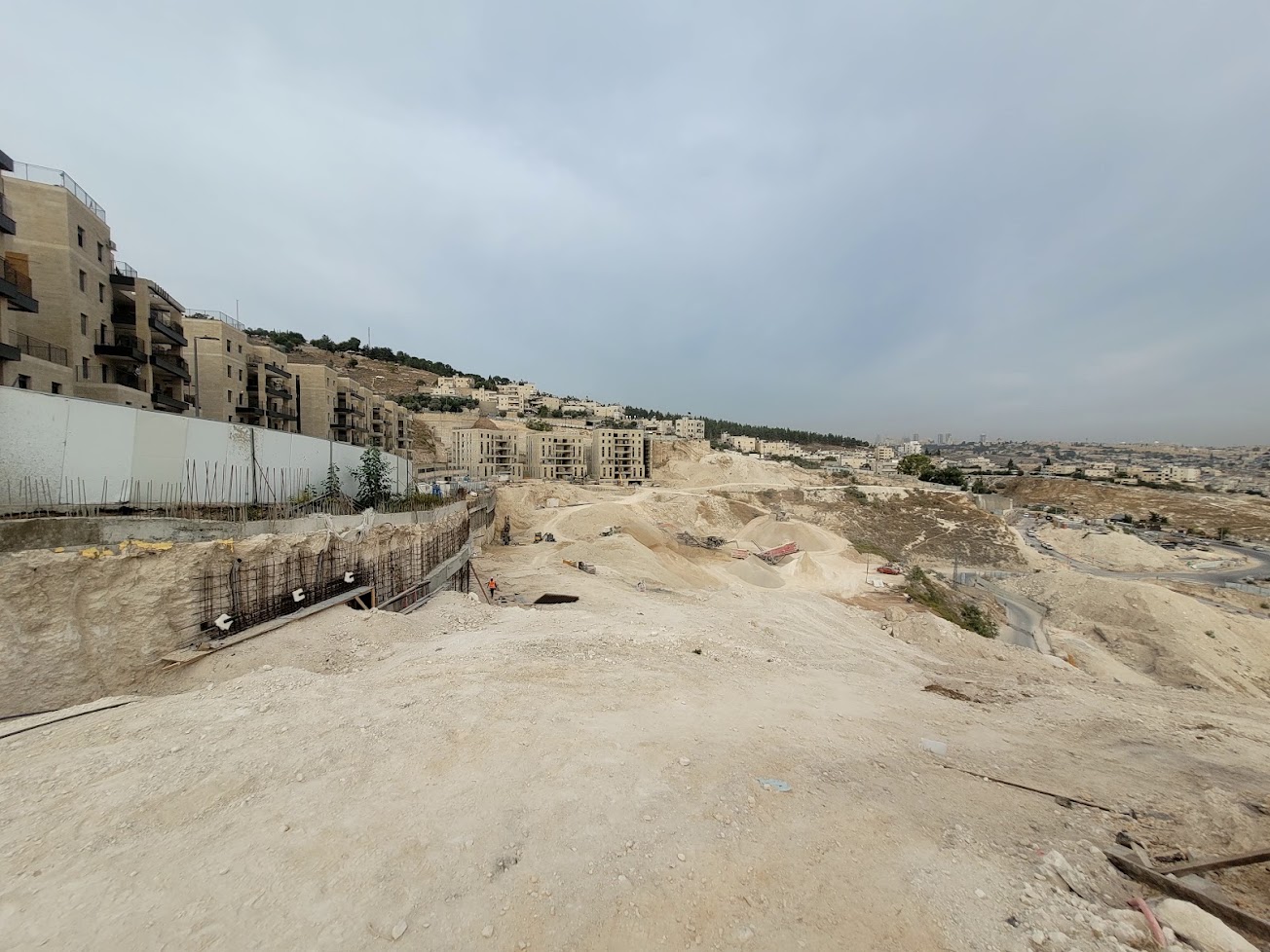 Anat TuegOct-14-2026Jerusalem. Nof Zion Expanding Down the Slope
-
