
Hamra (Beqaot), Tayasir, Za’tara (Tapuah)
11.20 Zatara/ Tapuach Junction
The positions were not manned
11.40 Ma’aleh Efrayim
As above (and also on the way back at 17.00)
12.00 Hamra checkpoint
At first sight it seemed to be deserted, and then a solitary soldier came out of the hut. There was no Palestinian traffic at the time that we passed-by.
Gochya Gate
The gate was locked. In the past, it was opened only three times a week. Now, even not that, and for the last two years inhabitants of the Jordan Valley who want to go to a doctor, the grocer, or to visit their children who learn in the Jordan Valley (and stay to sleep there because the occupier denies education for the shepherd communities in the valley), are forced to travel about twenty kilometers to the checkpoints, since there is no public transport.
About ten armed soldiers sat beside the gate. When we approached they all stood-up and came towards us, in a very hostile and aggressive manner. Two vehicles arrived a few minutes later and took them away.
Um Jamal
It was still impossible to cross the puddle of mud on the way to the families in Ka’abana` families. We had decided to give each family a contribution of1.000 NIS from the money that had been donated, so that they could buy tarpaulins for their sheep-sheds. We went from family to family and gave this amount to the family’s mother. We explained to them that Jewish women who were shocked by the destruction of their dwellings donated the money to help to rebuild them. The circle of children around us grew as we went from family to family.
One of the women told us that in the month of March 2014, their tractor, without which it is impossible for them to perform their agricultural tasks, was taken from them. They had to pay a 3,500 NIS fine. When we asked “What for?”, she shrugged her shoulders and said “I don’t know; they just came and took it”. She also told us that her family originally came from the Arad area in Israel. In 1948 they were expelled from there to the South Hebron mountain region, and after the 1967 6-Day War, were sent to the Jericho region (E1). They arrived here in 1991.
14.15 Tayasir Checkpoint
There was little traffic. The two detainees whom our friends saw here in the morning shift had been released. The soldiers could only tell us that they had been detained for three hours, and that their crime was that they had been loitering near one of the settlements – they didn’t know which one. The settlers are equipped with warning facilities and every shepherd who is caught by their cameras is taken to the checkpoint without a trial, without any rights to defend himself, and is held for 3-4 hours. Every move of a Palestinian is measured, but every hour of his life can be taken away from him, just like that, and without a thought.
A film team of the Palestinian television service asked to interview me. After the interview, the soldiers detained the team for a few minutes in order to question them about their activities, but not for a long time.
There was a strong army presence on all the roads in the Jordan Valley, including tanks, soldiers, armored personnel carriers, and aircraft which circled above us at low altitude. During the previous night, the troops raided the village of Bardalaand ran wild in the streets. More about this in this report .
Hamra (Beqaot)
See all reports for this place-
One of the Jordan Rift Valley checkpoints that prevent direct transit between the West Bank and the Jordan Valley, in addition to Tayasir Checkpoint. Located next to Hamra settlement, on Route 57 and the Allon Road.
Read about the peple of the Jordan Valley and the quiet transfer happening there.
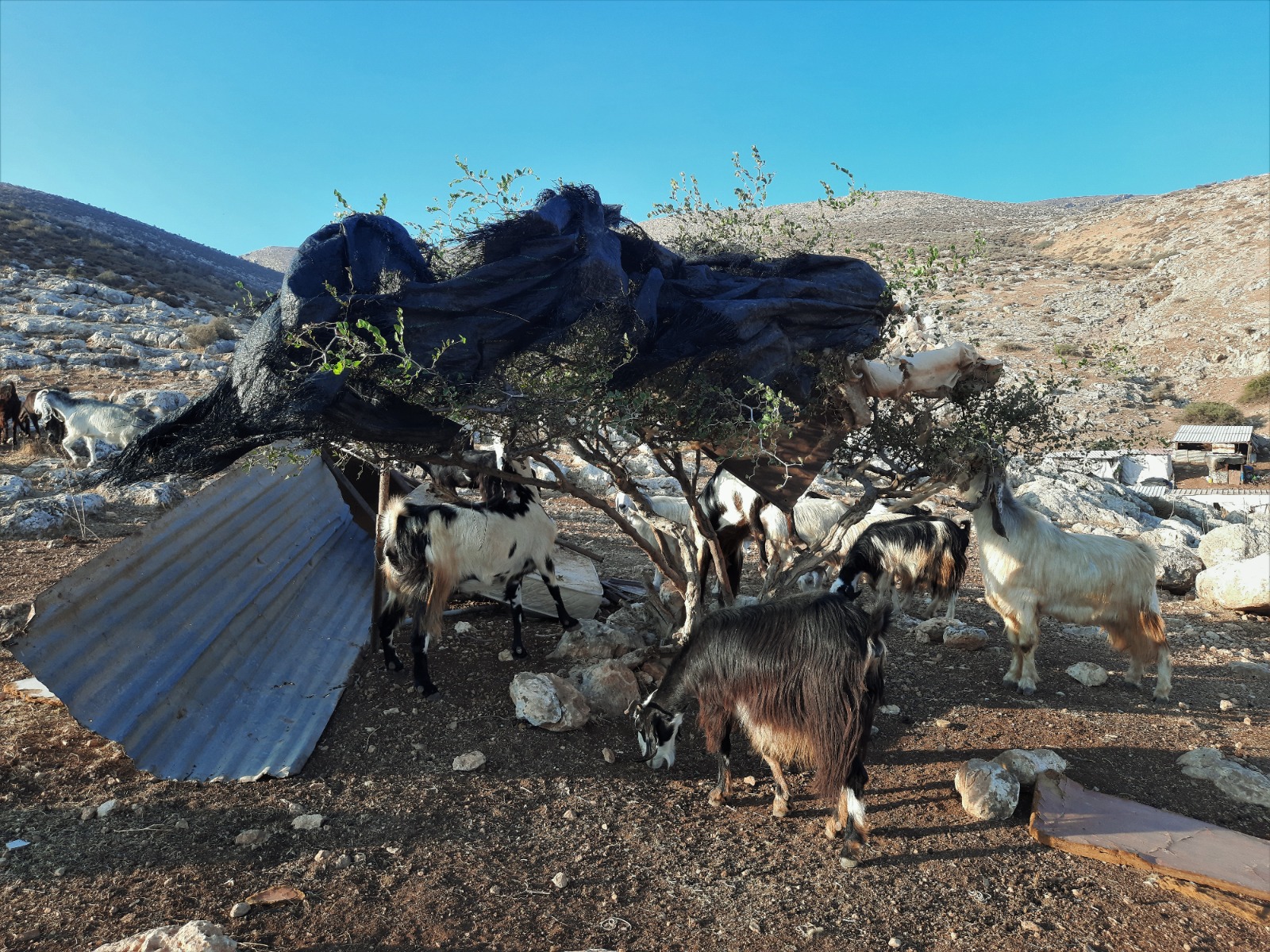 Shahar ShilohNov-3-2021Ein Shibli: grazing begins close to home
-
Tayasir CP
See all reports for this place-
Located on road 5799, It is one of the checkpoints control the passage between the northern West Bank and the Jordan Valley. For a long time, it stood empty and open, with only a sign next to it warning against entering Area A. It was adjacent to an old military camp - now everything is neglected. How much money was invested here, and how much brainwashing was done to the soldiers of Netzah Yehuda and Kfir.
Today, it is very difficult to pass there. Many delays. Often, teachers from Tubas are not allowed to pass into the Valley to villages like Ein al-Bida where the local schools are located, and there are no classes. There are additional days when the checkpoint is closed. In general, there is a wait there of about two to four hours to go towards the Valley and also to return. Many times the Palestinians are forced to use the Hamra checkpoint, which also leads into Tubas and the West Bank, but there is also a huge queue there and a long wait.
Following a deadly attack on soldiers at the nearby base in February 2025, the checkpoint was completely closed for the time being. (Updated March 2025)
-
Za'tara (Tapuah)
See all reports for this place-
Za'tara (Tapuah) Za'tara is an internal checkpoint in the heart of the West Bank, at the intersection of Road 60 and Road 505 (Trans-Samaria), east of the Tapuah settlement. This checkpoint is the "border" marked by the IDF between the north and south of the West Bank, in accordance with the policy of separation between the two parts of the West Bank that has been in place since December 2005. At the Za'tara checkpoint, there are separate routes for Israelis and Palestinians. In the route for Israelis, there are no inspections and the route for Palestinians inspects. The queue lengthens and shortens suits. The checkpoint is open 24 hours a day. The checkpoint is partially staffed and the people who pass through it are checked at random.
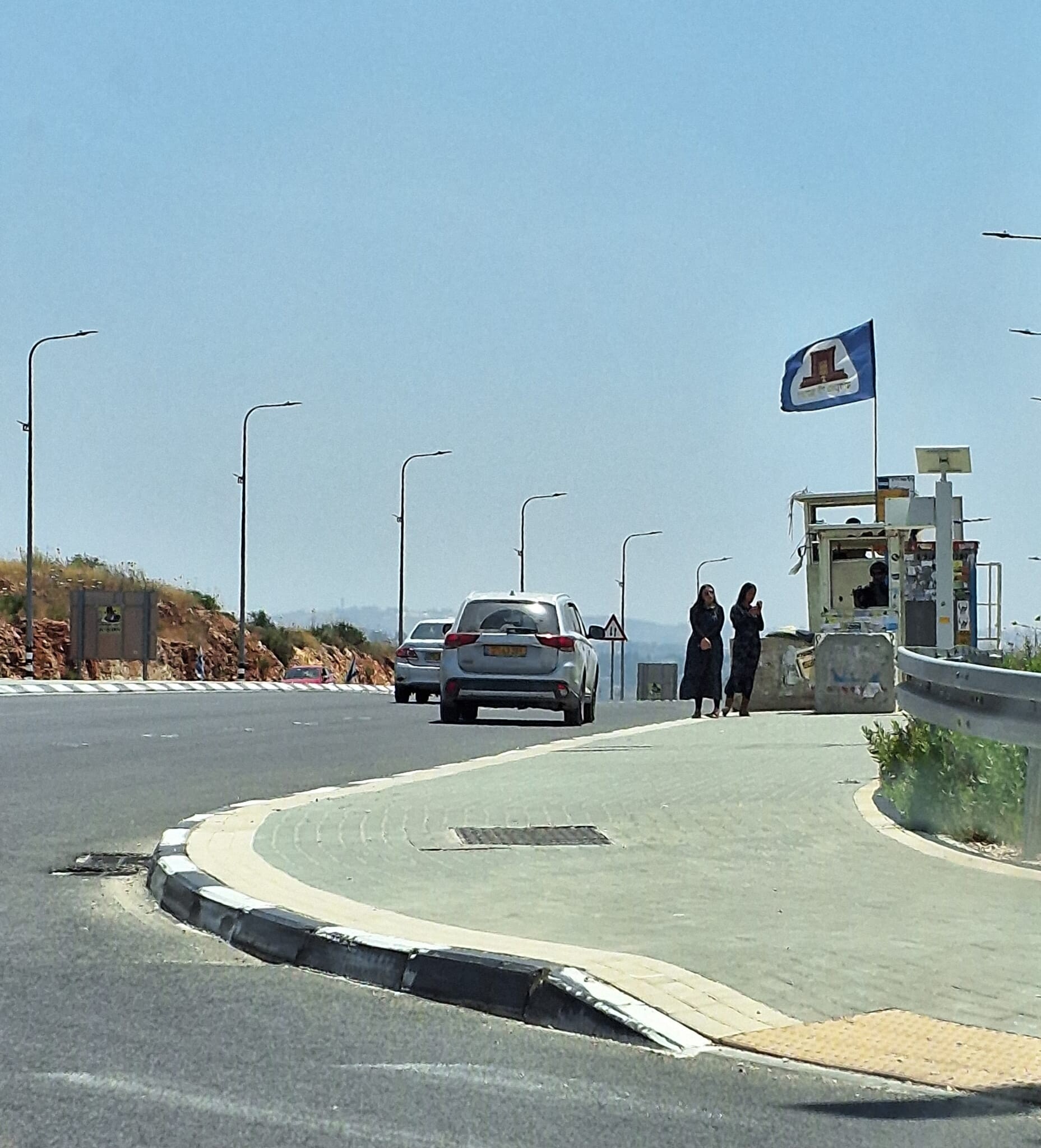 Ronit Dahan-RamatiJun-9-2026Za'atara (Tapuach Junction). The Temple Flag Above a Station
-
