
Hamra, Ma’ale Efrayim, Tayasir, Za’tara (Tapuah), Sun 21.3.10, Morning
How to make the lives of Jordan Valley Bedouin intolerable, and how to turn them into the poorest population of the West Bank?
Declare their living area a fire zone; physically block their links to education, health and commerce centres, and then fine anyone who sidetracks the blockade; increase the price of their water supply!
Today two Palestinian youths were killed at Awarta, this following the shooting and killing of two boys at Burin yesterday. We saw no exceptional military activity, apart from an ambulance parked at Zaatra Checkpoint when we returned from the Valley.
10:15 Shomron Checkpoint
No check upon entry to the Territories.
10:40 Zaatra Checkpoint
Four cars in line from Nablus. Apart from them the square is empty.
Maalei Ephraim Checkpoint
At the entry to the Valley – cars with Israeli numberplates, like us, are not stopped for examination.
Between the settlements of Gitit and Mechora a new building is rising on the side of the road to house their agricultural machinery, tractors and irrigation piping. Nobody there.
11:30 Hamra Checkpoint
After six months of absence (medical reasons) we discovered that they have fenced the area from the checkpoint, but the settlement stays the same. Vehicles from the south pass after a brief check of the passengers in the cars. Those coming from the west are obliged to alight and proceed through the checkpoint on foot. Only Valley residents are allowed through with vehicles. Israelis, tourists or Gaza residents cannot pass.
When we arrived we were greeted with friendliness by two soldiers who gave us explanations about the checkpoint. Afterwards, Palestinian tourists arrived and were taken off the bus for checking. They had come from Jenin area on a family tour of churches in and around Jericho. When we began to talk to them, a female soldier rushed over, clutching a drink and cigarette, and instructed us that it was forbidden for us to talk to locals, and in any event we must back away from the checkpoint – this even though we were behind the fence that surrounds it. We ignored her. She threatened to stop the checks if we did not do as she said. We threatened to phone in a complaint against her. In the final resort, the checks continued. And afterwards one of the soldiers came back to talk to us, and it became clear that he was the checkpoint commander, while the woman who had taken command was the dog minder.
All told, the tourist families were held up quarter of an hour.
12:00 – we left.
In a bedouin encampment between Roi and Maskiot (where we had brought sacks of clothes and shoes), we sat with three women. The men were out at pasture. The women told us, among other things, that they have no water and are forced to buy tankloads from Auja, a distance of 60 kilometres. Each 11-sqm. containerof water costs 250 NIS– in other words, around 25 NIS for a cubic metre (not including transport cost). We heard this after passing the hothouses of Roi and the lawns and swimming pools that they have together, of course, with flowing water from taps. Amira Hass wrote in Haaretz in February 2007 that each family in Roi settlement receives 40,000 cubic metres of water every year at a price of 1.5-3.5 shekels per cube, all this from wells in the Valley.
We saw the terrible poverty in which they live: plastic tents without floors, no furniture, no electricity, no flowing water. A bed and a few chairs for an extended family of ten. The children go to school in Auja, 60 kilometres away (because the road to Tamun is blocked), and have to stay there with relatives on weekdays.
Add to all that – a few months ago, across the Valley, near every encampment, pastureland or other hint of Bedouin life, concrete posts were planted with a sign "Danger, Firing Zone!" (A sign which of course does not appear next to any of the settlements or on their farm lands). The army forbids them to graze their flocks in the "Firing Zone" that covers the whole area. Since the herds are their only source of livelihood, it means that they have no choice. Some time ago, they arrested the son who was pasturing the herd, and held him at Hamra Checkpoint until 10 at night. So a checkpoint here becomes a prison. We learnt the significance of "Firing Zone" ourselves at Guchia Gate. We were warned by both the army and the police that no one has permission to enter a firing zone. That means that all the bedouins (a few thousand?) who live in the area reside and eaarn their living contrary to the law (laws of Sodom!!!), and at any moment that the powers that be so desire, they can be driven out (where to???).
13:40-14:15 Tayasir Checkpoint
Nothing new here either – anyone coming from the west must alight from the vehicle and go through the pedestrian checkpoint. The only thing we didn’t see today was the pirouette with a raised shirt.
At this hour schoolchildren are passing through. They live in the area of Hamam el Maliah and study in Tayasir. They descend from the taxi to be checked one by one. As we approached we saw them leaving the checkpoint one by one after a personal inspection (what do you inspect on an eight year old child?), but when the soldiers saw us approaching they sent the whole group. The checkpoint commander immediately informed us that he has orders from above to push us back 100 metres from the checkpoint. We ignored this too.
14:40 – 15:45 Guchia Gate
The "gate" is a metal bar blocking a dirt road west of Route 578 (the Allon Road) and south of Roi. The road leads to the town of Tamoun, at 15,000 residents one of the largest in the north of the West Bank, linking it with the Jordan Valley. The gate is supposed to be opened by the army three times a week, on Sunday, Tuesday and Thursday, for half an hour in the morning and in the afternoon. On the occasions that I arrived (between 15:00 and 15:30) to check whether the gate was open, it was closed and only our phone call to the DCO brought a military jeep with the key. On one side there is an open field across which an earthen ramp has been built to prevent passage. On the other side there is a hillock making transit difficult, but there are on it clear tire marks of all who have bypassed the gate. After all, this is clearly a decree which the public cannot obey.
What is the reason for the decree, one of many that make the lives of the area’s residents so impossible? Why are the bedouin spread across the area separated from the nearest urban centre?
This time we had a chance to see what happens to those who bypass…
When we arrived, at 14:40, we saw an army jeep about 100 metres from the closed Guchia Gate, alongside a Transit with seven men standing by it. When we went over to clarify, we were ordered by a captain to leave the area immediately because this is a firing zone to which entrance is prohibited. We were threatened with the arrival of police. We backed off, except for one of us who went to the Transit. Turned out that all the men were residents of Tamoun, labourers who work at Tomer settlement (with security passes), returning home after a day’s work. They had already been delayed quarter of an hour. We phoned the DCO in Jericho. They told us that they knew, and after a check the men would be released to go home.
At 14:55 a vehicle arrived with three policemen. They were very friendly and we understood that the matter would soon be over. They also explained that it was forbidden for us to be in a firing zone (with the well known notice). The policemen stopped there more than half an hour and when they left they said the workers would be released. To our surprise, the jeep pulled up for some unknown reason in front of the gate, followed by the Transit which was supposed to continue in the opposite direction toward Tamoun. It waited there more than five minutes (was it waiting for us to leave?).
The passengers in the Transit told us that first of all the police took the driver’s licenses and fined him 800 shekels (a massive sum in terms of the Jordan Valley), apart from which they were not permitted to go home by the short route, but had to make a detour of 40 kilometres via Hamra Checkpoint.
On the way back, our opinions were divided: is this just the stupidity of evil, or is it a deliberate policy with political and demographic elements, handed down from above?
17:35 Zaatra Checkpoint – an ambulance was standing in the plaza. Eight cars from the direction of Huwarra.
Hamra (Beqaot)
See all reports for this place-
One of the Jordan Rift Valley checkpoints that prevent direct transit between the West Bank and the Jordan Valley, in addition to Tayasir Checkpoint. Located next to Hamra settlement, on Route 57 and the Allon Road.
Read about the peple of the Jordan Valley and the quiet transfer happening there.
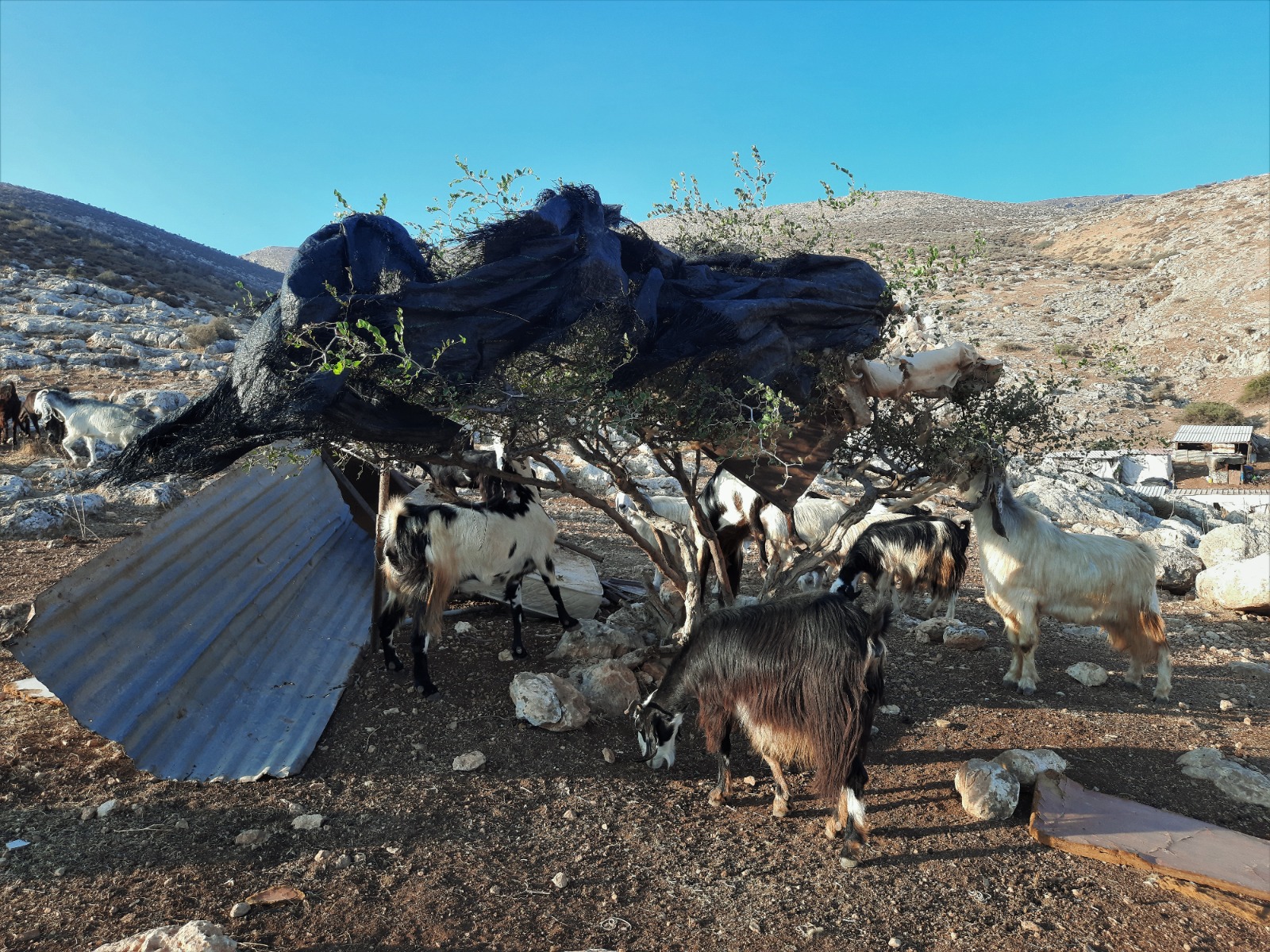 Shahar ShilohNov-3-2021Ein Shibli: grazing begins close to home
-
Ma'ale Efrayim
See all reports for this place-
Ma'ale Efrayim On the road connecting Route 90 (the Jordan Valley road) to the Allon Road.
-
Tayasir CP
See all reports for this place-
Located on road 5799, It is one of the checkpoints control the passage between the northern West Bank and the Jordan Valley. For a long time, it stood empty and open, with only a sign next to it warning against entering Area A. It was adjacent to an old military camp - now everything is neglected. How much money was invested here, and how much brainwashing was done to the soldiers of Netzah Yehuda and Kfir.
Today, it is very difficult to pass there. Many delays. Often, teachers from Tubas are not allowed to pass into the Valley to villages like Ein al-Bida where the local schools are located, and there are no classes. There are additional days when the checkpoint is closed. In general, there is a wait there of about two to four hours to go towards the Valley and also to return. Many times the Palestinians are forced to use the Hamra checkpoint, which also leads into Tubas and the West Bank, but there is also a huge queue there and a long wait.
Following a deadly attack on soldiers at the nearby base in February 2025, the checkpoint was completely closed for the time being. (Updated March 2025)
-
Za'tara (Tapuah)
See all reports for this place-
Za'tara (Tapuah) Za'tara is an internal checkpoint in the heart of the West Bank, at the intersection of Road 60 and Road 505 (Trans-Samaria), east of the Tapuah settlement. This checkpoint is the "border" marked by the IDF between the north and south of the West Bank, in accordance with the policy of separation between the two parts of the West Bank that has been in place since December 2005. At the Za'tara checkpoint, there are separate routes for Israelis and Palestinians. In the route for Israelis, there are no inspections and the route for Palestinians inspects. The queue lengthens and shortens suits. The checkpoint is open 24 hours a day. The checkpoint is partially staffed and the people who pass through it are checked at random.
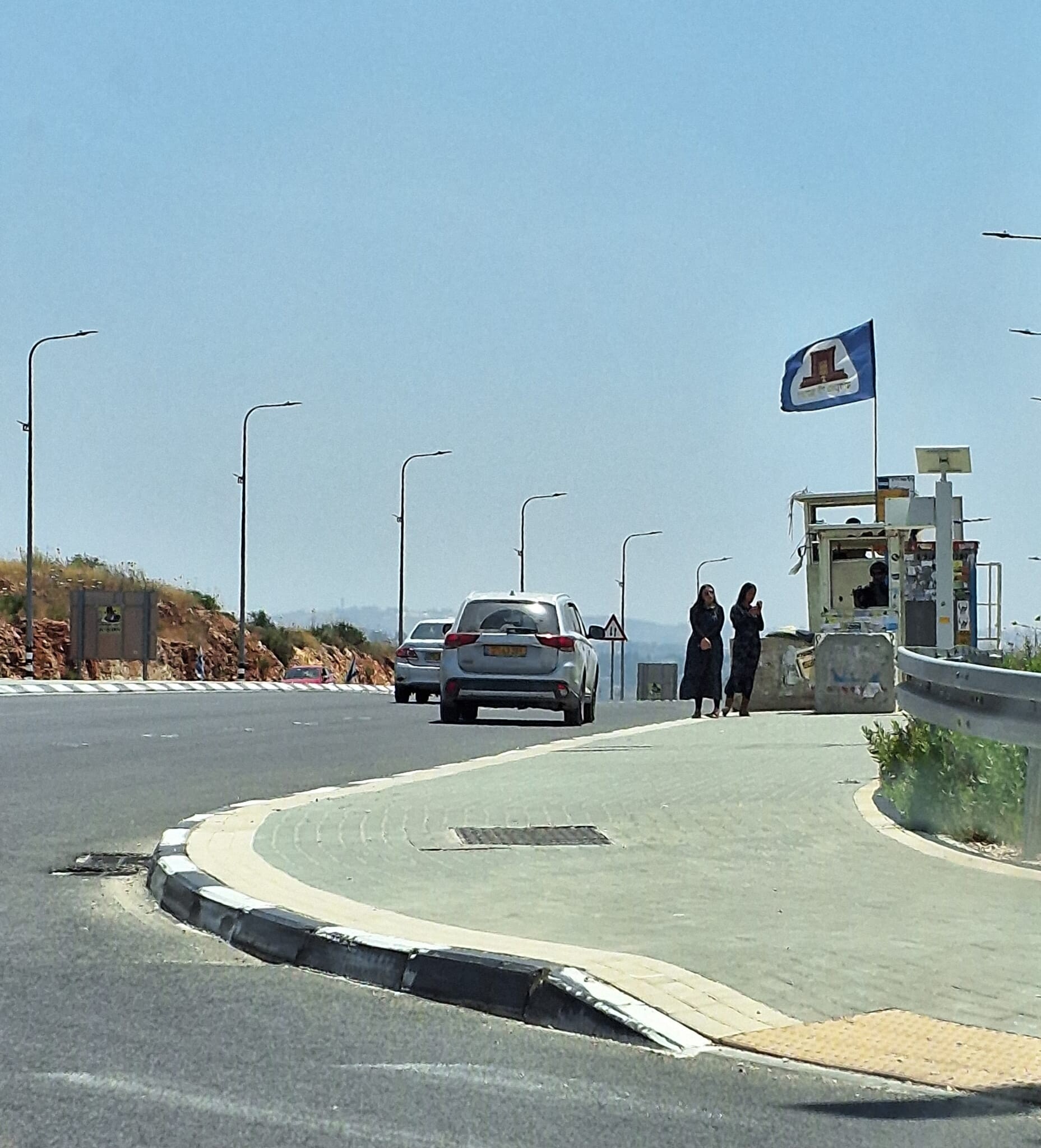 Ronit Dahan-RamatiJun-9-2026Za'atara (Tapuach Junction). The Temple Flag Above a Station
-
