
Huwwara, Sat 9.2.08, Afternoon
Translation: Ruth F.
Huwwara
The parking lot near the cp was crowded with vehicles, some peddlers held a kind of a small market for their welfare and that of the drivers. Stands with drinks, bread, candy, Falafel and even one with second hand shoes. At the beginning that sight made us happy, but later an officer from the civil administration explained to us that it was only temporary as the army, the state and the GSS had decided to look the other way until it will be decided that the stands, which enable those people to bring food to their homes, should be defined as a "disordered conduct" or as a threat to the soldiers or even an nuisance to the environment. Lieutenant Tarak from the DCO said that the area was under military control according to a decree, and it is only the army that can decide who could be there. The army may send the peddlers and even the cab driver away. There were many cabs at the parking lot, they had work but not much, some drivers waited for several hours until the car was filled, there is no difference in price between long distance rides and shorter ones. The drivers that were waiting told us about the difficulty they encounter when they wish to provide for their families. We shall later elaborate on a story from Azun.
Tens of men were standing behind each inspection post. Soldiers equipped with arms, shields and computers, stood in front of people who were making their way to do whatever it is one has to do in order to live. A rifle in front of a bag of food, a helmet in front of a Hijub, cement bricks so high that they were taller then the children standing by the parents, and on that day there were less young men who wished to pass, the reason for that was the segregation and that Fridays and Saturdays had become sabbatical days at the Palestinian Authority (until now it was Thursday and Friday but for some it seemed like a pact with the Jews). There are no studies in most of the institutions, no work and no service is given in most offices. The magnometers were especially sensitive to the bipping of shoes, they bipped all the time and with that noise came a shout saying "Erja Lawara". Men took of their shoes and their socks immediately turned from white to black. All the men took their belts off even before they were asked to do so, they lifted their hands and clothes, and looked at the soldier, who when looking back at them didn't see human beings in front of him. It is surprising that in spite it all none of the Palestinians haven't given up on the belt and the metal buckle. Perhaps it's a dress code or a symbol that they haven't given up.
As part of the segregation, men between the ages of 16-35 weren't allowed to pass to the south. The residents of the Nablus, Jenin and Tulkarem district couldn't pass through Huwwara and obviously they couldn't pass through the cps southern to Huwwara either, Za'atara cp for instance. If you managed to bypass Za'atara cp trough Awrta and reach Alon Moree road when the cp Atara is, then you would encounter the same segregation. A Tulkarem resident that staid in Nablus up until the segregation started, and now couldn't pass through Beit Iba, told us that over there the inspections were taking place for both sides. Part of the IDs that were issued for the residents of the villages southern to Nablus (like Zita or Jameion) say that the ID was issued in Tulkarem. The segregation therefore doesn't include these people, but the soldiers chose the easy way and sent them back. The DCO officer and the commander knew there was a problem but didn't bother to inform the soldier inspecting until the question was brought up.
A driver, brought some passengers during the morning and had been waiting to take them back for several hours. That way he earns a bit more, this is job on Saturdays. During the week he enters Israel without a permit and works for Israelis employers. He is under the age of 30. The entrance to Israel is easy as the employers prefer their workers to be Palestinians then foreigners, and I don't have to explain why. So there is an unspoken agreement with those that need it, and the soldiers turn a blind eye. During the whole week they hide and sleep in the orchards, while at the weekends they return home to their wives and children. They arrive dirty, smelly and they disgust themselves. On his way home he manages to enter through Azzun, this enclave is only open to Azzun residents. Through Azzun the Palestinian workers try entering to Beit Amin and from there to the rest of the villages in the West Bank, but that is the place where they get caught. The BP and police hold them for several hours, wasted time they couldn't have spent with their families. They go through the same kind of torture that we already know form the checkpoints. They aren't allowed to sit, talk, smoke or talk over their phones, not to move nor smile, they have to stay like that for hours. Sometimes they are sent back home and sometimes they are taken for investigations at the police station where they have to pay a large fine. Sometimes they are taken from there hiding places at the orchards during the police or the BP night raids, who have no problems destroying the nylons that are used as walls and ceilings.
We heard similar stories from various men in different places, but all the rest is the same. One thread links these stories, the ability to provide for the family leads to suffering or even worse, to the necessity of talking to the GSS Captains, in order of receiving a permit. One after another people come and tell us of their magnetic cards being taken from them because they were suddenly defined as prevented passage by the GSS, from then on they can either go sleep in the orchards or go have a chat. The head of the Civil Administration is in their eye, as just another branch of the GSS.
Huwwara
See all reports for this place-
The Huwwara checkpoint is an internal checkpoint south of the city of Nablus, at the intersection of Roads 60 and 5077 (between the settlements of Bracha and Itamar). This checkpoint was one of the four permanent checkpoints that closed on Nablus (Beit Furik and Awarta checkpoints to the east and the Beit Iba checkpoint to the west). It was a pedestrian-only barrier. As MachsomWatch volunteers, we watched therre since 2001 two shifts a day - morning and noon, the thousands of Palestinians leaving Nablus and waiting for hours in queues to reach anywhere else in the West Bank, from the other side of the checkpoint the destination could only be reached by public transport. In early June 2009, as part of the easing of Palestinian traffic in the West Bank, the checkpoint was opened to vehicular traffic. The passage was free, with occasional military presence in the guard tower. Also, there were vehicle inspections from time to time. Since the massacre on 7.10.2023, the checkpoint has been closed to Palestinians.
On February 26, 2023, about 400 settlers attacked the town's residents for 5 hours and set fire to property, such as houses and cars. Disturbances occurred in response to a shooting of two Jewish residents of Har Bracha by a Palestinian Terrorist. The soldiers stationed in the town did not prevent the arson and rescued Palestinian families from their homes only after they were set on fire. No one was punished and Finance Minister Smotrich stated that "the State of Israel should wipe out Hawara." Left and center organizations organized solidarity demonstrations and support actions for the residents of Hawara.Hawara continued to be in the headlines in all the months that followed: more pogroms by the settlers, attacks by Palestinians and a massive presence of the army in the town. It amounted to a de facto curfew of commerce and life in the center of the city. On October 5, 2023, MK Zvi established a Sukkah in the center of Hawara and hundreds of settlers backed the army blocked the main road and held prayers in the heart of the town all night and the next day. On Saturday, October 7, 23 The "Swords of Iron" war began with an attack by Hamas on settlements surrounding Gaza in the face of a poor presence of the IDF. Much criticism has been made of the withdrawal of military forces from the area surrounding Gaza and their placement in the West Bank, and in the Hawara and Samaria region in particular, as a shield for the settlers who were taking over and rioting.
On November 12, 2023, the first section of the Hawara bypass road intended for Israeli traffic only was opened. In this way, the settlers can bypass the road that goes through the center of Hawara, which is the main artery for traffic from the Nablus area to Ramallah and the south of the West Bank. For the construction of the road, the Civil Administration expropriated 406 dunams of private land belonging to Palestinians from the nearby villages. The settlers are not satisfied with this at the moment, and demand to also travel through Hawara itself in order to demonstrate presence and control.(updated November 2023)
.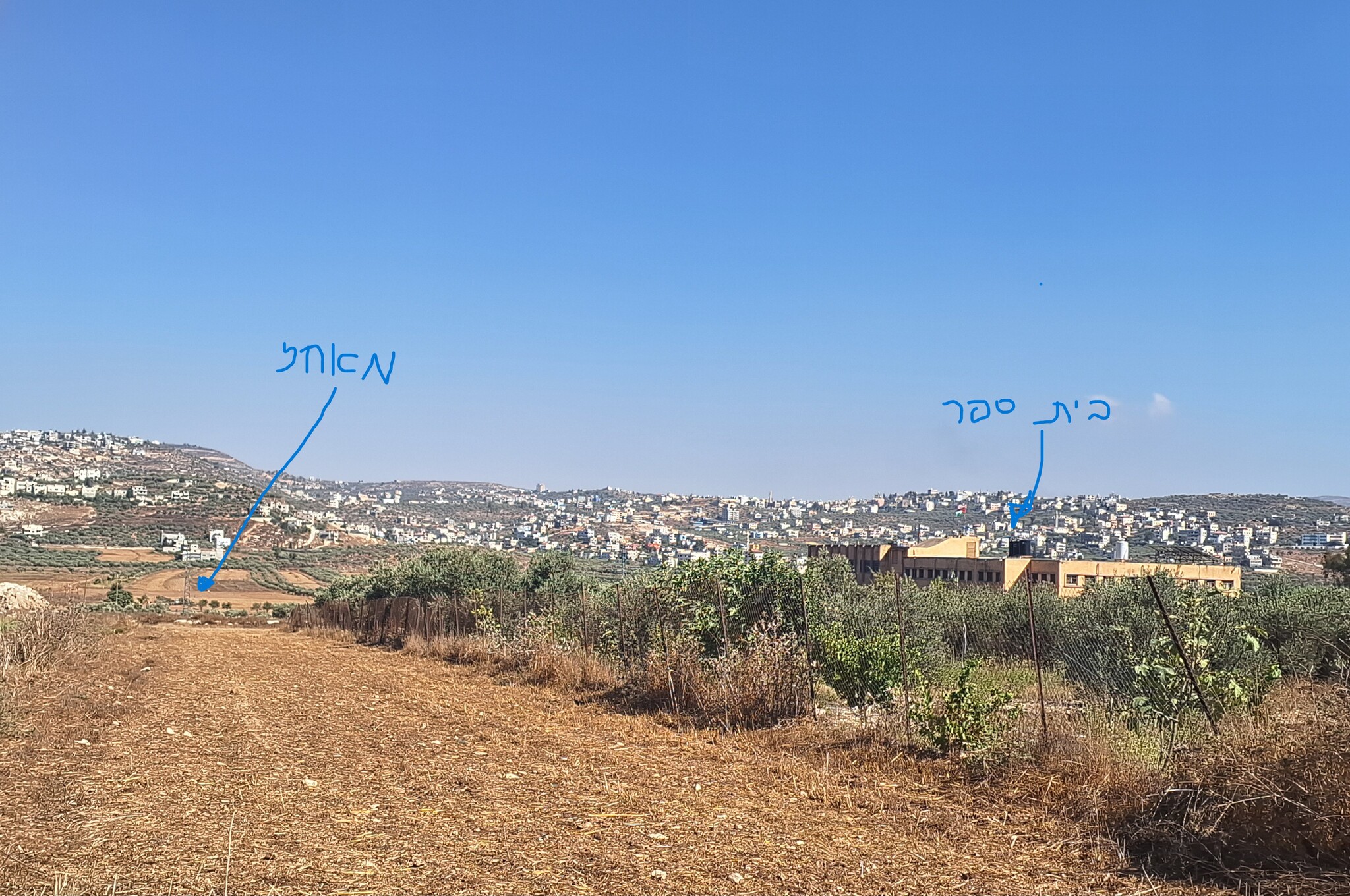 Ronit Dahan-RamatiAug-24-2026Huwara: The school on the outskirts of town and an outpost hidden among the trees
-
