
Nabi Samuel and Jerusalem: A Besieged Enclave, Racist Violence
Visit to Nabi Samuel, interview with Muatsem Kak in Ras al-Amud, demonstration in memory of Khalil al-Rashak outside the President’s Residence
13:00 — Nabi Samuel
I visited E., an old acquaintance of ours, to get an update on the situation in the village situated at the foot of the mosque and the tomb of the Prophet Samuel/Nabi Samuel.
I arrived at a special time, during the period known as “Bein HaZmanim.” This is a general vacation period in yeshivas and schools in Israel’s ultra-Orthodox and religious sectors. Religious Israelis, both within Israel and in the West Bank, flock in large numbers to tourist and recreation destinations, especially Jewish religious sites in national parks and sites administered by the Israel Antiquities Authority. Families come to Nabi Samuel with their children, and admission is, of course, free. The residents of the besieged Nabi Samuel enclave try to make a living by offering donkey rides as an attraction. The guides are children from the besieged Nabi Samuel enclave. A surreal sight.
E. says that the only checkpoint they are permitted to cross to reach the outside world, the al-Jib checkpoint, opposite Givat Ze’ev, has been closed for four days. This is collective punishment following an attempt to evade the checkpoint, during which part of the checkpoint was damaged as the vehicle fled. The person who did this has no connection whatsoever to the village. There are rumors that it was a car thief.
Regarding the situation at the mosque and the entry of Palestinian residents for prayers, he says that not much has changed since the mosque complex associated with Samuel’s Tomb was seized in May 2026 from the Jerusalem Waqf. The order applies to an area of 110 dunams containing the mosque and archaeological site, a spring, and agricultural land. The stated grounds for the expropriation are “the public interest.” The only difference now is that, as far as Jewish prayers at the Tomb of the Prophet Samuel are concerned, everything is completely open. In the past, overnight stays by yeshiva students and visitors were restricted; now there is no longer any enforcement of such restrictions.
He also criticizes the Palestinian Waqf for failing to act decisively to preserve its authority at the site and for surrendering without a struggle to what he describes as the unprecedented hostile takeover of a major and active Palestinian religious site.
Reminder: The ancient Palestinian village was left as a Palestinian enclave, while the area surrounding it was declared a national park and Area C, under full Israeli control. All new construction within the village is prohibited, and any building additions, even the smallest, are demolished. Most of its agricultural land has been turned into a national park, or its Palestinian owners have been denied access to it.
The residents are trapped in the village and cannot travel outside it unless they have permits allowing them to travel as far as the al-Jib checkpoint, which provides passage to and from the West Bank. The list of people permitted to pass through this sole checkpoint is subject to extremely stringent controls. If your house is demolished, or you move temporarily to a Palestinian area beyond the checkpoint, you lose your residency status, even though the land belongs to you. You are then removed from the list of people entitled to reach the village. Today, approximately 300 families remain in the village. Life there is impossible, and the purpose of all these difficulties is to make everyone leave.
About a year ago, all the Palestinian villages in the area were officially declared a “seam zone.” Now even relatives from the West Bank are not permitted to enter or stay there, even in special circumstances. E.’s brother is married to an Israeli woman who holds Israeli citizenship, and their two sons and daughter are also Israeli citizens. Yet they cannot officially live there with their family, nor can they live with their relatives in the West Bank. They are not even entitled to pass through the al-Jib checkpoint to reach the village.
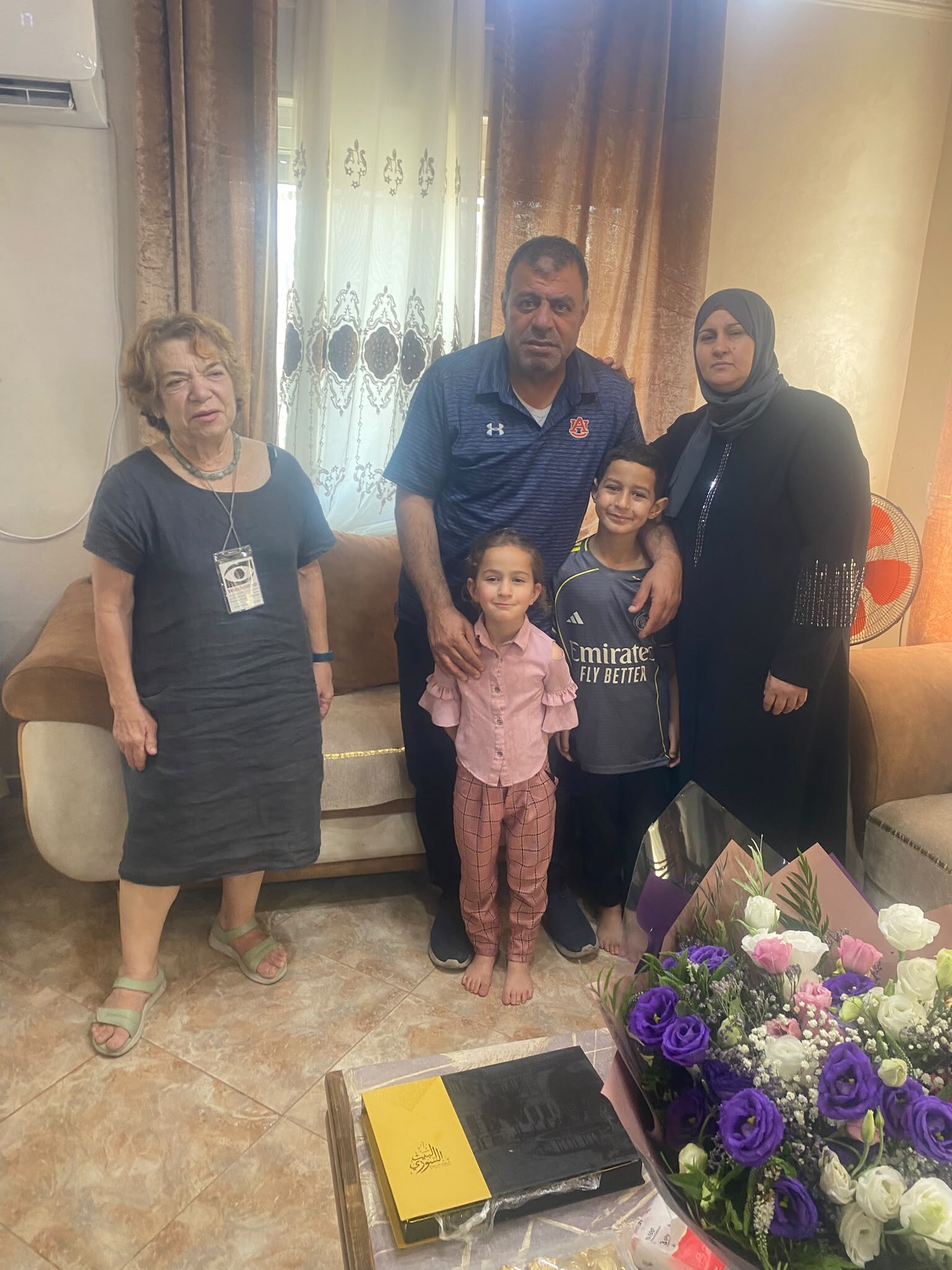
14:00 I met with Kamal, our excellent driver, and we drove to visit the Jerusalem bus driver who had been violently attacked several days earlier. He lost consciousness, was injured, and was taken to the hospital. His name is Muatsem Kak, and he lives in Ras al-Amud in East Jerusalem.
His regular route passes through Ma’aleh Zeitim (a large settlement opposite the Mount of Olives), close to his neighborhood, through the Old City and Ramat Eshkol, and along Route 1, which crosses between western and eastern Jerusalem. He has worked for 30 years for the Israeli bus company Tourbus and has received much praise for his consideration and assistance to passengers, most of whom are regular riders.
You can hear the story of the attack and its aftermath in the video we recorded.
The man faces a long process of physical and psychological rehabilitation, and at present he is afraid to return to work as a driver. He says that it was his bitter fate to be the one attacked, but that any other Arab bus driver who had been there would have undergone the same terrible experience.
Although there were numerous cameras at the intersection in Ramat Eshkol, and there are cameras on the bus itself, none of the racist attackers was arrested. He felt that if he had not managed to escape the scene, they would have killed him…
You have to admit that the situation in Jerusalem (and throughout the West Bank) today brings biblical verses of admonition to mind. With Gemini’s help, I found an appropriate passage:
“And you, son of man, will you judge the city of bloodshed? Then make known to her all her abominations… Behold, the princes of Israel, each according to his power, were in you in order to shed blood…”
(Ezekiel, chapter 22, verses 2, 6–9.)
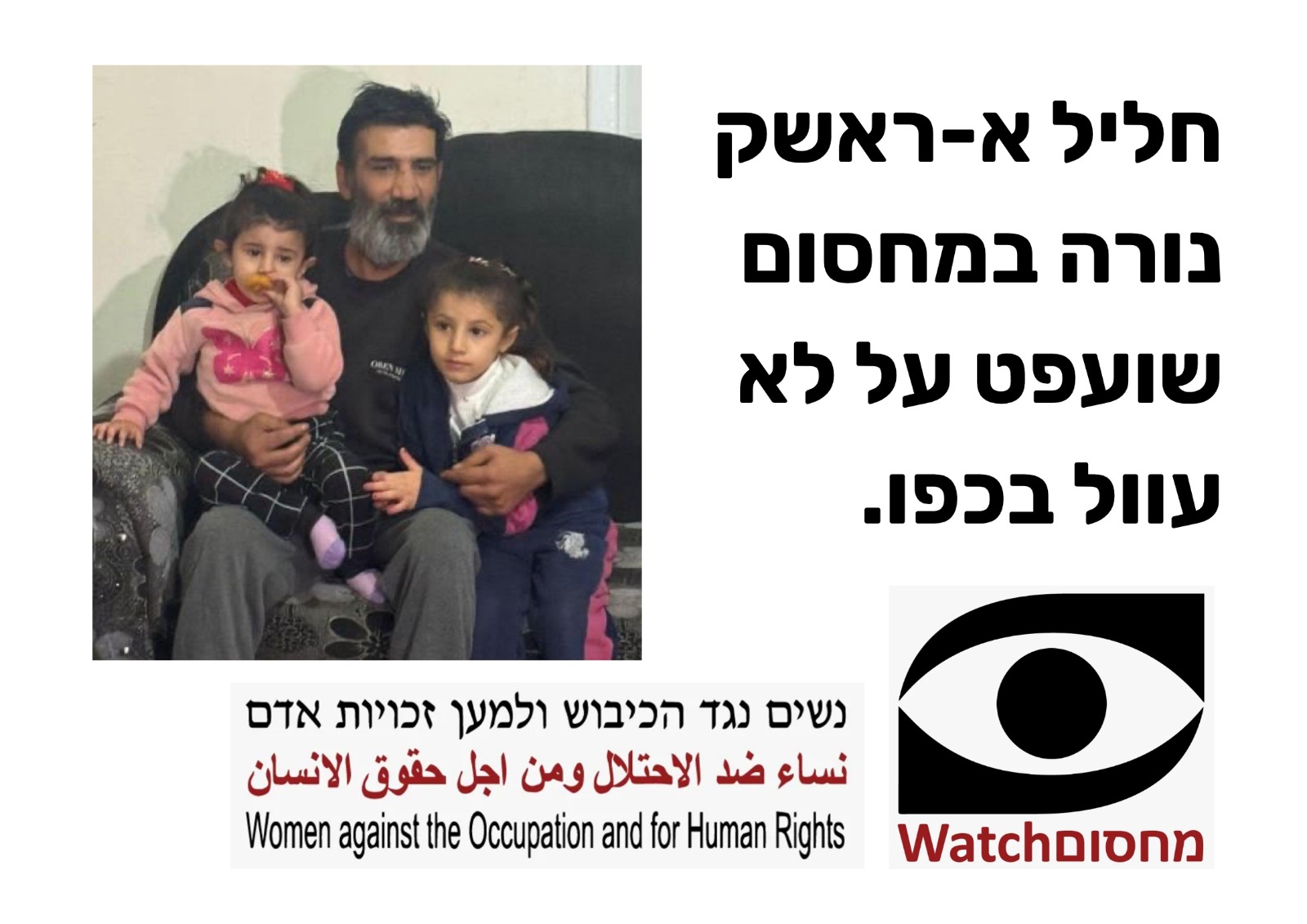
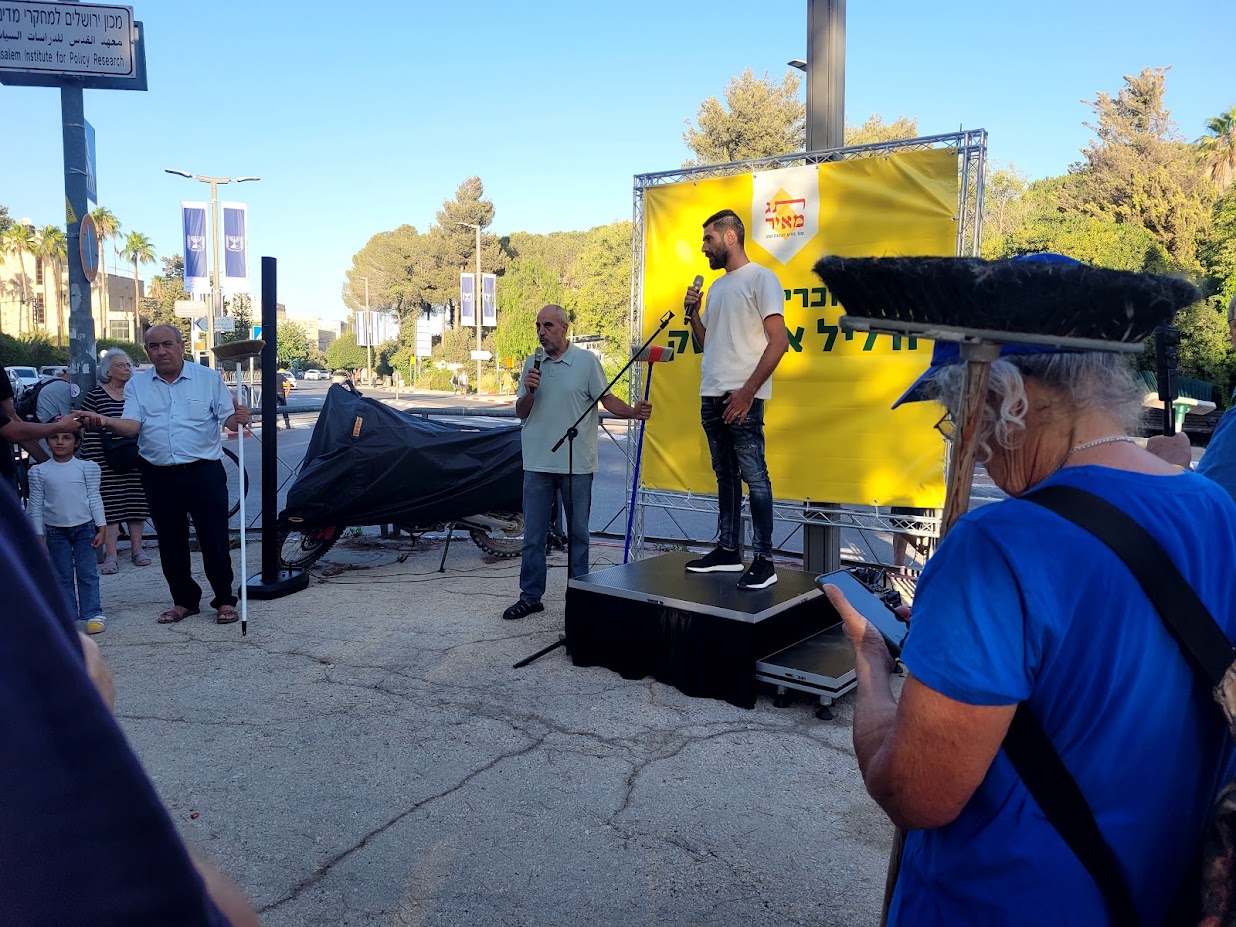
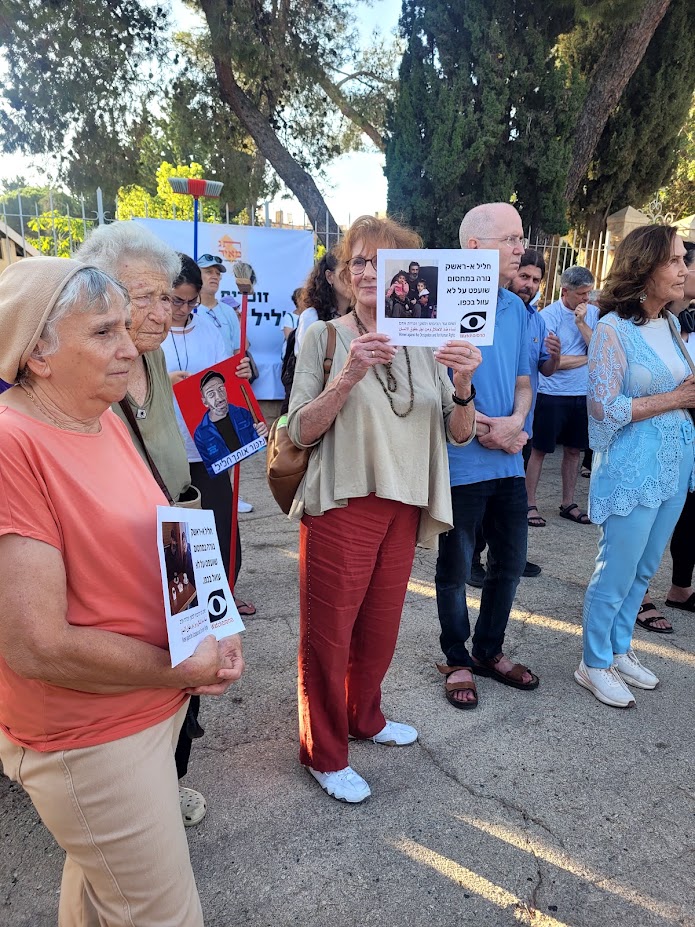
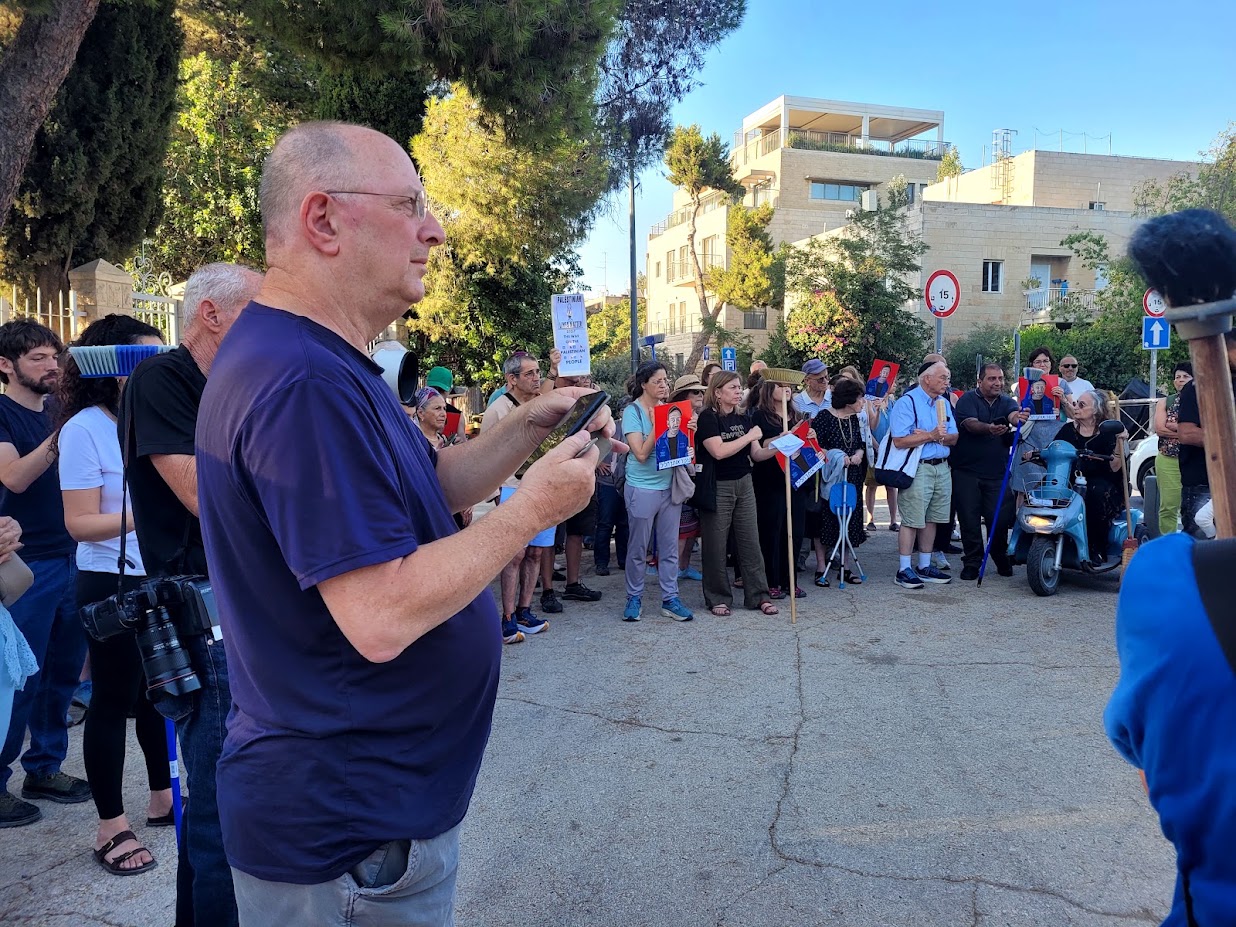
18:00 — Members of Machsom Watch participated in a moving memorial event for street cleaner Khalil al-Rashak, who was killed through negligence and criminal abandonment at the Shuafat checkpoint two weeks ago.
The event was organized by Tag Meir and took place near the President’s Residence.* Some 150 men and women from all over the country participated. Members of his family spoke about him, while the other speakers condemned the racism spreading throughout Israeli society and the trampling of human and Jewish morality by its citizens and by its representatives in the security forces.
We stood there with photographic posters commemorating him, based on photographs from a meeting between our colleague Roni P. and Khalil following his brutal assault in December 2024. He was beaten in a Jerusalem street that he was cleaning by delinquent teenagers, who proudly uploaded documentation of the attack to social media. The assault shattered his life, and from then on he was in pain, depressed, confused, and lost.
We gave his five-year-old daughter a poster featuring a family photograph of him. She could not stop looking at it.
* Although the President was actually at Mount Herzl, the demonstration was moved to a location opposite the Van Leer Institute and was guarded by approximately 15 Border Police officers, both men and women. When it comes to maintaining “public order” at quiet, nonviolent demonstrations, a maximum number of personnel is allocated. This is the unacceptable and infuriating reality.
Location Description
Jerusalem
See all reports for this place-
The places in East Jerusalem which are visited routinely by MachsomWatch women are Silwan and Sheikh Jarrah. During the month of Ramadan, also the Old City and its environs are monitored.
-
Nabi Samwil
See all reports for this place-
Nabi Samwil - a village literally placed in a transparent cage.
This Palestinian village is 800 years old. It is located on top of a hill, its altitude 890 meters above sea level, and overlooks the entire area. According to Jewish, Christian, and Muslim traditions, the Prophet Samuel was buried here. In recent years the mosque has been turned into a popular Jewish prayer site. Jews use the basement for prayer, and Muslims the upper part of the mosque. New signs are placed here, containing verses from the Jewish scriptures and mention of exclusively Israeli historical times. The nearby spring has become a popular site of ritual bathing. On Iyar 28th, every year, a mass-celebration is held in memory of the Prophet Samuel.
Until 1967 this was a well-off village that developed around the mosque, with a population of 1,000 owning thousands of dunams of farmland. In 1967 most of the villagers fled, and only 250 remained. In 1971 Israel expelled them, and until the 1990s completely razed its houses that were sitting on a Crusader and Hellenist archeological stratum, without any kind of compensation for the expelled inhabitants. Parts of the village lands are at present used for the settler-colony of Har Shmuel, another part has been declared a national park. Villagers have tried to restore their lives on their remaining lands, a short distance from their original homes, in an area that formerly held structures to house the village’s livestock.
Then the Separation Fence was erected in the West Bank, the village remained an enclave caught between the Green Line and the Fence, and its inhabitants were torn away from other West Bank villages. Any exit to the West Bank requires crossing the distant Jib checkpoint, with a permit. The movement to Israel inside the Green Line is forbidden as well. In 1995 the entire village area was declared a national park – not only around the mosque and antiquities around it which take up about 30 dunams, but an area of no less than 3,500 dunams including the new village and all of its land. Any additional construction is forbidden: any room, caravan, fence, a newly planted tree. Work permits are issued sparingly. There is a tiny school made up of several caravans.
Watch the movie by Eran Turbiner and MachsomWatch: NABI SAMWIL 1099-2099, a film by Eran Torbiner
-
