
Qalandiya
The woman from the village of Singil is ill with cancer. The doctors who treated her in the hospital in Ramallah determined that she is in need of an operation and referred her to Mukassad Hospital in E. Jerusalem. But occupation is occupation; a person is ill, even a malignant illness, and he cannot be hospitalized without permits from the secret services ("coordination" is what they call it). So, this coordination takes place, and the documents are issued and the referral of the doctors to the hospital in E. Jerusalem is recorded, black on white, and the ambulance from Jerusalem is ordered and, at the same time, the ambulance from the territories arrives simultaneously with the patient, lying on a stretcher and praying while grasping her prayer beads, since maybe, in her condition, the prayer beads and her prayers and the will of god have the strength to help her. And her daughter was also there, with the transit permit, which was prepared ahead of time and according to which all the criteria were met without any doubt, proving that she is not a security danger for the State of Israel.
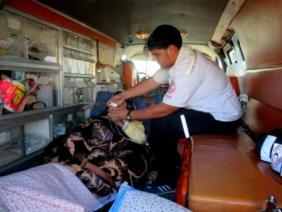
So, they all arrive at Qalandiya checkpoint, the ambulances and the patient with the prayer beads and her prayers and her daughter and the permit from the GSS, and the permit from the hospital, and the medical personnel have already transferred the woman from one ambulance to the other, and the soldiers approach to verify that they are themselves and this woman is the woman. But, oops! she does not have her ID! And they checked and admitted that this is the patient, but who ever heard of a Palestinian woman who does not have her ID with her?? Obviously, without an ID nothing is possible!
And they decided that the patient must be returned to Palestine and come back again, with her ID document, or that someone else should bring the document from wherever it might be, because, "No one goes through without an ID".
Or, as the ambulance driver said, "Here the ID is all-important, not the human being." So, the woman's husband, who, like all husbands and fathers in Palestine is prevented from taking care of his family members who are ill, found the document which had been forgotten in the hospital, and forced his way through all the traffic jams on the way from Ramallah to Kalandia, and provided his wife with her ID, and the way to the hospital in E. Jerusalem was opened for the ambulance.
"In the amount of time lost, we could already have operated on her," said the paramedic.
Qalandiya Checkpoint / Atarot Pass (Jerusalem)
See all reports for this place-
Click here to watch a video from Qalandiya checkpoint up to mid 2019 Three kilometers south of Ramallah, in the heart of Palestinian population. Integrates into "Jerusalem Envelope" as part of Wall that separates between northern suburbs that were annexed to Jerusalem in 1967: Kafr Aqab, Semiramis and Qalandiya, and the villages of Ar-Ram and Bir Nabala, also north of Jerusalem, and the city itself. Some residents of Kafr Aqab, Semiramis and Qalandiya have Jerusalem ID cards. A terminal operated by Israel Police has functioned since early 2006. As of August 2006, northbound pedestrians are not checked. Southbound Palestinians must carry Jerusalem IDs; holders of Palestinian Authority IDs cannot pass without special permits. Vehicular traffic from Ramallah to other West Bank areas runs to the north of Qalandiya. In February 2019, the new facility of the checkpoint was inaugurated aiming to make it like a "border crossing". The bars and barbed wire fences were replaced with walls of perforated metal panels. The check is now performed at multiple stations for face recognition and the transfer of an e-card. The rate of passage has improved and its density has generally decreased, but lack of manpower and malfunctions cause periods of stress. The development and paving of the roads has not yet been completed, the traffic of cars and pedestrians is dangerous, and t the entire vicinity of the checkpoint is filthy. In 2020 a huge pedestrian bridge was built over the vehicle crossing with severe mobility restrictions (steep stairs, long and winding route). The pedestrian access from public transport to the checkpoint from the north (Ramallah direction) is unclear, and there have been cases of people, especially people with disabilities, who accidentally reached the vehicle crossing and were shot by the soldiers at the checkpoint. In the summer of 2021, work began on a new, sunken entrance road from Qalandiya that will lead directly to Road 443 towards Jerusalem and Tel Aviv. At the same time, the runways of the old Atarot airport were demolished and infrastructure was prepared for a large bus terminal. (updated October 2021)
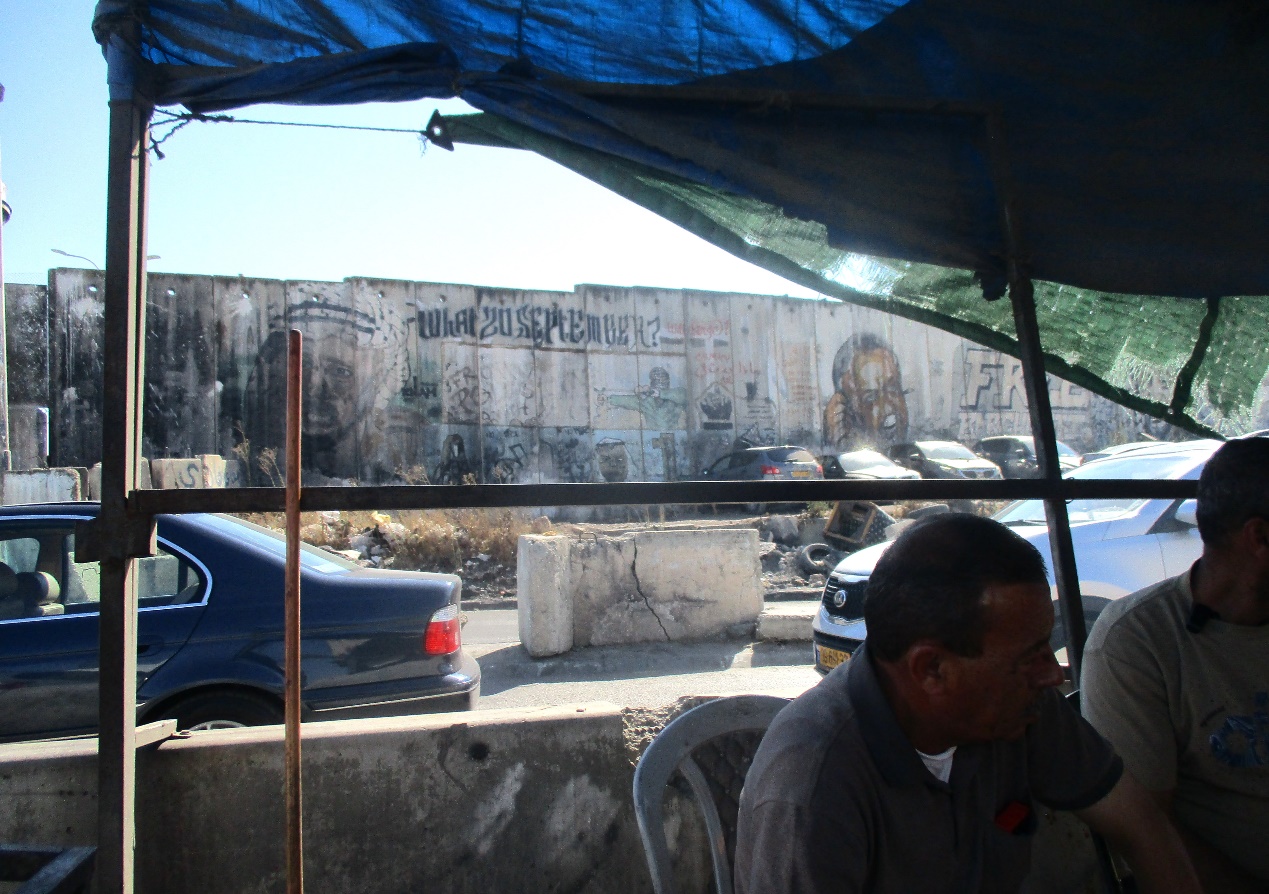 Tamar FleishmanJul-21-2026Qalandiya. Conversation in the shadow of the wall
-
