Qalandiya, Sun 14.10.12, Afternoon
Translating: Ruth Fleishman
Signs of an Arab Spring?
Munir Naim Hamed can no longer be seen near the checkpoint or at his parents' home at the refugee camp. Fifteen year old Munir hasn't been back since he was 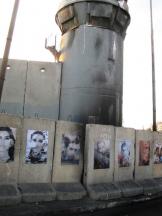 arrested by soldiers during a protest. They say it will be a while until Munir gets back. They say he is probably at Ofer, that he will get two years, maybe more. And the teenagers tell personal stories from their imprisonment and from jail houses, one of them was accused and found guilty of throwing stones: "Here, at the checkpoint", his friend was taken in for throwing a Molotov bottle: "Also here, at the checkpoint…", one of them had seen Ofer from the inside, his friend had been to Nafha prison and another was taken to the Moskovia (=the Russian Compound).
Since Munir's arrest, the official leader of this group of teenagers, they continue to arrive restless at the same hour to the same place- the square in front of the checkpoint. Like a flock without a shepherd.
People say that stones are no longer being thrown there every day, and that gas isn't thrown every day either.
-Why? –Someone talked to them (to the teenagers). Someone from the Tanzim came and talked to them.
And in spite of that, a couple of days earlier, on Friday, from noon that day and up until sun set, the teenagers came back and threw stones and the army shoved them back with gas grenades.
It seems that in spite of the two authorities, the Israeli and the Palestinian one, that would seem to be co-operating and working hand in hand, it is difficult to suffocate and get the flames of this spontaneous protest out, which is a result of the prolonging frustration of human beings that had lost all hope for change and are trying to take control over their own fate.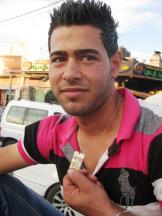
Talk of an Intifada that up until now had been spoken behind closed doors, has also become open. The Intifada is part of the discourse, whether it represents a longing and a wish and whether it stands for a threat and a concern. Every person has his own inclination, every person has his own political affiliation. They say that now, when all eyes are cast towards the blood bath in Syria, the still unstable Egyptian regime and the possibility that there will be an attack on Iran, an all-inclusive and violent conflict might prove to be a fatal error, because what happens in Palestine isn't at the center of attention, not even during more quite times.
This concern must be noted in addition to the fact that even after over a decade the wounds of the El-Aqsa Intifada are still bleeding, and the shattering of the spine of the Palestinian society by a regime of checkpoints, permits and restrictions, as well as the loss of social unity which is a result of the massive recruitment of collaborators for GSS, an organization that makes a cynical and blunt use of mean of repression and prevents the right for movement in order to get what it wants, brothers are made to suspect each other.
More people now than in the past dare to speak against seniors in the Palestinian authority. Some say that: "Yours and ours are the same. They care only for themselves and not for the people" or: "I only have a stomach. They (those in Ramallah) also have a back". And regarding this a person who owns a stale at the front of the checkpoint said he approached the authorities and requested a business license, he wanted to work in accordance to the law and not be sought out from time to time. When asked whether he thought he would receive such a license he replied with a realistic smile: "I can still dream!" and continued to say: "My father's father would say: 'it's only ruff during the first fifty years. After that it will be alright'. My father told me: it's only ruff during the first fifty years, after that it will be alright, and I tell my son: it's only ruff during the first fifty year… when will these fifty years end?"
And what is widely known had already been told and spoken of, that they (inside the checkpoint) see all and film all, that "they" are not only the army but also the GSS and the police, that they observe every person in the refugee camp and know his name.
And on one of these past nights, on the way leading to the checkpoint all along the wall, photos of young men that had been murdered were being glued. A boulevard of Shahids, the photos seemed as though they were coming off, giving the impression that the portraits were fading away, fading away, perhaps it's happening not only in the picture, perhaps it's happening in the collective and privet recollection.
But the truth is that only has the memory of victims not been forgotten, but it is intensifying and becoming a myth and a model. And a teenage boy from Munir's group presented a medallion that hung on his chest and on it the facr of Ali Khalifa who had been murdered in the allies of Qalandiya. "We were friends", he said with pride.
And so the myth of the heroes is forming around the image of the murdered, as a necessary link for a people that are fighting for their freedom.
(More on Ali Khalifa can be found in the following link: http://palestinechronicle.com/view_article_details.php?id=17099)
Qalandiya Checkpoint / Atarot Pass (Jerusalem)
See all reports for this place-
Click here to watch a video from Qalandiya checkpoint up to mid 2019 Three kilometers south of Ramallah, in the heart of Palestinian population. Integrates into "Jerusalem Envelope" as part of Wall that separates between northern suburbs that were annexed to Jerusalem in 1967: Kafr Aqab, Semiramis and Qalandiya, and the villages of Ar-Ram and Bir Nabala, also north of Jerusalem, and the city itself. Some residents of Kafr Aqab, Semiramis and Qalandiya have Jerusalem ID cards. A terminal operated by Israel Police has functioned since early 2006. As of August 2006, northbound pedestrians are not checked. Southbound Palestinians must carry Jerusalem IDs; holders of Palestinian Authority IDs cannot pass without special permits. Vehicular traffic from Ramallah to other West Bank areas runs to the north of Qalandiya. In February 2019, the new facility of the checkpoint was inaugurated aiming to make it like a "border crossing". The bars and barbed wire fences were replaced with walls of perforated metal panels. The check is now performed at multiple stations for face recognition and the transfer of an e-card. The rate of passage has improved and its density has generally decreased, but lack of manpower and malfunctions cause periods of stress. The development and paving of the roads has not yet been completed, the traffic of cars and pedestrians is dangerous, and t the entire vicinity of the checkpoint is filthy. In 2020 a huge pedestrian bridge was built over the vehicle crossing with severe mobility restrictions (steep stairs, long and winding route). The pedestrian access from public transport to the checkpoint from the north (Ramallah direction) is unclear, and there have been cases of people, especially people with disabilities, who accidentally reached the vehicle crossing and were shot by the soldiers at the checkpoint. In the summer of 2021, work began on a new, sunken entrance road from Qalandiya that will lead directly to Road 443 towards Jerusalem and Tel Aviv. At the same time, the runways of the old Atarot airport were demolished and infrastructure was prepared for a large bus terminal. (updated October 2021)
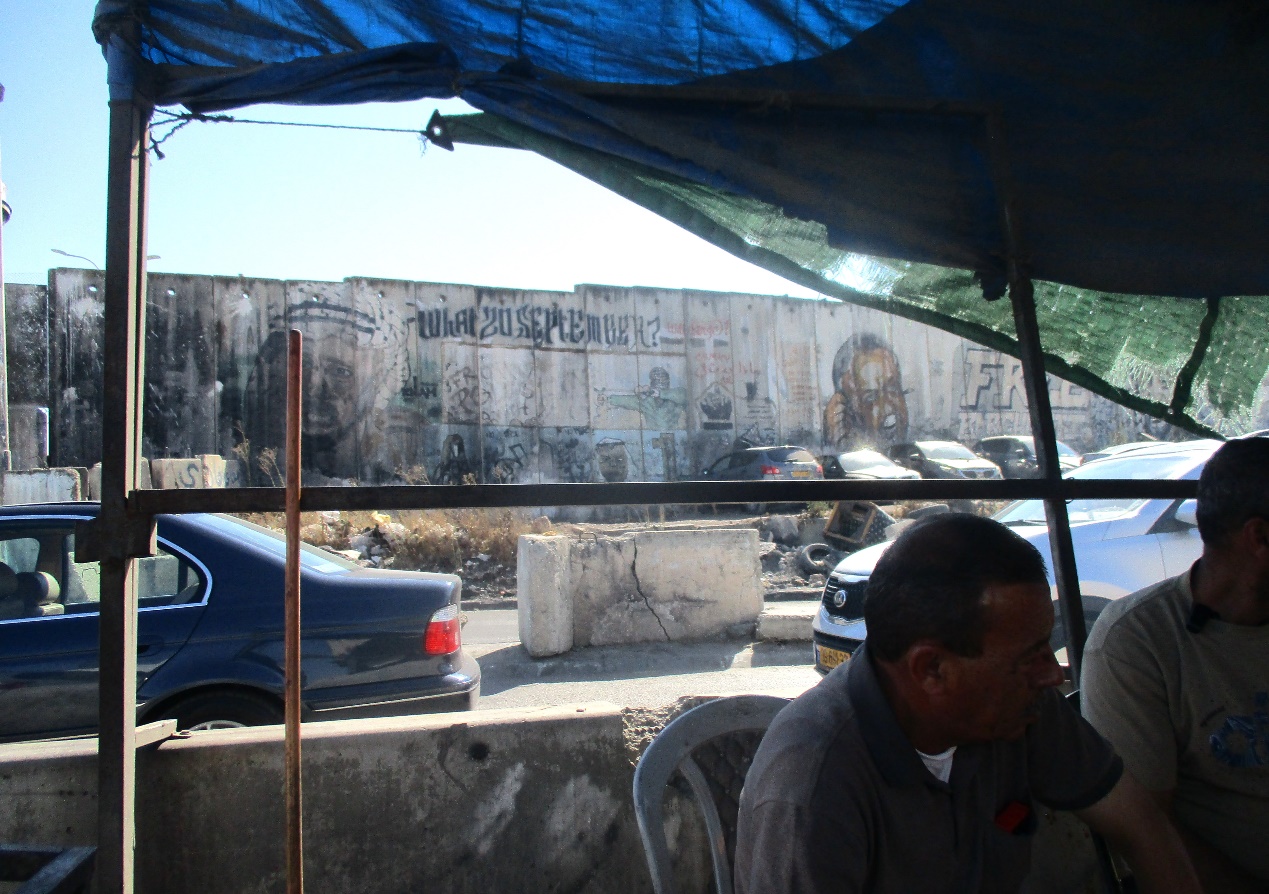 Tamar FleishmanJul-21-2026Qalandiya. Conversation in the shadow of the wall
-