
Qalandiya, Sun 20.11.11, Afternoon
Translating: Ruth Fleishman
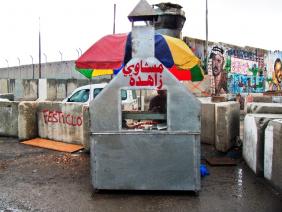
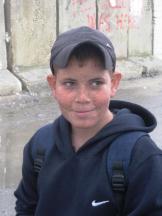 "Take five pictures of me today", asked seven and a half year old Haled whilst skipping between the puddles and between the rain drops, trying to sell bumper stickers to the drivers. The temperature dropped to 11 degrees Celsius, and on Haled's feet were hole-ridden sandals and on his slim body was a tight shirt. I took the photos.
I took photos of thirteen year old Jamal as well, a new comer to the local scenery who asked: "come to my house, I live near here" and pointed with his stretched arm towards the refugee camps, "It's right here, in the camp, I have a horse and I would like to have my picture taken while I'm ridding it". Perhaps another time
.
It was 15:00 when we entered the checkpoint. By the (locked) gate leading to the DCO offices was a man. There was no one on the other side to respond, for better or worse, to this person as he shouted and knocked on the metal gate. The official closing time is 16:00. The intercom has been disconnected for many years.
We were stuck for 15 minutes in the human pens at the entrance to the
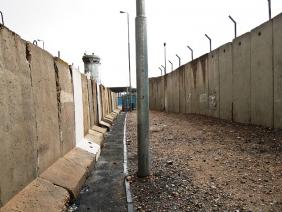
checkpoint without there being any movement, the journey to the other side of the checkpoint took an extra 20 minutes. We passed the time while engaging in conversation with S, an old friend who works in Atarot. He is always in a hurry in this time of the day to arrive at work, for S, who doesn't have the strength to deal with what goes on during the morning in Qalandiya, has been working for the past five years only night shifts: "During this time of day I sometimes wait ten minutes and sometimes an hour. But that's it. But in the morning it takes hours. Sometimes, by the time you cross the checkpoint it's better for you if you don't show up to work at all, because all those who arrive late are sent back".
S's schedule is like that of many others:
He returns home in the early hours of the morning, eats, showers, and as it becomes day time he goes to sleep, he wakes up late in the afternoon, gets dressed, rushes to the checkpoint and then it begins all over again…
People who live their days as though they were nights and their nights as though they were days. It's not a matter of choice but an existential constraint.
We tried locating the family of the 15 year old boy who as was mentioned in the reported from the courts is being held in Ofer. We didn't make much progress. We fled from the rain.
Qalandiya Checkpoint / Atarot Pass (Jerusalem)
See all reports for this place-
Click here to watch a video from Qalandiya checkpoint up to mid 2019 Three kilometers south of Ramallah, in the heart of Palestinian population. Integrates into "Jerusalem Envelope" as part of Wall that separates between northern suburbs that were annexed to Jerusalem in 1967: Kafr Aqab, Semiramis and Qalandiya, and the villages of Ar-Ram and Bir Nabala, also north of Jerusalem, and the city itself. Some residents of Kafr Aqab, Semiramis and Qalandiya have Jerusalem ID cards. A terminal operated by Israel Police has functioned since early 2006. As of August 2006, northbound pedestrians are not checked. Southbound Palestinians must carry Jerusalem IDs; holders of Palestinian Authority IDs cannot pass without special permits. Vehicular traffic from Ramallah to other West Bank areas runs to the north of Qalandiya. In February 2019, the new facility of the checkpoint was inaugurated aiming to make it like a "border crossing". The bars and barbed wire fences were replaced with walls of perforated metal panels. The check is now performed at multiple stations for face recognition and the transfer of an e-card. The rate of passage has improved and its density has generally decreased, but lack of manpower and malfunctions cause periods of stress. The development and paving of the roads has not yet been completed, the traffic of cars and pedestrians is dangerous, and t the entire vicinity of the checkpoint is filthy. In 2020 a huge pedestrian bridge was built over the vehicle crossing with severe mobility restrictions (steep stairs, long and winding route). The pedestrian access from public transport to the checkpoint from the north (Ramallah direction) is unclear, and there have been cases of people, especially people with disabilities, who accidentally reached the vehicle crossing and were shot by the soldiers at the checkpoint. In the summer of 2021, work began on a new, sunken entrance road from Qalandiya that will lead directly to Road 443 towards Jerusalem and Tel Aviv. At the same time, the runways of the old Atarot airport were demolished and infrastructure was prepared for a large bus terminal. (updated October 2021)
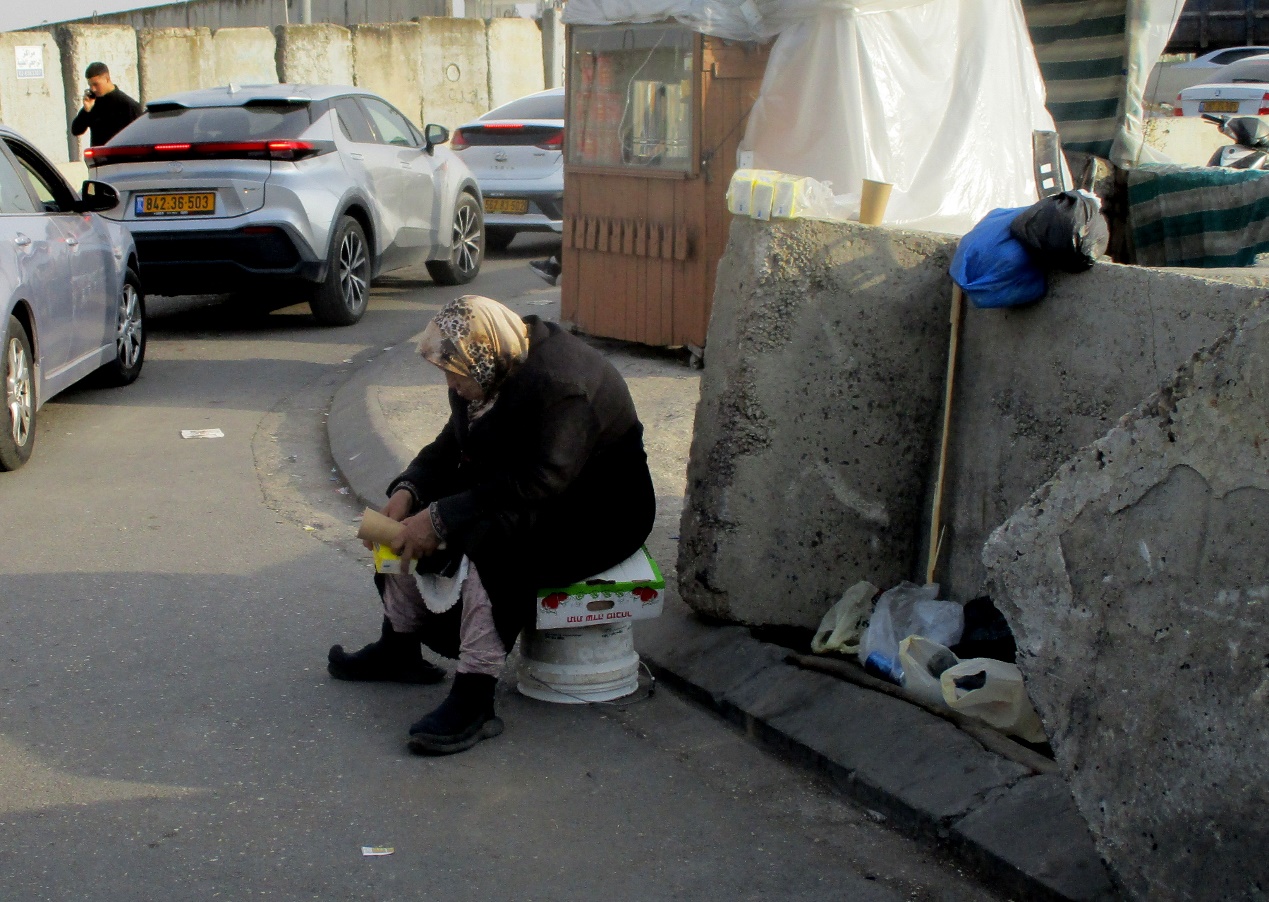 Tamar FleishmanOct-11-2026Qalandiya. Female Beggar
-
