
Sansana, South Hebron Hills, Fri 19.6.09, Morning
Meitar CP: Dozens of cars are parked on the Palestinian side, is that a sign of improvement in the economic situation?
The parking lot used to be empty, for two reasons: First, use of the highway was restricted to Israelis and second, the cost of petrol.
Road 60: The road is almost empty, but it is still early, the morning mist hasn't even lifted yet.
Hirbat Tiwani: A few "Combatants for Peace" activists came with us on the ride to Tiwani where they intend to help the shepherds. We went into the village to meet G and were surprised to find the dirt road leading there, that used to be all but impassable previously, now smoothed in preparation for paving. We were delighted but G, who told us of the plan to pave, is concerned: the Liaison and Coordination Administration is bringing pressure to bear, threats are voiced against the village and people are afraid paving will be forbidden and obstructed. We promised to come and help should it be necessary.
In addition we see some new electricity poles that would bring electricity from Yata so the old ones connected to the generators could become redundant. However, the Civil Administration came today and stuck demolition notices on the new poles that are glittering in the sunlight. I ask myself (not out loud, for pure shame) – is this within Area C where Israel is supposed to supply the needs of the population, or isn't it? We are hosted with some sweet, hot tea and leave.
The "Combatants for Peace" volunteers will be meeting up with some shepherds from Um Tuba who wish to go to Um Zeituna, one of the cisterns by the settlement Maon. A Palestinian youth and child are already on their way there. Having no common language hampers communication. The CFP activists join the shepherds for three hours grazing of the stock on the hills by Maon. Later on, we join them at the Gawawais family, located in-between the two illegal strongholds Abigail and Mizpe Yair. Standing on a high vantage point you choke as you see how the strongholds are taking over the territory. The Jewish settlers are closing in on the villagers and inhabitants of the border districts.
T tells us the following story: The family has been living in the area for many years. A few years ago, the elderly parents moved to Jordan, to live closer to their children. Upon their return, three years ago, they found their house (a mortar building overlooking the road and the family's land) taken over by a couple of settlers who refused to vacate it. Court intervention forced the usurpers out but since then, relationship with the settlers around has been tense. A year ago security forces came to demolish the family's tents. If I understood correctly the reason given by the person in charge of security in the neighbouring stronghold is that they constitute a security hazard because they obstruct the view of the road from the stronghold. He (driving a car paid for by us [as Israeli taxpayers] and armed with IDF weapon) was believed and, though the settlement is hundreds of metres from the tents, the army pulled the three tents down. At the same time, a nearby sheeps' pen was also demolished "accidently" – this is the big stone building the remains of which are strewn all around now. The family asked us to help them rebuild and we consented of course. They are now afraid of going to their olive groves. We said we'd try to organize activists' escort for the olive harvest but the men are hesitant. They seem to be deeply concerned about the prospects' of encountering violence from either the army or the settlers (or both, of course). Yesterday morning the man who had instigated the demolition came to T while he was working in the field, threatened, cursed, used abusive language and went to his way.We passed the complaint on to Yesh Din [Israeli peace activist group — literally: "law obtains").
On our way back, road 60 was almost entirely empty of vehicles. The Palestinian cars in the CP parking lot were still standing there.
Meitar checkpoint / Sansana
See all reports for this place-
Meitar Checkpoint / Sansana The checkpoint is located on the Green Line and serves as a border crossing between Israel and the West Bank. It is managed by the Border Crossing Authority of the Defense Ministry. It is comprised of sections for the transfer of goods as well as a vehicle checkpoint (intended for holders of blue identity cards, foreign nationals or diplomats and international organizations). Passing of Palestinians is prohibited, except for those with entry permits to Israel. Palestinians are permitted to cross on foot only. The crossing has a DCO / DCL / DCL / DCL (District Coordination Office), a customs unit, supervision, and a police unit. In the last year, a breach has been opened in the fence, not far from the crossing. This breach is known to all, including the army. There does not appear to be any interest in blocking it, probably as it permits needed Palestinian workers without the bureaucratic permits to get to work in Israel. Food stalls and a parking area economy have been created, but incidents of violent abuse by border police have also been recorded. Updated April 2022
-
South Hebron Hills
See all reports for this place-
South Hebron Hills
South Hebron Hills is a large area in the West Bank's southern part.
Yatta is a major city in this area: right in the border zone between the fertile region of Hebron and its surroundings and the desert of the Hebron Hills. Yatta has about 64,000 inhabitants.
The surrounding villages are called Masafer Yatta (Yatta's daughter villages). Their inhabitants subsist on livestock and agriculture. Agriculture is possible only in small plots, especially near streams. Most of the area consists of rocky terraces.Since the beginning of the 1980s, many settlements have been established on the agricultural land cultivated by the Palestinians in the South Hebron Hills region: Carmel, Maon, Susia, Masadot Yehuda, Othniel, and more. Since the settlements were established and Palestinians cultivation areas have been reduced; the residents of the South Hebron Hills have been suffering from harassment by the settlers. Attempts to evict and demolish houses have continued, along with withholding water and electricity. The military and police usually refrain from intervening in violent incidents between settlers and Palestinians do not enforce the law when it comes to the investigation of extensive violent Jewish settlers. The harassment in the South Hebron Hills includes attacking and attempting to burn residential tents, harassing dogs, harming herds, and preventing access to pastures.
There are several checkpoints in the South Hebron Hills, on Routes 317 and 60. In most of them, no military presence is apparent, but rather an array of pillboxes monitor the villages. Roadblocks are frequently set up according to the settlers and the army's needs. These are located at the Zif Junction, the Dura-al Fawwar crossing, and the Sheep Junction at the southern entrance to Hebron.
Updated April 2022
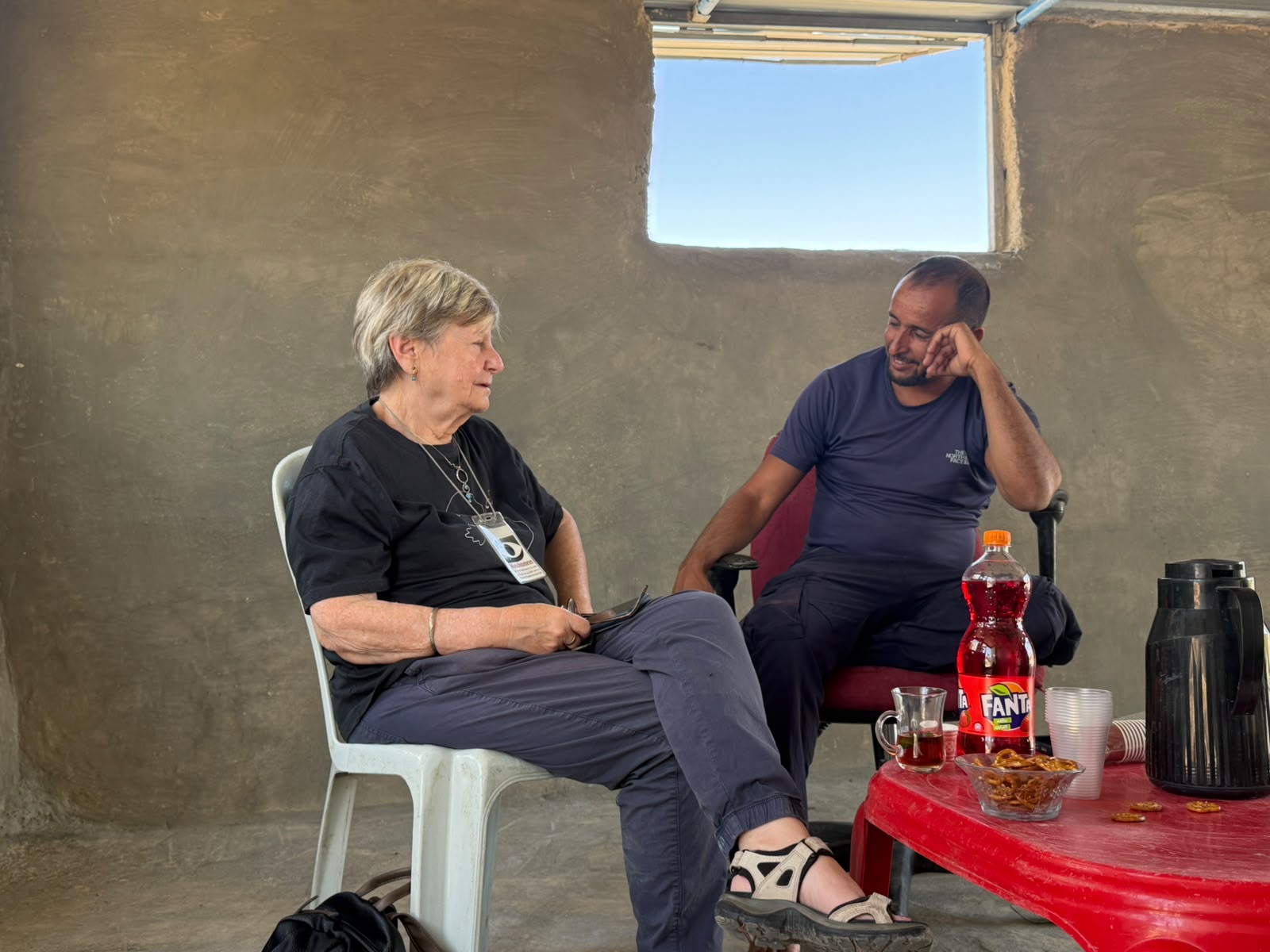 Muhammad D.Oct-10-2026Smadar with Najeh in Umm Qusa
-
